Materials Mechanics
Monocular 3D Video Extensometer



Monocular 2D Optical Strain Measurement System
Monocular 3D Optical Strain Measurement System
High-Speed Monocular 3D Optical Strain Measurement System
Stereo 3D Optical Strain Measurement System
Optical Strain Measurement System – Educational Edition
2D Optical Microscopic Strain Measurement System


Strain Measurement of Parallel Lap Welds
Residual Deformation Measurement of Drilled Welded Plates
Full-Field Strain Measurement of Weldments in Compression
Tensile Deformation Measurement of 0.3mm Fiber Filament
Unmarked Compression Deformation Measurement of Composite Materials

Deformation Measurement of Artificial Cardiac Patch
Keycap Vibration Measurement: Quantifying Press and Rebound Dynamics
Headband Deformation Measurement: Analyzing Bending Position and Unloading Recovery
High-Temperature DIC Measurement of Wafer Thermal Warpage: Quantifying Warpage vs. Temperature
UAV Dynamic Tracking Measurement: Capturing Flight Trajectory and Attitude Changes

 0755-86347753

 Weld strength tensileFull-field strain measurement
Weld strength is a key indicator of weld quality. Conventional tensile testing usually captures strain data only at specific points and cannot fully reveal the strain distribution across the welded region. Full-field strain testing, by contrast, enables comprehensive strain analysis of the entire weld area during tension, allowing more accurate evaluation of the strength and reliability of welded joints.
The Haytham monocular 3D video extensometer employs advanced monocular 3D DIC technology to perform full-field strain measurement on the surface of welded parts. Its high-precision camera and image processing system capture the minute deformation of the weld region during tension and generate full-field strain distribution maps. Compared with conventional single-point or multi-point strain measurement, the 3D video extensometer delivers more comprehensive strain analysis results, with easy operation and no calibration required.
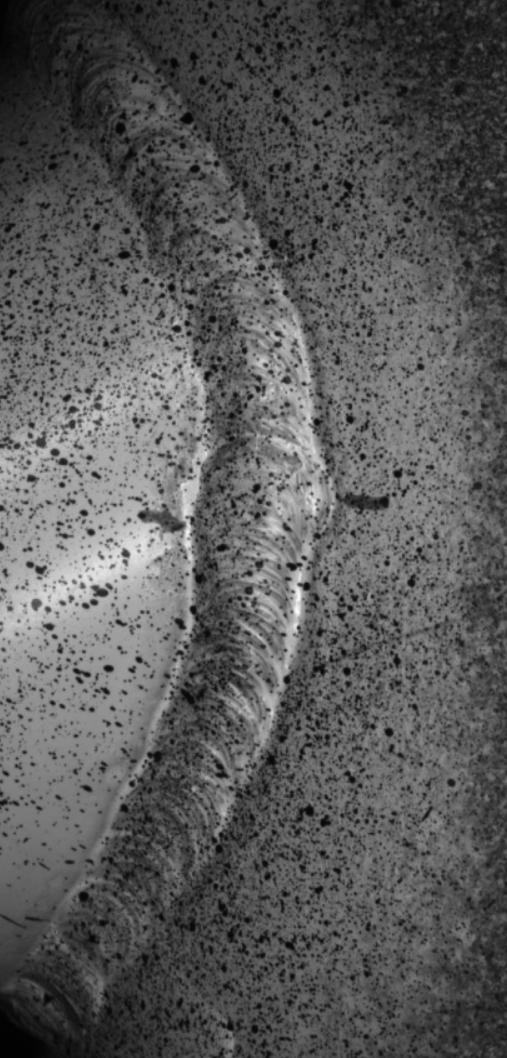
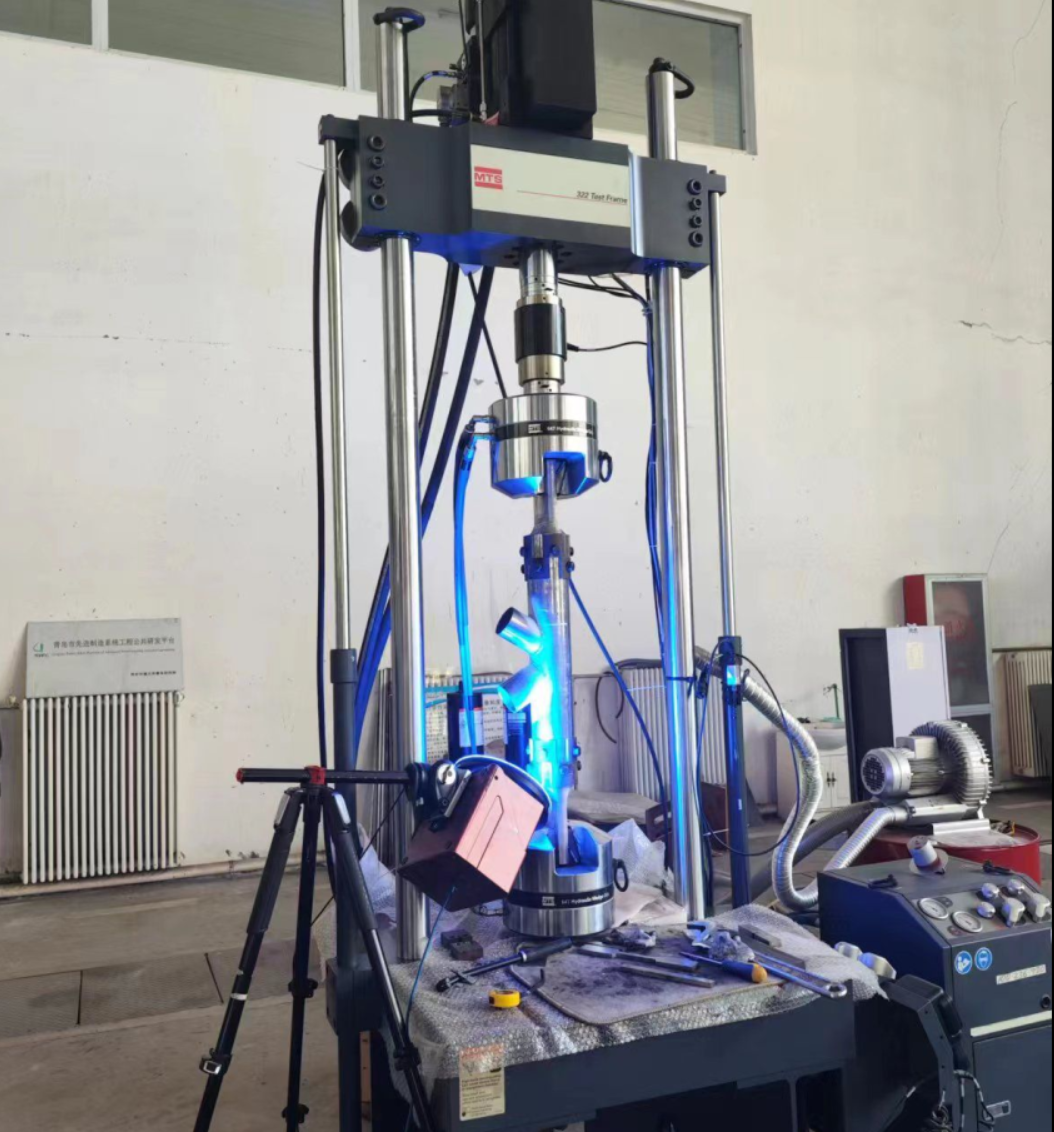
Specimen speckle preparation and on-site setup
In the weld strength tensile test, the specimen was fixed on a tensile testing machine and subjected to progressively increasing tensile load. The Haytham monocular 3D video extensometer monitored the strain distribution of the weld region in real time through its camera, accurately capturing the strain evolution of the welded joint under load and generating detailed full-field strain maps.
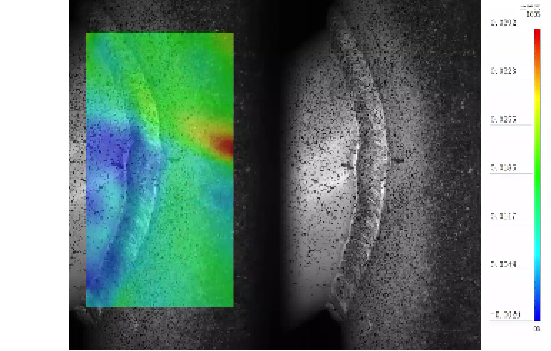
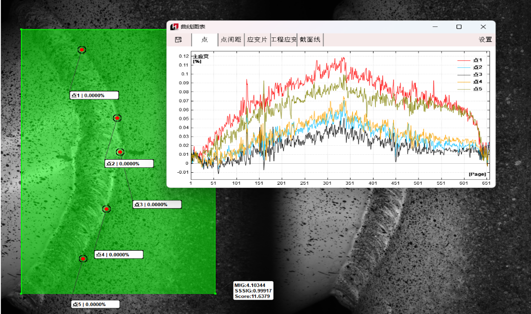
Analysis of the full-field strain data over the welded region identifies stress concentration areas and potential failure points of the welded joint. Full-field strain distribution maps help engineers gain deep insight into the strain behavior of welded joints under different tensile loads, providing data support for optimizing welding processes and improving weld strength. In addition, the test data can be used to validate mechanical models of welded joints and improve the prediction of weld quality.





 Downloads

