Materials Mechanics
Monocular 3D Video Extensometer



Monocular 2D Optical Strain Measurement System
Monocular 3D Optical Strain Measurement System
High-Speed Monocular 3D Optical Strain Measurement System
Stereo 3D Optical Strain Measurement System
Optical Strain Measurement System – Educational Edition
2D Optical Microscopic Strain Measurement System


Strain Measurement of Parallel Lap Welds
Residual Deformation Measurement of Drilled Welded Plates
Full-Field Strain Measurement of Weldments in Compression
Tensile Deformation Measurement of 0.3mm Fiber Filament
Unmarked Compression Deformation Measurement of Composite Materials

Deformation Measurement of Artificial Cardiac Patch
Keycap Vibration Measurement: Quantifying Press and Rebound Dynamics
Headband Deformation Measurement: Analyzing Bending Position and Unloading Recovery
High-Temperature DIC Measurement of Wafer Thermal Warpage: Quantifying Warpage vs. Temperature
UAV Dynamic Tracking Measurement: Capturing Flight Trajectory and Attitude Changes

 0755-86347753



2026/08
 DIC systemDIC selection
DIC system selection is not about the number of physical cameras, but whether the system can obtain calibratable, computable different viewing angles. Selection should not start from how many cameras are used, but from how the specimen will deform and what data is needed.

2026/08
DIC large-deformation measurementLarge strain measurementDIC system DIC is often used for large-deformation testing of rubber, plastics, flexible materials and composites. Unlike contact measurement with a fixed gauge length, DIC computes displacement by continuously tracking surface speckle features, so it has a large deformation measurement range.

2026/08
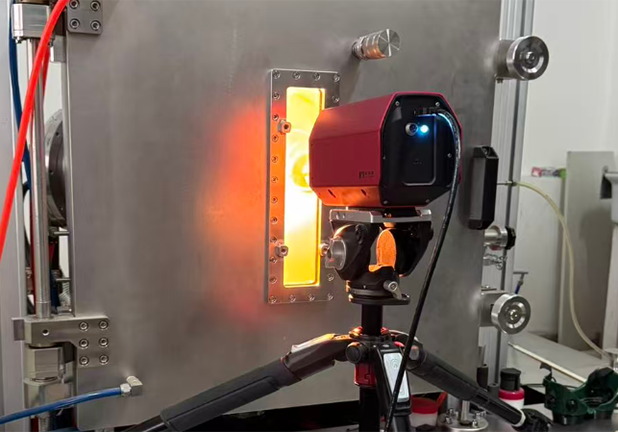
High-temperature DIC measurementDigital image correlation methodFull-field strain High-temperature environments simultaneously affect image contrast, speckle stability, air refractive index and system calibration. This article analyzes the influence of thermal radiation, heat flow disturbance, surface oxidation and observation windows on high-temperature DIC measurement.

2026/08
DIC subsetDIC errorDigital image correlation method With the same set of DIC images, different subset sizes, calculation step sizes, strain windows and filtering settings may yield different strain results. Parameter selection is essentially a balance among spatial resolution, stability and local detail.

2026/08
DIC systemFull-field strainFinite element simulation DIC test results differing from finite element simulation does not necessarily mean the test or model is wrong. Coordinate systems, boundary conditions, material models, spatial resolution and data mapping all affect the comparison.

2026/08
Tunnel safety monitoringTunnel structural monitoringAutomated tunnel monitoring What does tunnel safety monitoring mainly monitor? This article introduces the differences between construction-stage and operation-stage tunnel monitoring, and the monitoring logic of convergence, settlement, lining deformation, cracks and water seepage.

2026/08
Bridge safety monitoringBridge structural health monitoringBridge displacement monitoring Which indicators should bridge safety monitoring cover? Based on the Ministry of Transport's bridge monitoring specifications and long-span bridge data application guidelines, this article introduces the monitoring logic of displacement, vibration, strain, cable force and environmental loads.

2026/08
Metro safety monitoringMetro structural monitoringMetro settlement monitoring What does metro safety monitoring mainly monitor? Starting from stations, running tunnels, tracks and surrounding environments, this article introduces displacement, settlement and deformation monitoring methods, and how automated monitoring supports risk warning.

2026/07
Slope monitoringAutomated slope monitoring The difficulty of highway slope displacement monitoring is not only whether displacement can be measured, but also whether equipment can run long-term in remote environments, how site power and communication are solved, how large-span slopes are flexibly arranged, and whether timely warning is possible after anomalies.
2026/07
Video extensometerVideo extensometer price There is no uniform price for video extensometers. Price is mainly determined by camera and lens configuration, 2D/3D scheme, accuracy class, temperature range and software modules; at the same configuration, imported brands are usually significantly more expensive than domestic ones. Rather than comparing total prices...





 Downloads

