Materials Mechanics
Monocular 3D Video Extensometer



Monocular 2D Optical Strain Measurement System
Monocular 3D Optical Strain Measurement System
High-Speed Monocular 3D Optical Strain Measurement System
Stereo 3D Optical Strain Measurement System
Optical Strain Measurement System – Educational Edition
2D Optical Microscopic Strain Measurement System


Strain Measurement of Parallel Lap Welds
Residual Deformation Measurement of Drilled Welded Plates
Full-Field Strain Measurement of Weldments in Compression
Tensile Deformation Measurement of 0.3mm Fiber Filament
Unmarked Compression Deformation Measurement of Composite Materials

Deformation Measurement of Artificial Cardiac Patch
Keycap Vibration Measurement: Quantifying Press and Rebound Dynamics
Headband Deformation Measurement: Analyzing Bending Position and Unloading Recovery
High-Temperature DIC Measurement of Wafer Thermal Warpage: Quantifying Warpage vs. Temperature
UAV Dynamic Tracking Measurement: Capturing Flight Trajectory and Attitude Changes

 0755-86347753



2024/12
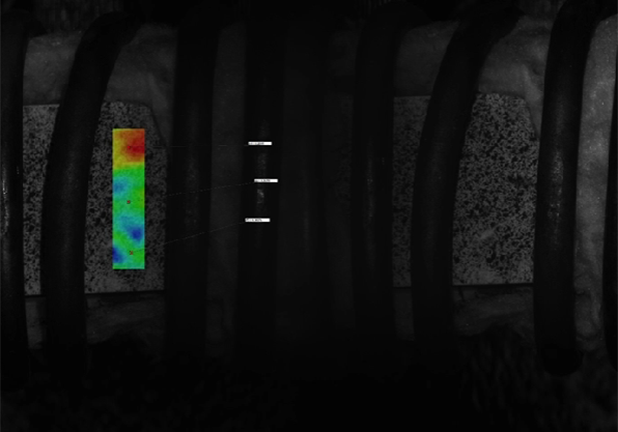
 Strain sensorDIC technology
Extreme environments are a huge test for high-precision strain sensors — from high to low temperature, humidity to corrosion, even strong electromagnetic interference. Beyond robust technical design, DIC as a non-contact measurement solution also plays an important role in these fields.

2024/11
DIC technologyDigital image correlation method (DIC) In structural mechanical property testing, a DIC vision sensor measures without contacting the test object, avoiding interference and damage from sensor installation, while providing high-resolution, real-time, multi-scale strain measurement across the entire test area.

2024/11
Video extensometerDigital image correlation (DIC) A video extensometer is a non-contact strain measurement device based on DIC, used to measure material strain during tensile testing. Compared with traditional mechanical extensometers, it offers advantages such as high precision, long measurement range and no specimen contact in metal tensile testing.

2024/11
DIC technologyHigh-temperature creepThermal testing Thermal testing evaluates the mechanical properties of materials under different temperature conditions, especially deformation in high/low-temperature environments. Traditional thermal testing relies on contact sensors such as thermocouples and strain gauges, which are limited by the test environment; DIC compensates ...

2024/11
DIC technologyImpact testing Impact testing is a key experiment for evaluating material or structural response under rapid loads, widely used in aerospace, automotive and protective equipment. In traditional impact tests, sensors such as strain gauges and accelerometers usually measure only local stress and strain, while DIC provides full-field, r...
2024/10
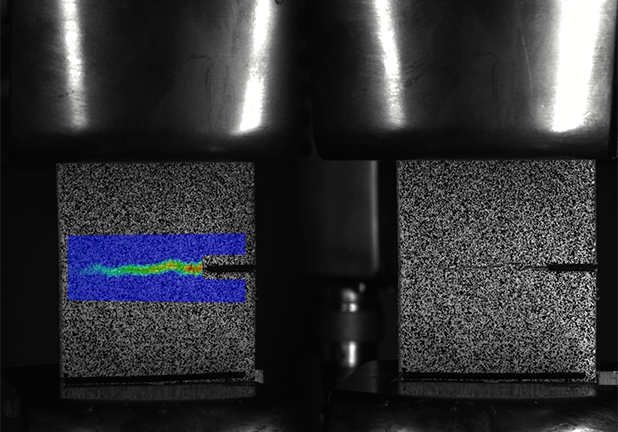
Digital image correlation method (DIC)DIC technology There are many ways to measure force, each with its own scenarios and technical characteristics. Common methods include spring force measurement, strain gauge measurement, piezoelectric effect, hydraulic, magnetoelectric and DIC-based approaches — each with its advantages and limitations.

2024/09
DIC technologyDIC digital image correlation method DIC has developed rapidly in recent years with broad application prospects. With continuous progress in computer vision and image processing, its accuracy, speed and usability have improved significantly. In the future, it will develop toward intelligence, portability and diversification.

2024/09
Analyzes the applications of DIC in structural health monitoring, emphasizing its importance in building safety evaluation.
2024/09
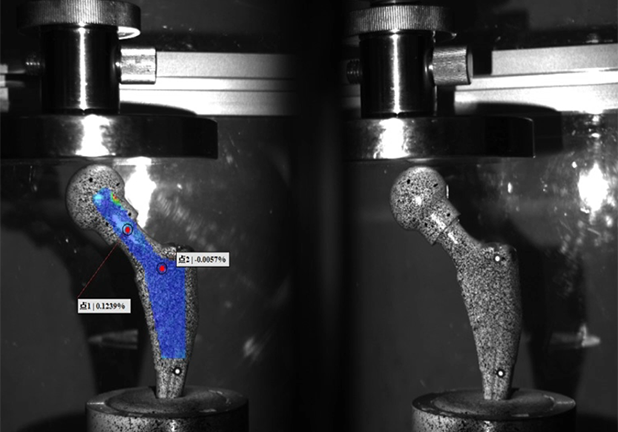
DIC technologyDigital image correlation method (DIC) In material testing, DIC is rapidly becoming an important testing method. Traditional approaches rely on contact sensors that may affect result accuracy; DIC achieves precise monitoring of material deformation and strain through non-contact measurement.
2024/09
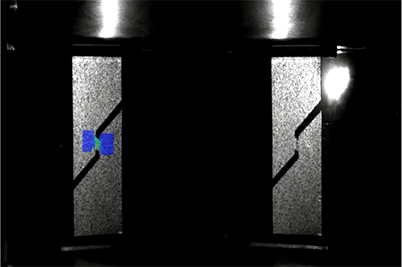
DIC technologyDigital image correlation method (DIC)DIC digital image correlation method The core principle of DIC is to measure the deformation and displacement of objects through image comparison. The technique requires applying random black-and-white dots on the object surface to form a specific texture for subsequent image processing. The workflow includes image acquisition, feature recognition, displa...





 Downloads

