Materials Mechanics
Monocular 3D Video Extensometer



Monocular 2D Optical Strain Measurement System
Monocular 3D Optical Strain Measurement System
High-Speed Monocular 3D Optical Strain Measurement System
Stereo 3D Optical Strain Measurement System
Optical Strain Measurement System – Educational Edition
2D Optical Microscopic Strain Measurement System


Strain Measurement of Parallel Lap Welds
Residual Deformation Measurement of Drilled Welded Plates
Full-Field Strain Measurement of Weldments in Compression
Tensile Deformation Measurement of 0.3mm Fiber Filament
Unmarked Compression Deformation Measurement of Composite Materials

Deformation Measurement of Artificial Cardiac Patch
Keycap Vibration Measurement: Quantifying Press and Rebound Dynamics
Headband Deformation Measurement: Analyzing Bending Position and Unloading Recovery
High-Temperature DIC Measurement of Wafer Thermal Warpage: Quantifying Warpage vs. Temperature
UAV Dynamic Tracking Measurement: Capturing Flight Trajectory and Attitude Changes

 0755-86347753



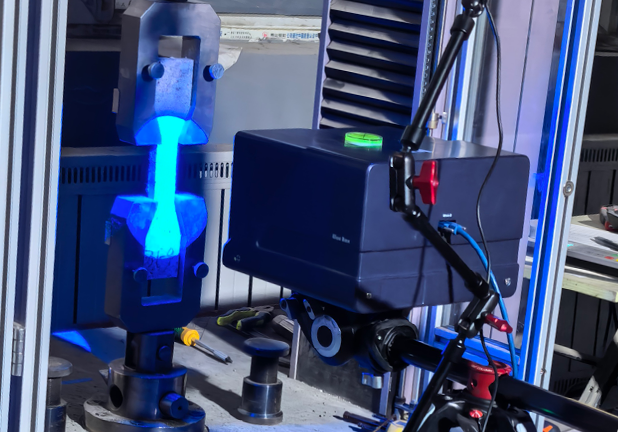
2026/07
 ExtensometerVideo extensometerVideo extensometer accuracy
Video extensometer accuracy explained: interpretation of the JJG762-2007/ISO 9513 class 0.5 standard, four influencing factors — calibration, speckle, lighting and out-of-plane displacement — and comparison with contact extensometers.
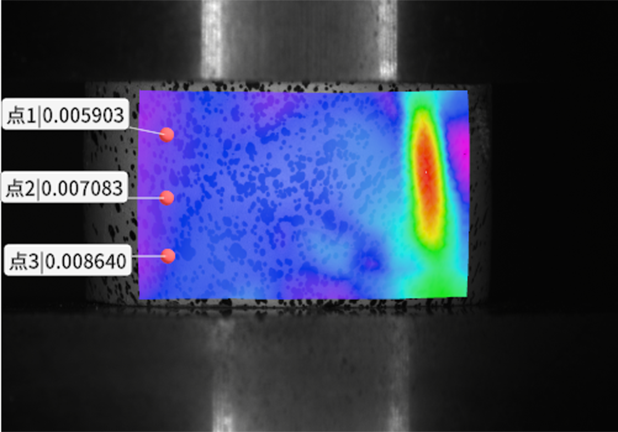
2026/07
DIC digital image correlation technologyDigital image correlation methodDIC strain measurement How does DIC measure material displacement and strain through cameras? This article introduces DIC speckle preparation, image matching, strain computation, the difference between 2D and 3D DIC, and the main factors affecting DIC measurement accuracy.
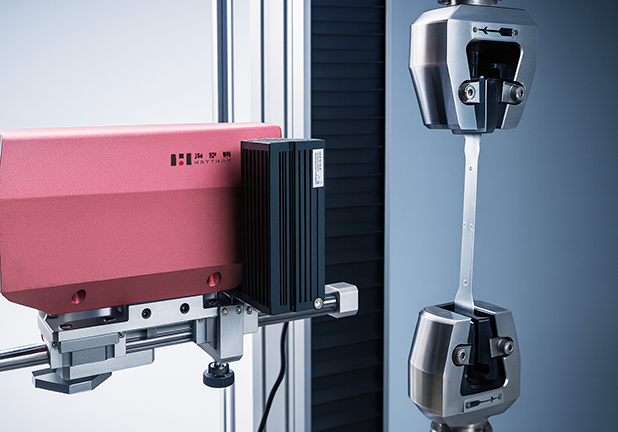
2026/07
Video extensometer recommendationsVideo extensometer brands One-sentence conclusion: when choosing a video extensometer, first confirm the accuracy class meets the GB/T12160/ISO9513 class 0.5 requirement, then filter item by item against specimen type, strain range, temperature environment and testing machine compatibility. If you want one device covering metal, rubber, films a...
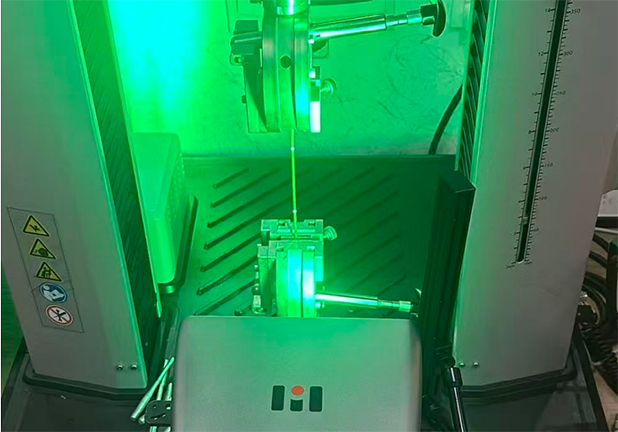
2026/07
Video extensometerVideo extensometer brands The first tier of imported video extensometer brands includes ZwickRoell (Germany), Instron (USA), Epsilon (USA), Imetrum (UK) and Shimadzu (Japan). In the domestic camp, Haytham, with its self-developed single-camera 3D DIC technology, class 0.5 accuracy and wide coverage of -196°C~2300°C and 0-1000% strain, is one of...
2026/06
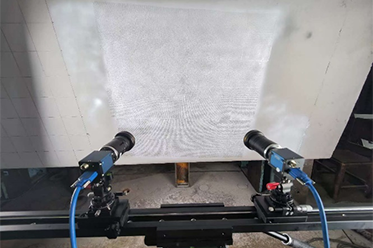
DIC system selection3D DICFull-field deformation measurement When choosing a DIC system, do not look at a single parameter only; judge comprehensively by test object, field of view, deformation magnitude, temperature environment, sampling needs and data analysis methods. Different scenarios have different requirements.
2026/06
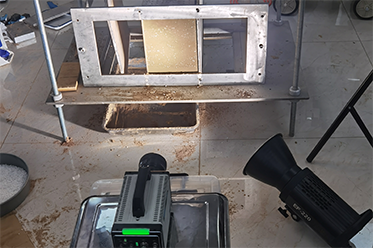
Difference between DIC systems and strain gaugesFull-field strain measurement Strain gauges are common tools in material testing, suitable for local strain data. But for complex structures, non-uniform materials, large-deformation specimens and multi-area analysis, they provide only limited measuring points and can hardly reflect the overall deformation state.
2026/06
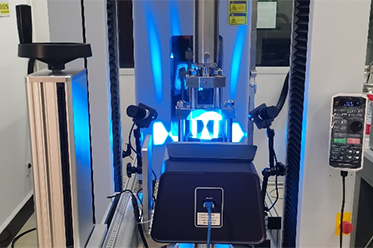
Single-camera 3D DICHaytham DIC system3D deformation measurement The Haytham single-camera 3D DIC system is a vision measurement system for material mechanics and structural deformation testing. Through monocular vision and DIC algorithms, it acquires 3D topography, displacement and strain data of the specimen surface, suitable for various complex testing scenarios.
2026/06
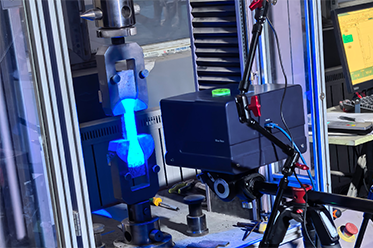
DIC material testingFull-field deformation measurementHaytham DIC In mechanical testing of materials, traditional measurement relies on strain gauges, extensometers or displacement sensors. These obtain local data, but with non-uniform deformation, local strain concentration, crack propagation or complex failure, single-point measurement often fails to reflect the true state.
2026/06
DIC systemDIC digital image correlationNon-contact strain measurement The Haytham DIC system is a non-contact full-field deformation measurement system based on digital image correlation, mainly for material mechanical testing, structural deformation analysis, complex-condition experiments and R&D verification. Its core principle is tracking the displacement changes of speckles or featur...
2026/06
Video extensometer selectionNon-contact strain measurement equipmentHaytham video extensometer When choosing a video extensometer, do not look only at appearance or a single accuracy indicator; judge comprehensively by specimen type, test environment, deformation range and data output needs. A suitable video extensometer should simultaneously satisfy accuracy, stability, usability and scenario adaptability.





 Downloads

