Materials Mechanics
Monocular 3D Video Extensometer



Monocular 2D Optical Strain Measurement System
Monocular 3D Optical Strain Measurement System
High-Speed Monocular 3D Optical Strain Measurement System
Stereo 3D Optical Strain Measurement System
Optical Strain Measurement System – Educational Edition
2D Optical Microscopic Strain Measurement System


Strain Measurement of Parallel Lap Welds
Residual Deformation Measurement of Drilled Welded Plates
Full-Field Strain Measurement of Weldments in Compression
Tensile Deformation Measurement of 0.3mm Fiber Filament
Unmarked Compression Deformation Measurement of Composite Materials

Deformation Measurement of Artificial Cardiac Patch
Keycap Vibration Measurement: Quantifying Press and Rebound Dynamics
Headband Deformation Measurement: Analyzing Bending Position and Unloading Recovery
High-Temperature DIC Measurement of Wafer Thermal Warpage: Quantifying Warpage vs. Temperature
UAV Dynamic Tracking Measurement: Capturing Flight Trajectory and Attitude Changes

 0755-86347753

 PRODUCT
Designed for material testing in high-temperature environments, it features plug-and-play operation with no calibration required. Using advanced optical and laser speckle technology, it accurately captures material deformation data even at extreme temperatures, making it suitable for tensile, compressive, and creep testing of superalloys, composites, and more. Its unique high-temperature optical path system and surface treatment technology ensure measurement accuracy and stability, significantly improving testing efficiency and reliability.
● Application Fields: Tensile, compressive, and bending tests of flat specimens in high- and low-temperature environments


Laser Focusing

0.5-Class Accuracy

Zero-Latency Communication

Strain Control Capability

Measurable Temperature Range -190℃—2300℃
 High-temperature tensileHigh-temperature video extensometer
In high-temperature material testing, especially tensile testing of superalloy steel, traditional contact extensometers often fail in harsh high-temperature environments. The Haytham monocular 2D video extensometer shows unique advantages, measuring strain without contact at 900°C and delivering stable, reliable tensile data.
 High-temperature extensometerHigh-temperature compression test
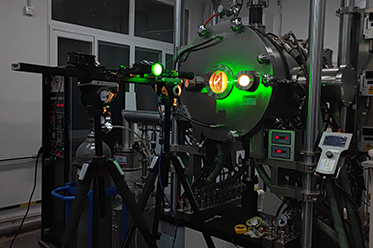
In materials science, composites are widely used in aerospace and energy for their strength and heat resistance. Their behavior must be measured under extreme temperatures to ensure reliability in real service. Marker-free non-contact DIC captures full-field compression deformation at 2300°C for trustworthy verification.
 High-temperature extensometerDIC systemVideo extensometer
Accurate data acquisition is key in high-temperature material testing, and at 1600°C traditional equipment faces serious challenges. In this test the Haytham 2D extensometer provided the customer with a reliable solution, measuring strain without contact and delivering stable, trustworthy data where conventional devices struggle.
 High-temperature full-field strainDIC technology
As 3D printing spreads across aerospace and automotive manufacturing, material performance is a core design and production concern. A well-known manufacturer developing a 3D-printed alloy component for high-temperature service needed full-field data under heating to 350°C. Non-contact DIC delivered complete strain fields, supporting reliable performance verification.
 Rebar tensile testingHigh-temperature extensometer
In steel performance evaluation, high-temperature tensile testing verifies heat resistance and plasticity. For rebar with rough, reflective, complex surfaces, traditional contact extensometers often fail to work stably. Haytham's featureless recognition measures strain without surface preparation for stable high-temperature data.
 Lithium battery nail penetrationThermo-mechanical coupling
The nail penetration test simulates internal short circuit scenarios in battery cells. Traditional approaches focus on a single physical quantity such as temperature or displacement and strain, making it hard to answer where the heat starts and how it spreads, or how mechanical deformation interacts with the temperature rise. Haytham brings full-field deformation measurement into the test to capture both together.
 Material tensile testingVideo extensometer
In 1500°C tensile testing of carbon/carbon (C/C) composites, the material endures strong radiation, high heat flux, and a complex atmosphere. Traditional contact extensometers and strain gauges fail or detach under such conditions. Non-contact DIC withstands the extreme environment for reliable full-field strain data.




 Downloads


