Materials Mechanics
Monocular 3D Video Extensometer



Monocular 2D Optical Strain Measurement System
Monocular 3D Optical Strain Measurement System
High-Speed Monocular 3D Optical Strain Measurement System
Stereo 3D Optical Strain Measurement System
Optical Strain Measurement System – Educational Edition
2D Optical Microscopic Strain Measurement System


Strain Measurement of Parallel Lap Welds
Residual Deformation Measurement of Drilled Welded Plates
Full-Field Strain Measurement of Weldments in Compression
Tensile Deformation Measurement of 0.3mm Fiber Filament
Unmarked Compression Deformation Measurement of Composite Materials

Deformation Measurement of Artificial Cardiac Patch
Keycap Vibration Measurement: Quantifying Press and Rebound Dynamics
Headband Deformation Measurement: Analyzing Bending Position and Unloading Recovery
High-Temperature DIC Measurement of Wafer Thermal Warpage: Quantifying Warpage vs. Temperature
UAV Dynamic Tracking Measurement: Capturing Flight Trajectory and Attitude Changes

 0755-86347753

 High-temperature tensileHigh-temperature video extensometer
In performance testing of high-temperature materials, especially tensile testing of high-temperature alloy steel, conventional contact extensometers often fail to meet the demands of harsh high-temperature environments. This is where the Haytham monocular 2D video extensometer demonstrates its unique advantages.
1. Application Background
Owing to its excellent strength and corrosion resistance in high-temperature environments, high-temperature alloy steel is widely used in aerospace, energy, chemical, and other fields. However, evaluating the mechanical properties of these materials at extreme temperatures is critical to ensuring their safety and reliability in practical applications. Especially at 900°C, the influence of the material's tiny deformation on the overall structure may be amplified, making accurate measurement of the stress-strain relationship at this temperature especially important.
2. Testing Challenges
In such a high-temperature environment, conventional mechanical extensometers can hardly operate stably and are susceptible to temperature interference, resulting in measurement errors. Meanwhile, the material oxidizes and deforms at high temperature, which also makes it impossible for contact measurement tools to precisely capture the subtle deformation process. As a result, obtaining an accurate stress-strain curve in tensile testing of high-temperature alloy steel has become a major challenge.
3. Application of the Haytham Monocular 2D High-Temperature Video Extensometer
Through non-contact optical measurement technology, the Haytham monocular 2D high-temperature video extensometer overcomes the various adverse factors in high-temperature environments. By capturing images of the specimen surface and processing them with digital image correlation (DIC), it analyzes the material's deformation in real time. Specifically, in the 900°C tensile testing of high-temperature alloy steel, this video extensometer can accurately track subtle deformation on the material surface and transmit the data directly via software communication to the MTS testing machine's software system.
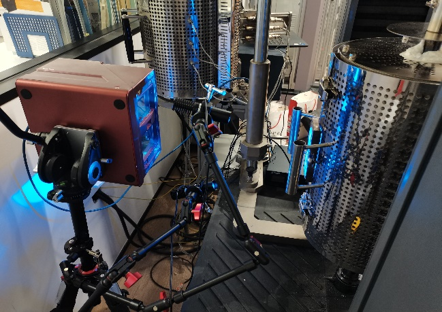
Test setup of the Haytham monocular 2D video extensometer
4. Experimental Procedure
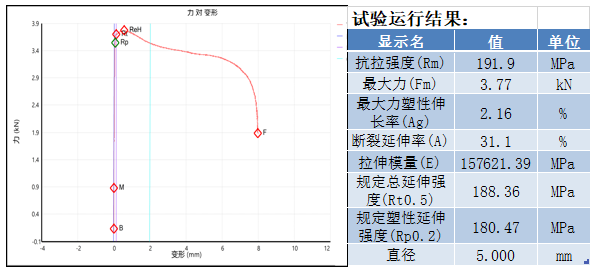
Before the test began, the specimen was mounted on the MTS testing machine and slowly heated to 900°C. Once the temperature stabilized, the Haytham monocular 2D high-temperature video extensometer began capturing changes on the specimen surface. As the specimen deformed under tensile force, the video extensometer recorded every subtle displacement change. After real-time processing, these data were immediately transferred to the MTS testing machine's software, generating an accurate stress-strain curve.
5. Test Results
With this system, researchers successfully obtained the complete stress-strain curve of high-temperature alloy steel at 900°C. This result not only reveals the mechanical behavior of the material at high temperature but also provides an important basis for further optimizing the composition design and processing technology of high-temperature alloy steel.
6. Application Significance
The application of the Haytham monocular 2D high-temperature video extensometer greatly improves the accuracy and efficiency of tensile testing of high-temperature alloy steel. Especially under extreme temperature conditions, its non-contact measurement technology avoids the various error factors of traditional methods, providing powerful tool support for the research and development of high-temperature materials. This successful case also shows that non-contact optical measurement technology will play an increasingly important role in future materials testing.





 Downloads

