Materials Mechanics
Monocular 3D Video Extensometer



Monocular 2D Optical Strain Measurement System
Monocular 3D Optical Strain Measurement System
High-Speed Monocular 3D Optical Strain Measurement System
Stereo 3D Optical Strain Measurement System
Optical Strain Measurement System – Educational Edition
2D Optical Microscopic Strain Measurement System


Strain Measurement of Parallel Lap Welds
Residual Deformation Measurement of Drilled Welded Plates
Full-Field Strain Measurement of Weldments in Compression
Tensile Deformation Measurement of 0.3mm Fiber Filament
Unmarked Compression Deformation Measurement of Composite Materials

Deformation Measurement of Artificial Cardiac Patch
Keycap Vibration Measurement: Quantifying Press and Rebound Dynamics
Headband Deformation Measurement: Analyzing Bending Position and Unloading Recovery
High-Temperature DIC Measurement of Wafer Thermal Warpage: Quantifying Warpage vs. Temperature
UAV Dynamic Tracking Measurement: Capturing Flight Trajectory and Attitude Changes

 0755-86347753

 PRODUCT
The Stereo 3D Optical Strain Measurement System is a non-contact measurement system based on binocular 3D DIC technology. Designed for large-scale and wide-range structural testing, it enables three-dimensional full-field displacement and strain measurement, while also supporting velocity, acceleration calculation, motion tracking and trajectory analysis to meet diverse testing requirements.


Flexible Measurement Range Adjustment

Adjustable Measurement Distance

Supports Large-Scale Measurement up to 10 m

Replaceable Cameras and Lenses for Easy Upgrades
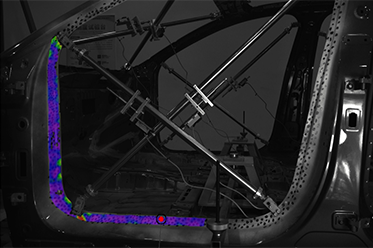
 DIC systemAutomotive torsion testing
Torsional load testing of the body-in-white is a key step in evaluating vehicle structural stiffness, verifying how the body deforms under torsional stress. By applying torsional loads and measuring strain and displacement at different body regions, it quantifies stiffness and gives engineers solid data to refine body design.
 DIC systemDIC digital image correlation
In structural engineering, bending performance testing of concrete beams is a key step in evaluating load capacity and crack propagation behavior. As a common experimental method, the four-point bending test simulates the stress state of concrete beams in actual use, and DIC captures full-field strain and crack development.
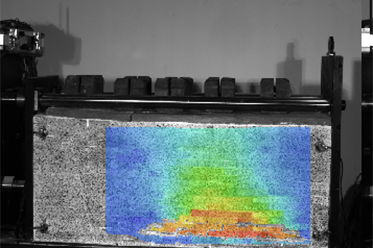 DIC systemGeological mining simulation
Geological mining simulation experiments reproduce the stress states of rock or soil layers during mining, such as compression, tension, and shear. These stresses cause deformation and fracturing that affect mining safety. Traditional measurement struggles to capture this behavior, so DIC full-field monitoring is valuable.
 DIC technologyStereo 3D DIC system
The transverse wet joint is a critical connection in concrete box girder bridges, usually cast in place to join precast segments into one structure; its stability directly affects bridge load capacity and safety. As wet joint technology still faces challenges, three-point bending DIC testing helps verify joint performance.
 Digital image correlation (DIC) technology
A key load-bearing member in bridges and long-span structures, the box girder has a rectangular or trapezoidal section formed by top and bottom slabs and two webs. With high torsional stiffness, strong load capacity, good aerodynamics, and easy construction, its strain and crack behavior is verified in four-point bending tests.




 Downloads

