Materials Mechanics
Monocular 3D Video Extensometer



Monocular 2D Optical Strain Measurement System
Monocular 3D Optical Strain Measurement System
High-Speed Monocular 3D Optical Strain Measurement System
Stereo 3D Optical Strain Measurement System
Optical Strain Measurement System – Educational Edition
2D Optical Microscopic Strain Measurement System


Strain Measurement of Parallel Lap Welds
Residual Deformation Measurement of Drilled Welded Plates
Full-Field Strain Measurement of Weldments in Compression
Tensile Deformation Measurement of 0.3mm Fiber Filament
Unmarked Compression Deformation Measurement of Composite Materials

Deformation Measurement of Artificial Cardiac Patch
Keycap Vibration Measurement: Quantifying Press and Rebound Dynamics
Headband Deformation Measurement: Analyzing Bending Position and Unloading Recovery
High-Temperature DIC Measurement of Wafer Thermal Warpage: Quantifying Warpage vs. Temperature
UAV Dynamic Tracking Measurement: Capturing Flight Trajectory and Attitude Changes

 0755-86347753

 DIC systemGeological mining simulation
Geological mining simulation experiments usually involve simulating the various stress states that rock or soil strata experience during mining, such as compression, tension, and shear. These stresses cause deformation and fracturing of the rock or soil, which in turn affects mining safety.
Traditional measurement methods, such as strain gauges or contact sensors, can provide some strain data, but their installation and use have certain limitations when dealing with complex geological specimens. In simulation experiments in particular, due to the heterogeneity and complex surface morphology of geological specimens, contact sensors may fail to fully capture the strain distribution on the specimen surface, resulting in less accurate measurement results.
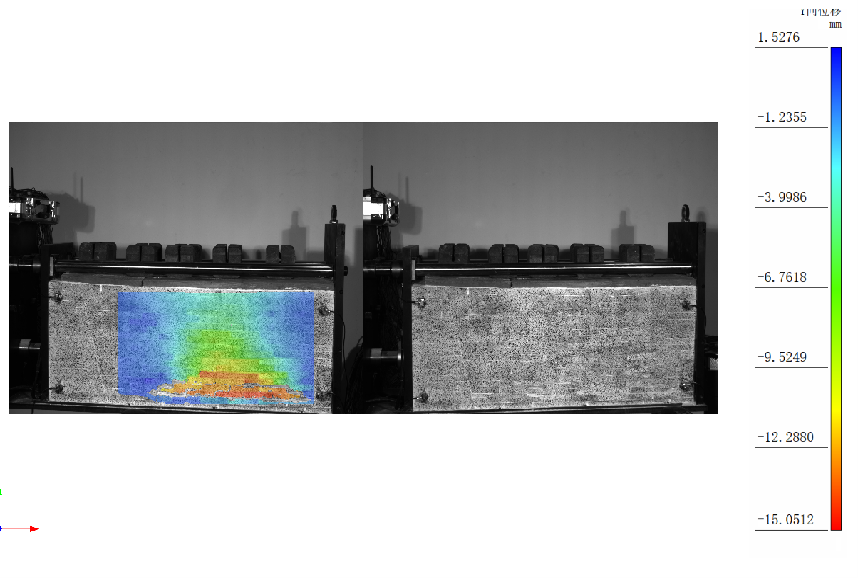
Binocular DIC technology uses two high-resolution cameras to synchronously capture the surface of the experimental specimen from different angles, and computes the 3D displacement field and strain field of the specimen by comparing surface images under different load conditions. Compared with traditional methods, the non-contact measurement of binocular DIC technology avoids the interference of sensor installation with the specimen, ensuring the completeness and accuracy of the measurement data. In addition, since DIC technology enables full-field measurement, researchers can obtain the strain distribution over the entire specimen surface and analyze stress concentration regions and potential fracture points in detail.
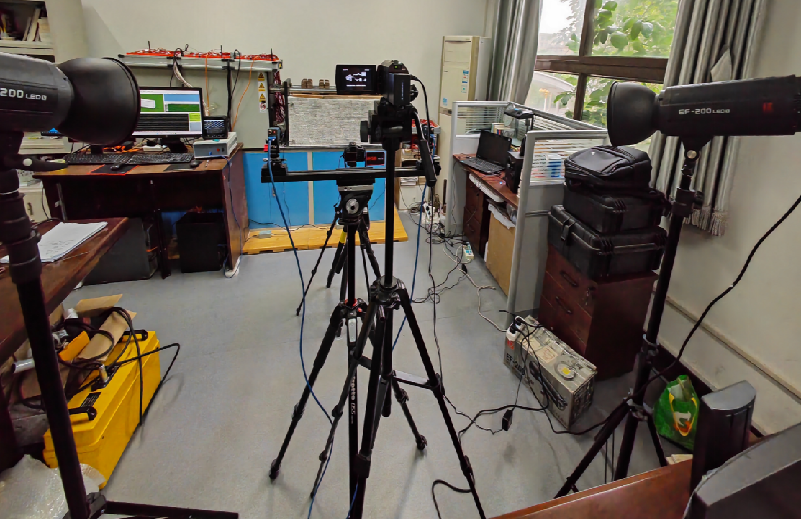
In geological mining simulation experiments, binocular DIC technology is particularly suitable for studying crack initiation and propagation. Geological materials often develop cracks due to stress concentration during mining, and the propagation of these cracks can lead to catastrophic consequences. With binocular DIC, researchers can monitor in real time key parameters such as crack formation, propagation paths, and the stress intensity factor at the crack tip. These data are of great significance for understanding rock fracture mechanisms and predicting geological hazards.
In addition, during the simulation experiment, researchers can observe the strain distribution and crack propagation on the specimen surface in real time through the visualization interface of the device. This immediate feedback mechanism not only improves experimental efficiency but also allows researchers to adjust experimental parameters in time to more accurately simulate real mining conditions.





 Downloads

