Materials Mechanics
Monocular 3D Video Extensometer



Monocular 2D Optical Strain Measurement System
Monocular 3D Optical Strain Measurement System
High-Speed Monocular 3D Optical Strain Measurement System
Stereo 3D Optical Strain Measurement System
Optical Strain Measurement System – Educational Edition
2D Optical Microscopic Strain Measurement System


Strain Measurement of Parallel Lap Welds
Residual Deformation Measurement of Drilled Welded Plates
Full-Field Strain Measurement of Weldments in Compression
Tensile Deformation Measurement of 0.3mm Fiber Filament
Unmarked Compression Deformation Measurement of Composite Materials

Deformation Measurement of Artificial Cardiac Patch
Keycap Vibration Measurement: Quantifying Press and Rebound Dynamics
Headband Deformation Measurement: Analyzing Bending Position and Unloading Recovery
High-Temperature DIC Measurement of Wafer Thermal Warpage: Quantifying Warpage vs. Temperature
UAV Dynamic Tracking Measurement: Capturing Flight Trajectory and Attitude Changes

 0755-86347753

 Cupping testVideo extensometer
The cupping test is a widely used formability test method for metallic materials. It evaluates the deep-drawing performance and local formability of the material by measuring the strain distribution and deformation behavior as the material forms a cup shape under progressively increasing punch force. Conventional test methods typically rely on physical contact measurement and can hardly provide full-field strain distribution information.
The Haytham monocular 3D video extensometer, built on its self-developed monocular 3D DIC technology, measures the surface strain of metal specimens during the cupping test in real time and without contact. Capturing specimen surface deformation through a high-resolution camera, the instrument generates accurate full-field strain distribution maps and provides detailed strain information, especially when local failure such as cracking occurs.
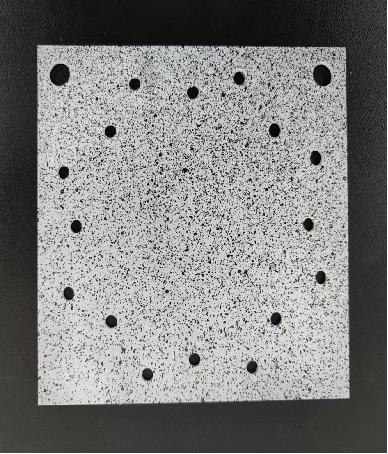
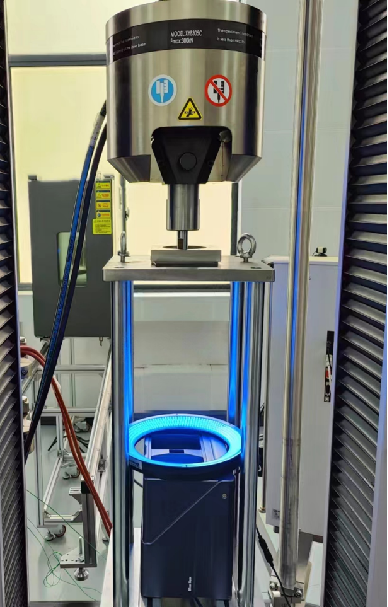
In the cupping test, the metal specimen was fixed in the test fixture while progressively increasing pressure was applied through the punch. The Haytham monocular 3D video extensometer monitored the deformation of the specimen surface in real time through its camera, recording full-field strain data during the punching process. The instrument precisely captures the strain distribution across different regions of the specimen during punching, especially the data near maximum strain and the failure point.
Analysis of the full-field strain data yields the strain distribution of the metallic material in the cupping test, which is essential for evaluating deep-drawing performance and local formability. Engineers can use these data to analyze the ultimate formability of the material, identify stress concentration regions, and predict material behavior in actual processing. In addition, full-field strain maps help improve material formulations or adjust processing methods to enhance formability and quality.





 Downloads

