Materials Mechanics
Monocular 3D Video Extensometer



Monocular 2D Optical Strain Measurement System
Monocular 3D Optical Strain Measurement System
High-Speed Monocular 3D Optical Strain Measurement System
Stereo 3D Optical Strain Measurement System
Optical Strain Measurement System – Educational Edition
2D Optical Microscopic Strain Measurement System


Strain Measurement of Parallel Lap Welds
Residual Deformation Measurement of Drilled Welded Plates
Full-Field Strain Measurement of Weldments in Compression
Tensile Deformation Measurement of 0.3mm Fiber Filament
Unmarked Compression Deformation Measurement of Composite Materials

Deformation Measurement of Artificial Cardiac Patch
Keycap Vibration Measurement: Quantifying Press and Rebound Dynamics
Headband Deformation Measurement: Analyzing Bending Position and Unloading Recovery
High-Temperature DIC Measurement of Wafer Thermal Warpage: Quantifying Warpage vs. Temperature
UAV Dynamic Tracking Measurement: Capturing Flight Trajectory and Attitude Changes

 0755-86347753

 CAEDIC system
Composite materials are widely used in aerospace, automotive manufacturing, and other fields thanks to their high strength and light weight. To optimize designs and ensure material reliability, engineers usually rely on computer-aided engineering (CAE) simulation to predict the mechanical behavior of composites under bending loads. The accuracy of CAE simulation results, however, needs to be verified with actual test data. The goal of this test was to validate the accuracy of CAE simulation through a bending experiment.
1. Testing Process
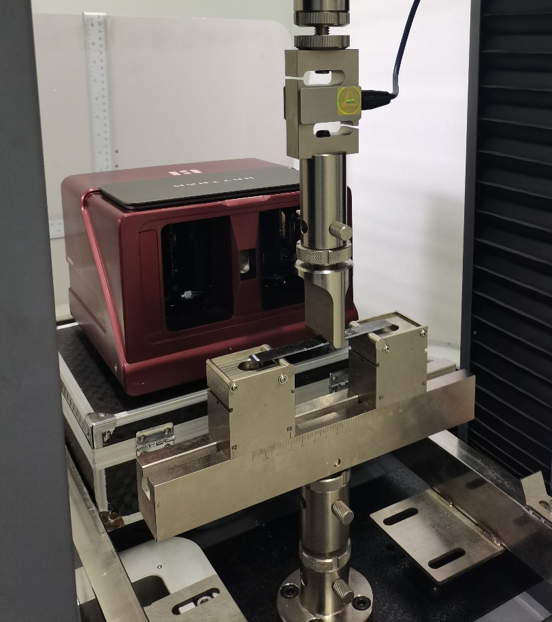
To achieve this goal, the test team used the Haytham monocular 3D visual strain gauge for the bending test of the composite. First, the composite specimen was mounted on a three-point bending fixture and the bending load was applied step by step. The strain gauge monitored the specimen surface in real time with a monocular camera and acquired the 3D strain distribution on the surface through digital image correlation (DIC) technology. During the test, the Haytham monocular 3D visual strain gauge captured the strain changes of the specimen during bending in a non-contact manner, especially the strain concentration at critical locations during loading. Unlike conventional contact sensors, the device covers the entire specimen surface and provides high-precision full-field strain data.
2. Test Results vs. CAE Simulation
After the test, the team compared the experimentally measured strain data with the CAE simulation results. The results show that the strain distribution measured by the Haytham monocular 3D visual strain gauge is highly consistent with the predictions of the CAE simulation. In particular, in the central region of bending, the strain concentration and distribution trends match the simulation data well. This validates the accuracy of the CAE model in predicting the bending behavior of composites.
In some regions, the actual test data also revealed small strain deviations, providing a reference for further optimizing the CAE model. Through this experiment, the team not only verified the reliability of the existing CAE simulation but also obtained valuable experimental data, laying a foundation for future material design and simulation improvements.
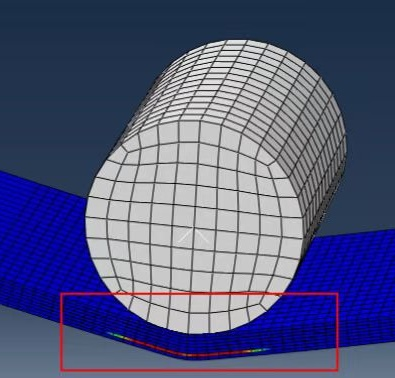
CAE simulation results
DIC measurement results





 Downloads

