Materials Mechanics
Monocular 3D Video Extensometer



Monocular 2D Optical Strain Measurement System
Monocular 3D Optical Strain Measurement System
High-Speed Monocular 3D Optical Strain Measurement System
Stereo 3D Optical Strain Measurement System
Optical Strain Measurement System – Educational Edition
2D Optical Microscopic Strain Measurement System


Strain Measurement of Parallel Lap Welds
Residual Deformation Measurement of Drilled Welded Plates
Full-Field Strain Measurement of Weldments in Compression
Tensile Deformation Measurement of 0.3mm Fiber Filament
Unmarked Compression Deformation Measurement of Composite Materials

Deformation Measurement of Artificial Cardiac Patch
Keycap Vibration Measurement: Quantifying Press and Rebound Dynamics
Headband Deformation Measurement: Analyzing Bending Position and Unloading Recovery
High-Temperature DIC Measurement of Wafer Thermal Warpage: Quantifying Warpage vs. Temperature
UAV Dynamic Tracking Measurement: Capturing Flight Trajectory and Attitude Changes

 0755-86347753

 High-temperature video extensometerHigh-temperature tensile
UHPC is a concrete material with extremely high strength and durability, widely used in bridges, buildings, and other infrastructure. However, the performance of UHPC in extreme high-temperature environments still requires in-depth research to ensure its safety and stability under extreme conditions such as fire. High-temperature tensile testing is an important means of evaluating the mechanical performance of UHPC at high temperatures, yet conventional strain measurement techniques often struggle to provide accurate and reliable data under such conditions.
The Haytham monocular 3D high-temperature video extensometer is designed specifically for high-temperature testing and can precisely measure the surface strain of materials in high-temperature environments. Adopting monocular 3D digital image correlation (DIC) technology combined with a heat-resistant optical system, it monitors the strain distribution on the specimen surface in real time and without contact under high-temperature conditions. Its high precision and high resolution allow it to capture the minute deformation of UHPC during high-temperature tension, especially the strain changes during crack formation and propagation.
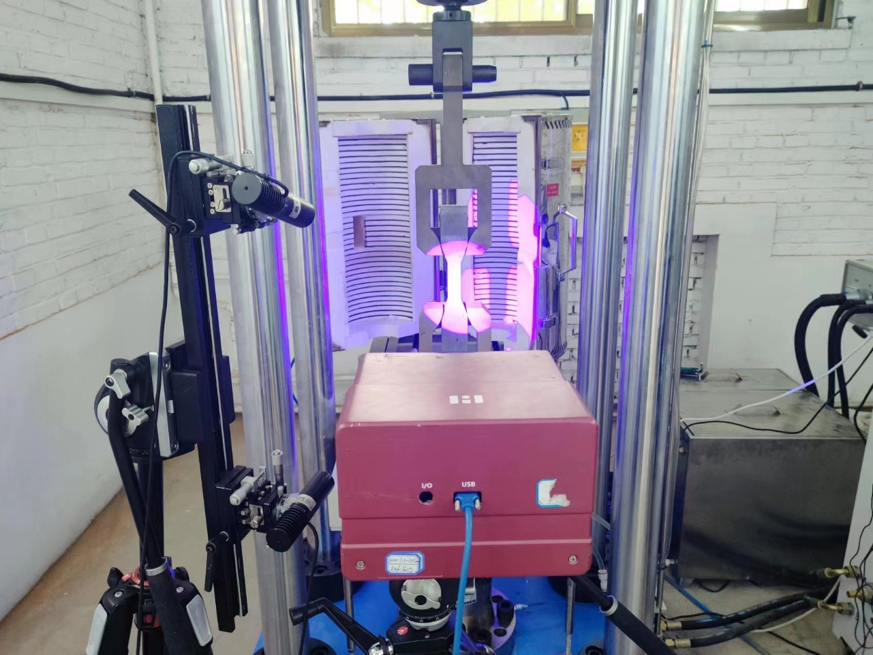
In the high-temperature tensile test of UHPC, the specimen is heated to a preset high temperature (e.g., 900°C or higher) before the tensile load is applied. The Haytham high-temperature video extensometer monitors the strain on the specimen surface in real time, capturing and recording full-field strain data as the specimen is loaded, especially the dynamic process of crack formation and propagation at high temperature.
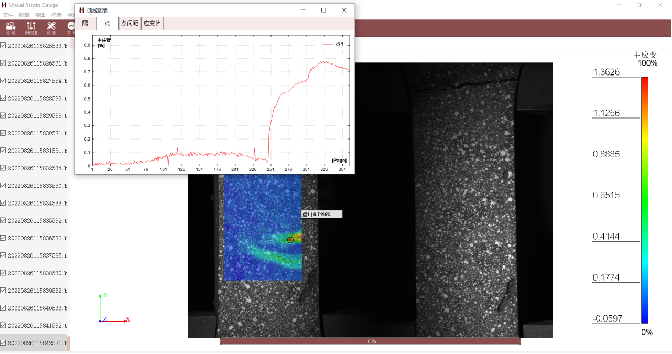

With the full-field strain data obtained from the high-temperature tensile test, engineers can analyze the mechanical performance of UHPC in high-temperature environments in detail. The strain data reveal the stress concentration regions, crack propagation paths, and final failure mode of the material. This information is of great significance for optimizing the mix design of UHPC, improving its high-temperature performance, and establishing more reliable standards for engineering applications. In addition, the data can be used to validate and improve finite element analysis models, further enhancing the safety and durability of UHPC in practical applications.





 Downloads

