Materials Mechanics
Monocular 3D Video Extensometer



Monocular 2D Optical Strain Measurement System
Monocular 3D Optical Strain Measurement System
High-Speed Monocular 3D Optical Strain Measurement System
Stereo 3D Optical Strain Measurement System
Optical Strain Measurement System – Educational Edition
2D Optical Microscopic Strain Measurement System


Strain Measurement of Parallel Lap Welds
Residual Deformation Measurement of Drilled Welded Plates
Full-Field Strain Measurement of Weldments in Compression
Tensile Deformation Measurement of 0.3mm Fiber Filament
Unmarked Compression Deformation Measurement of Composite Materials

Deformation Measurement of Artificial Cardiac Patch
Keycap Vibration Measurement: Quantifying Press and Rebound Dynamics
Headband Deformation Measurement: Analyzing Bending Position and Unloading Recovery
High-Temperature DIC Measurement of Wafer Thermal Warpage: Quantifying Warpage vs. Temperature
UAV Dynamic Tracking Measurement: Capturing Flight Trajectory and Attitude Changes

 0755-86347753

 DIC technologyFatigue crack propagation analysis
During long-term use, bone cement is subjected to repeated mechanical loads and is prone to fatigue crack propagation. The propagation process of these cracks and the strain concentration at the crack tip directly affect the service life of the bone cement and the stability of the implant. Traditional measurement methods make it difficult to fully observe the dynamic propagation of cracks, whereas DIC technology, through high-precision image processing, enables real-time, full-field monitoring of crack propagation.
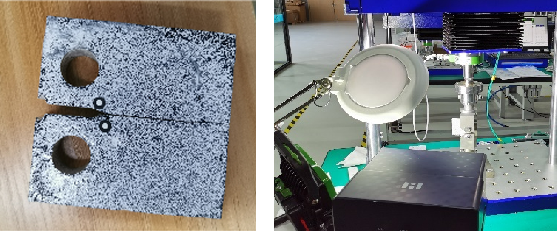
In this experiment, Haytham DIC technology was applied to fatigue crack propagation testing of bone cement CT specimens. During the experiment, the specimen was subjected to repeated loading, and DIC technology captured the strain changes on the specimen surface during loading through continuous imaging, especially the concentrated strain distribution at the crack tip, successfully achieving the following key objectives:
1. Real-time monitoring of crack propagation: DIC technology precisely recorded the entire process of the fatigue crack from initiation to propagation. Through continuous strain field images, the researchers could clearly see the crack gradually extending from a tiny initiation point into the material, capturing changes in the crack propagation rate and direction.
2. Crack tip strain concentration analysis: DIC technology provided strain concentration data for the crack tip region, revealing the changes in stress distribution around the crack. These data provide a scientific basis for predicting the crack propagation path and further evaluating the fatigue performance of bone cement materials.
3. Material fatigue life assessment: By observing the crack propagation behavior under different stress levels, DIC technology helped the researchers more accurately evaluate the fatigue life of the bone cement, providing reliable data support for its safety and stability in clinical applications.





 Downloads

