Materials Mechanics
Monocular 3D Video Extensometer



Monocular 2D Optical Strain Measurement System
Monocular 3D Optical Strain Measurement System
High-Speed Monocular 3D Optical Strain Measurement System
Stereo 3D Optical Strain Measurement System
Optical Strain Measurement System – Educational Edition
2D Optical Microscopic Strain Measurement System


Strain Measurement of Parallel Lap Welds
Residual Deformation Measurement of Drilled Welded Plates
Full-Field Strain Measurement of Weldments in Compression
Tensile Deformation Measurement of 0.3mm Fiber Filament
Unmarked Compression Deformation Measurement of Composite Materials

Deformation Measurement of Artificial Cardiac Patch
Keycap Vibration Measurement: Quantifying Press and Rebound Dynamics
Headband Deformation Measurement: Analyzing Bending Position and Unloading Recovery
High-Temperature DIC Measurement of Wafer Thermal Warpage: Quantifying Warpage vs. Temperature
UAV Dynamic Tracking Measurement: Capturing Flight Trajectory and Attitude Changes

 0755-86347753

 Rail simulation fatigueDIC technology
Simulated rail fatigue tests usually last a long time and involve a large number of loading cycles, and damage changes often do not appear instantaneously but accumulate and emerge gradually during repeated loading. For such tests, the concern is not only the data results at a given moment, but also the evolution trajectory of the structure throughout the loading process, as well as where the anomaly starts and how it develops step by step.

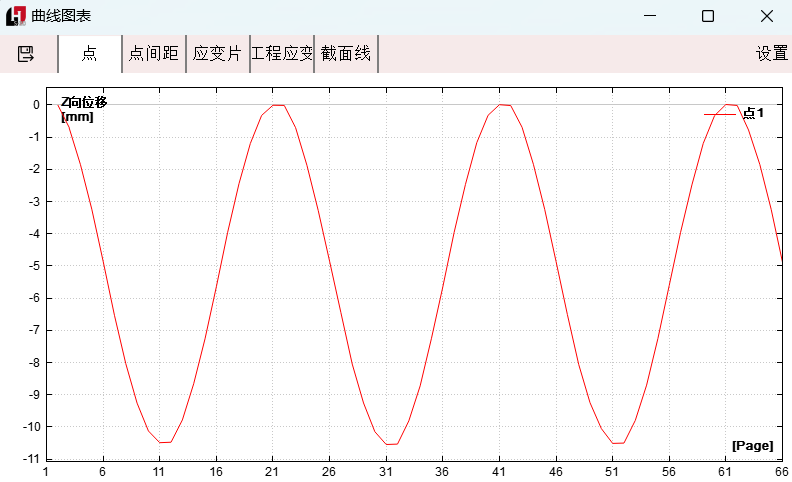
Traditional testing methods can record data at key locations and have practical value for acquiring the response at specific points. However, when the test object involves longer sections or different cross-sections, or when the evolution of the anomalous region needs to be observed, discrete point data alone often need to be supplemented with more measurement points and subsequent analysis for cross-checking. Especially when the damage development path is not fully determined, the continuous variation information between cross-sections often deserves more attention.
Haytham DICContinuous acquisition throughout the entire test process not only records the result data of key stages, but also completely preserves the process of damage initiation, propagation and evolution along the time axis. For local anomalies, deformation concentration or damage propagation trends appearing during the test, such process data provide a more continuous basis for observation, helping researchers extend from single-point results to an understanding of the overall change process.
In the subsequent analysis stage, these process data preserved along the time axis provide a more intuitive reference. On the one hand, they make it easy to review the changes at different stages for before-and-after comparison; on the other hand, they also help conduct more detailed retrospective analysis in combination with the test results, supporting the subsequent characterization of structural response, optimization of the test plan, and refinement of the analytical conclusions.





 Downloads

