Materials Mechanics
Monocular 3D Video Extensometer



Monocular 2D Optical Strain Measurement System
Monocular 3D Optical Strain Measurement System
High-Speed Monocular 3D Optical Strain Measurement System
Stereo 3D Optical Strain Measurement System
Optical Strain Measurement System – Educational Edition
2D Optical Microscopic Strain Measurement System


Strain Measurement of Parallel Lap Welds
Residual Deformation Measurement of Drilled Welded Plates
Full-Field Strain Measurement of Weldments in Compression
Tensile Deformation Measurement of 0.3mm Fiber Filament
Unmarked Compression Deformation Measurement of Composite Materials

Deformation Measurement of Artificial Cardiac Patch
Keycap Vibration Measurement: Quantifying Press and Rebound Dynamics
Headband Deformation Measurement: Analyzing Bending Position and Unloading Recovery
High-Temperature DIC Measurement of Wafer Thermal Warpage: Quantifying Warpage vs. Temperature
UAV Dynamic Tracking Measurement: Capturing Flight Trajectory and Attitude Changes

 0755-86347753

 DIC technologyFull-field strain measurement
Sneakers are no longer just footwear — they are a key booster of athletic performance. Making sneakers comfortable, durable, and able to withstand intense movements is a major challenge for designers. Today, DIC (digital image correlation) technology offers a brand-new approach to sneaker design: it precisely captures the dynamic behavior of shoes during motion, providing a reliable basis for design optimization.
1. Preparation: mark key areas and prepare the equipment
(1) Sample selection: sneakers of different designs, sizes, and uses were chosen to make the test comprehensive and representative.

(2) Marking key areas: high-contrast speckles were applied to the sole, upper, and cushioning layer to provide observation coordinates for the DIC system.

(3) Equipment setup: a high-speed camera paired withHaytham's monocular 3D DIC system, ready to precisely capture every moment of the shoe's deformation.

2. Test execution
(1) Simulated sports environment: the marked sneakers were worn while running on a treadmill, or tested dynamically through jumping.
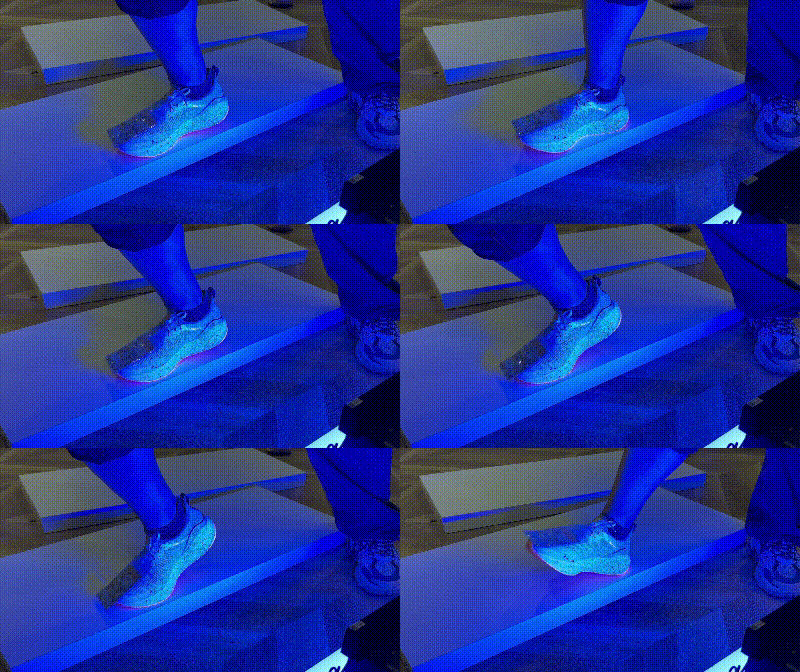
(2) Recording deformation data: continuous images captured by the high-speed camera recorded the shoe's dynamic behavior in various states of motion.
3. Data analysis
(1) Locating high-stress areas: analyzing foot-ground contact points and upper bending zones to identify areas of stress concentration or excessive deformation.
(2) Data-driven optimization: sole cushioning, upper fit, and even shoe durability can all be improved based on the data.
Test result — support performance of the shoe last (Y-direction displacement)
Test result — sole cushioning performance (point spacing)
DIC technology not only solves problems but also helps R&D teams explore new directions.
1. Filling the gaps: sneakers that better fit your feet
Through dynamic data analysis, R&D teams can precisely evaluate the performance of sneakers:
▪ Cushioning and abrasion resistance: does the sole absorb impact effectively and stay durable without premature failure?
▪ Support and fit: does the upper maintain sufficient support during intense exercise without squeezing the feet?
These data free designers from relying on experience or trial and error, pointing straight to the core of the problem.
2. Building an accelerator for iterative upgrades
▪ Material innovation: DIC verifies the actual performance of new materials, such as whether flexibility and hardness meet targets.
▪ Structural optimization: sole thickness, bending point location, and overall load distribution can all be fine-tuned with data.
▪ Competitive analysis: comparing strain data across brands to identify design differences and drive innovation.
3. Driving the future of customization and precision design
In the future, consumers may use foot-shape data and DIC technology to customize shoes that best fit their personal needs.From professional athletes to everyday runners, every pair of shoes can meet user needs with optimal performance.





 Downloads

