Materials Mechanics
Monocular 3D Video Extensometer



Monocular 2D Optical Strain Measurement System
Monocular 3D Optical Strain Measurement System
High-Speed Monocular 3D Optical Strain Measurement System
Stereo 3D Optical Strain Measurement System
Optical Strain Measurement System – Educational Edition
2D Optical Microscopic Strain Measurement System


Strain Measurement of Parallel Lap Welds
Residual Deformation Measurement of Drilled Welded Plates
Full-Field Strain Measurement of Weldments in Compression
Tensile Deformation Measurement of 0.3mm Fiber Filament
Unmarked Compression Deformation Measurement of Composite Materials

Deformation Measurement of Artificial Cardiac Patch
Keycap Vibration Measurement: Quantifying Press and Rebound Dynamics
Headband Deformation Measurement: Analyzing Bending Position and Unloading Recovery
High-Temperature DIC Measurement of Wafer Thermal Warpage: Quantifying Warpage vs. Temperature
UAV Dynamic Tracking Measurement: Capturing Flight Trajectory and Attitude Changes

 0755-86347753

 Hopkinson bar testDIC technology
In high-speed dynamics research, split Hopkinson pressure bar (SHPB) tests often face measurement challenges: material deformation occurs within microsecond time windows, space around the specimen is limited, and loading is sudden and energy-concentrated.
Conventional strain gauges are bandwidth-limited and struggle to fully record high-speed deformation. Although binocular high-speed DIC offers non-contact measurement, it imposes significant engineering constraints in setup, synchronization, and calibration, and is not easy to exploit fully in the compact SHPB environment.
In real test tasks, Haytham's monocular 3D high-speed DIC adapts better to the spatial and temporal characteristics of such tests, providing a stable technical route for recording high-speed material deformation.
01 | Single-camera imaging reduces synchronization error
SHPB loading occurs on a microsecond time scale and is highly sensitive to time synchronization. Dual-camera systems require high-precision synchronization; even a tiny phase offset can show up in strain curve continuity.
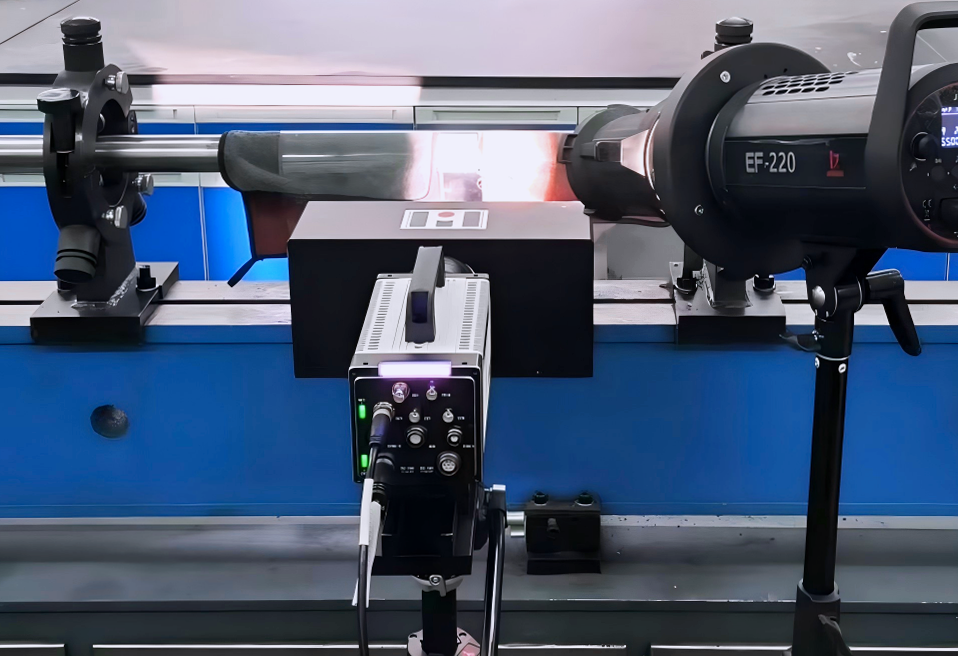
Monocular 3D high-speed DIC acquires images from a single high-speed camera with a unified time base, making it better at stably capturing rapid deformation behaviors such as necking and local damage.
02 | Low space requirements make setup easier
The incident and transmitter bars occupy much of the space around the specimen; the viewing angle and field overlap required by binocular systems are often hard to achieve in real setups.
A monocular system needs only one viewing angle and can place its imaging path closer to the specimen; installation is more straightforward, fitting SHPB platforms with limited windows or fixed structures.

03 | No binocular calibration reduces uncertainty from environmental disturbance
High-speed test platforms often involve vibration, temperature fluctuation, and airflow disturbance, under which binocular calibration tends to drift.
Monocular 3D high-speed DIC does not rely on binocular calibration, reducing data errors caused by unstable calibration and helping improve data consistency between repeated tests.
04 | A single coordinate system better suits high-speed and high-frequency vibration environments
Binocular 3D reconstruction depends on a stable geometric relationship between two cameras; slight vibration or thermal drift can degrade reconstruction accuracy.
The monocular approach is based on a single coordinate system, less affected by external geometric disturbance, and maintains reconstruction stability more easily under high-frequency dynamic loads.
05 | Captures the complete deformation process, complementing conventional point measurement
In SHPB tests, materials often show local details such as necking migration, local strain concentration, crack initiation and propagation, and out-of-plane deformation — phenomena that point sensors cannot fully capture.
Monocular 3D high-speed DICOutput of full-field displacement and strain distributions provides richer experimental evidence for material dynamics analysis.
01 | SHPB impact test on PU material
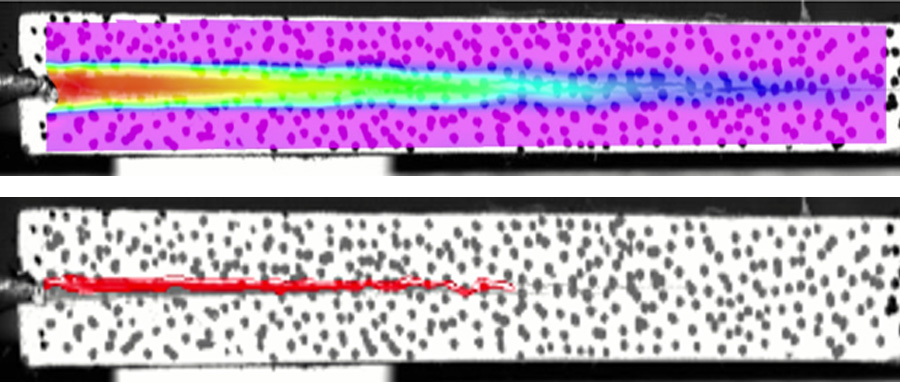
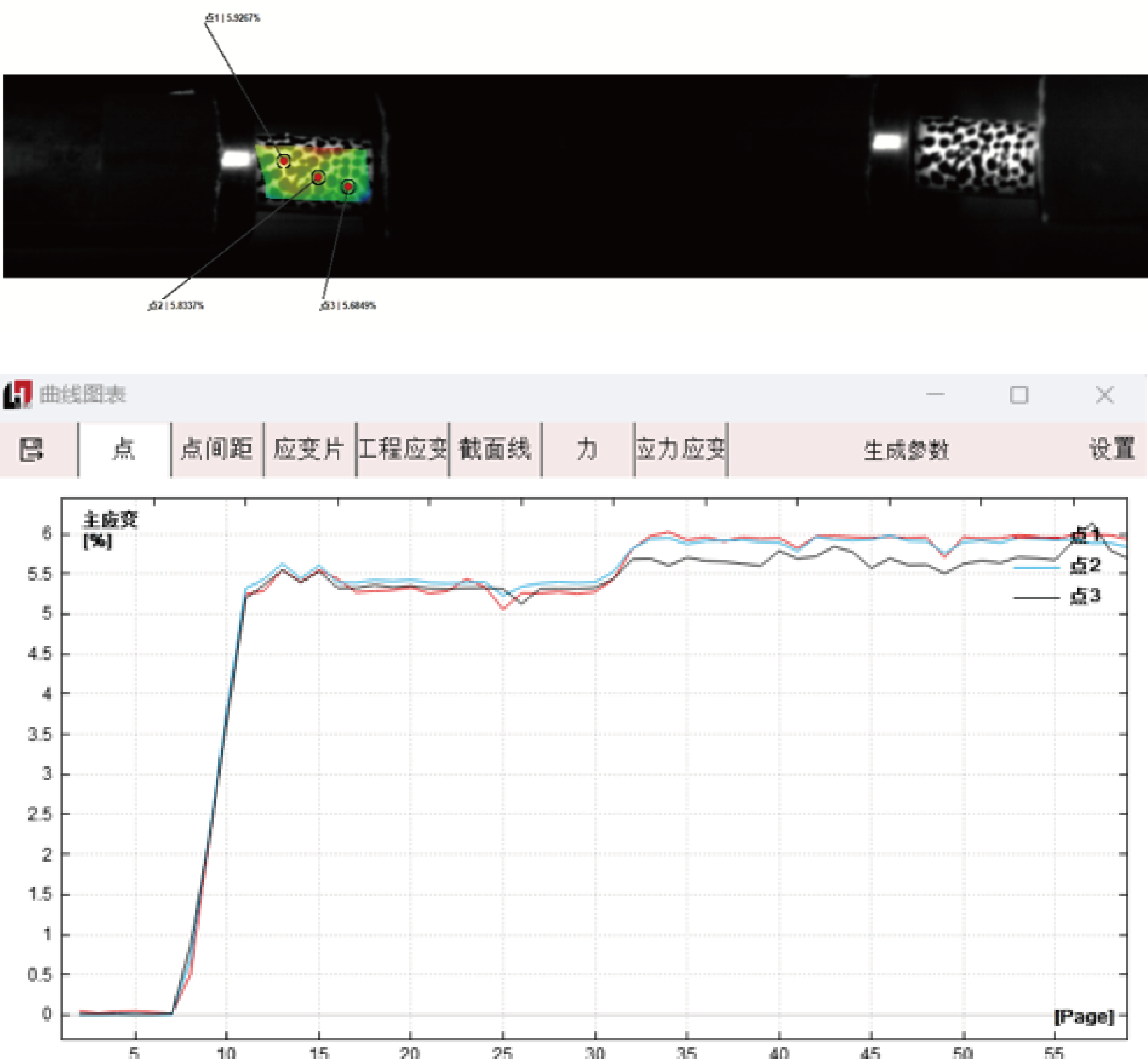
02 | SHPB impact test on titanium alloy
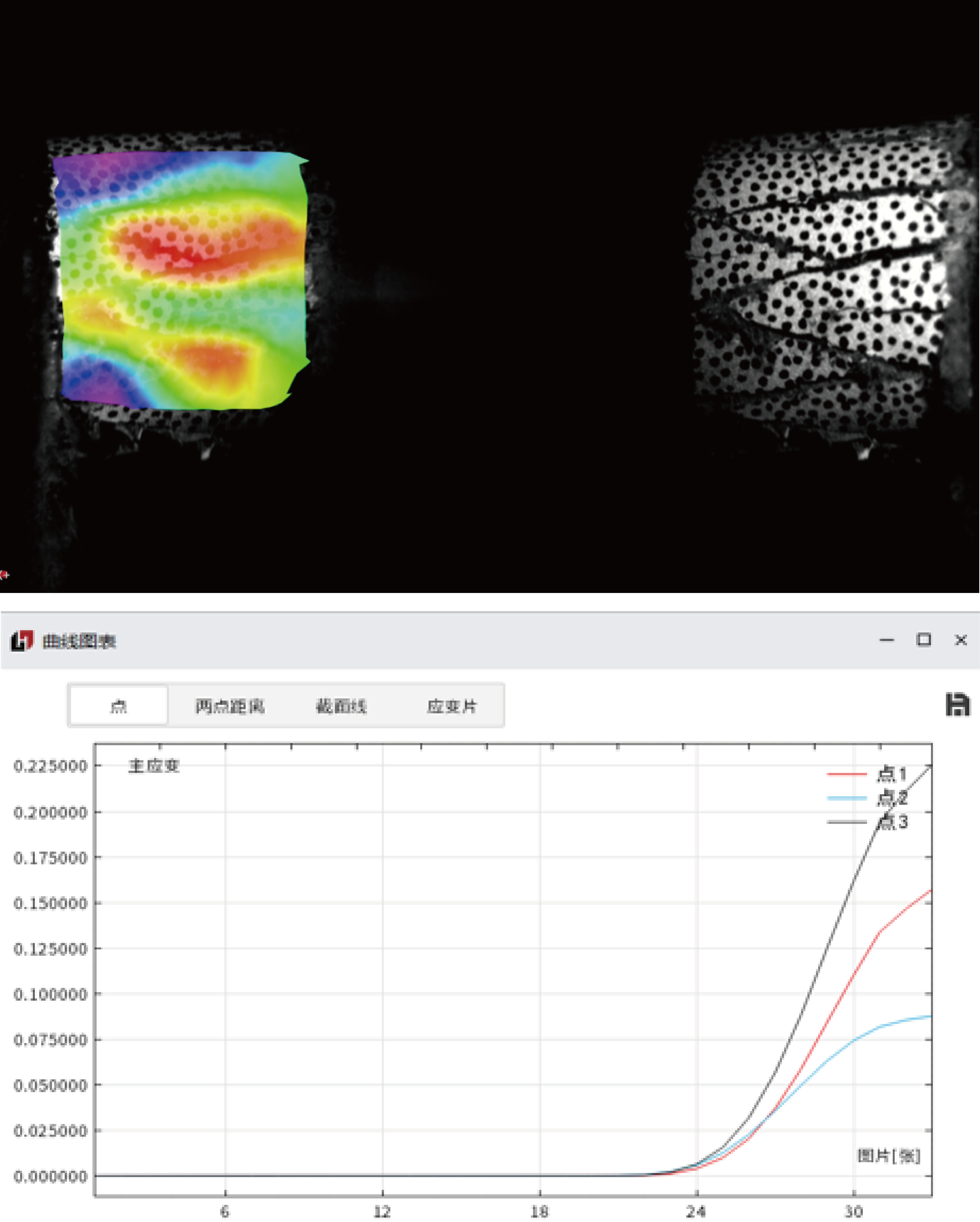
03 | SHPB impact and fragmentation test on rock
04 | SHPB high-speed tensile test on alloy
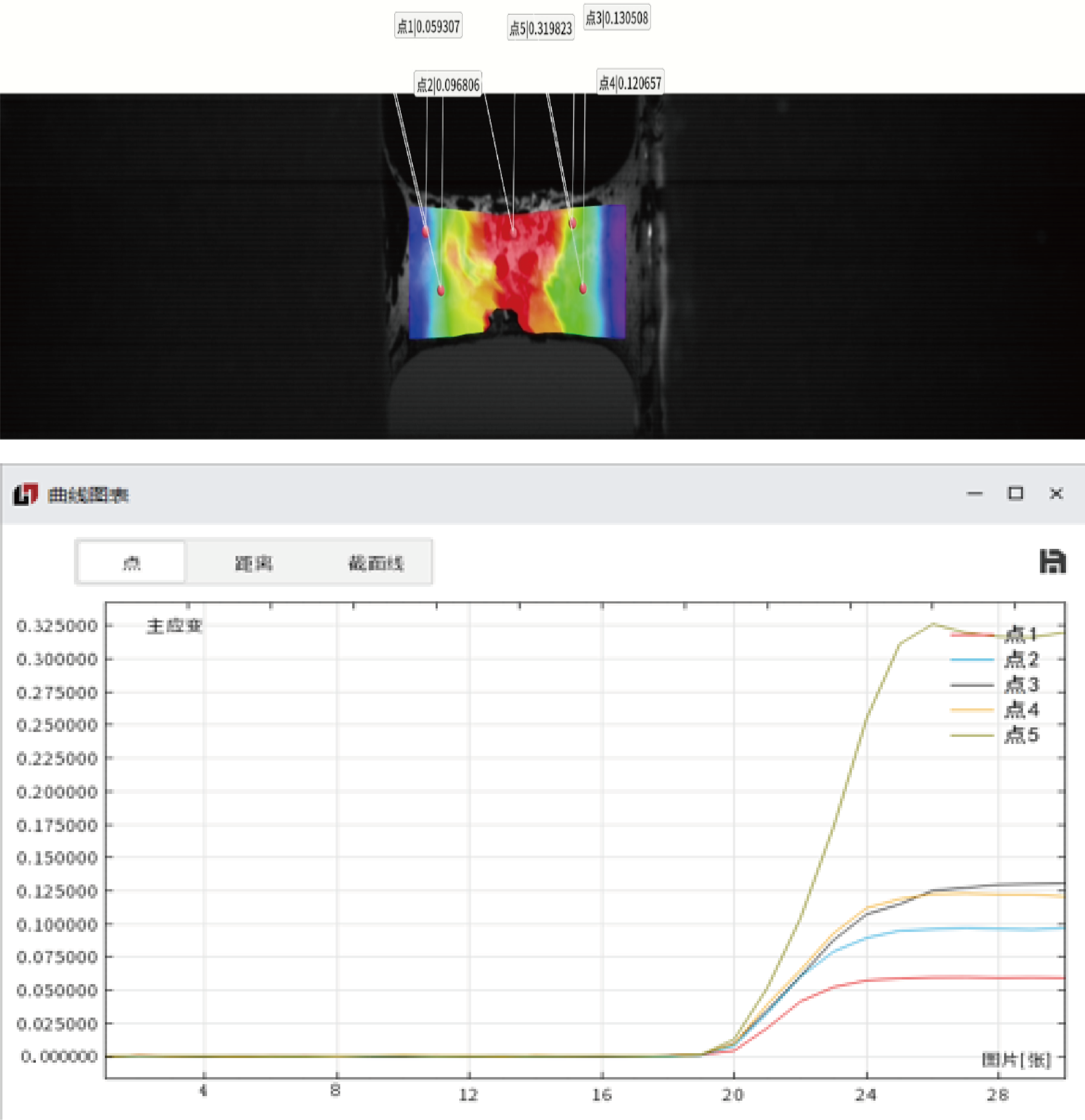
Beyond SHPB impact tests, Haytham's monocular 3D high-speed DIC is also used in drop-weight impact, high-speed vibration, rotational deformation, explosive loading, high-speed wind tunnels, pendulum impact, and other scenarios, offering flexible imaging solutions for high-speed testing of different material systems.





 Downloads

