Materials Mechanics
Monocular 3D Video Extensometer



Monocular 2D Optical Strain Measurement System
Monocular 3D Optical Strain Measurement System
High-Speed Monocular 3D Optical Strain Measurement System
Stereo 3D Optical Strain Measurement System
Optical Strain Measurement System – Educational Edition
2D Optical Microscopic Strain Measurement System


Strain Measurement of Parallel Lap Welds
Residual Deformation Measurement of Drilled Welded Plates
Full-Field Strain Measurement of Weldments in Compression
Tensile Deformation Measurement of 0.3mm Fiber Filament
Unmarked Compression Deformation Measurement of Composite Materials

Deformation Measurement of Artificial Cardiac Patch
Keycap Vibration Measurement: Quantifying Press and Rebound Dynamics
Headband Deformation Measurement: Analyzing Bending Position and Unloading Recovery
High-Temperature DIC Measurement of Wafer Thermal Warpage: Quantifying Warpage vs. Temperature
UAV Dynamic Tracking Measurement: Capturing Flight Trajectory and Attitude Changes

 0755-86347753

 Structural safety monitoringStructural health online monitoring
The Haytham visual tracker solves the pain point that traditional sensing methods are difficult to apply to ancient buildings. With the deployment advantages of non-contact operation, long-distance capability and no need for attachment, the device requires no sensors or cables to be installed on the surface of ancient buildings, effectively reducing construction risks and avoiding disturbance to the historic structure itself.
visual trackerBased on the oblique optical axis DIC imaging principle and subpixel-level positioning algorithms, it can precisely track the tiny displacements of elevated structural nodes such as the pagoda finial and door frames, providing high-precision and continuous measurement data. In actual deployment, detachable passive targets only need to be placed in areas that do not interfere with the structure to achieve long-distance observation. The solution offers good reversibility, flexibility and maintainability, achieving both "clear visibility" and "zero disturbance".
In the online monitoring project of the wooden pagoda, Haytham online visual trackerachieved long-term stable operation under the complex climate of the plateau region, continuously outputting high-precision structural displacement data and laying a solid foundation for subsequent risk identification and evolution trend analysis.
The area where the pagoda is located features large day-night temperature differences, frequent wind and sand, and strong sunlight. The online visual tracker is equipped with temperature-humidity and attitude sensing modules, and combined with algorithm optimizations such as fog-penetrating fill light, temperature compensation, strong light suppression and turbulence correction, it ensures stable image recognition and uninterrupted data collection even under conditions such as low temperature in the early morning, strong light in the afternoon, and rain or fog interference.
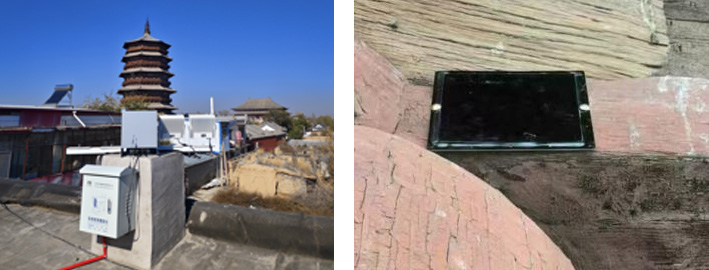
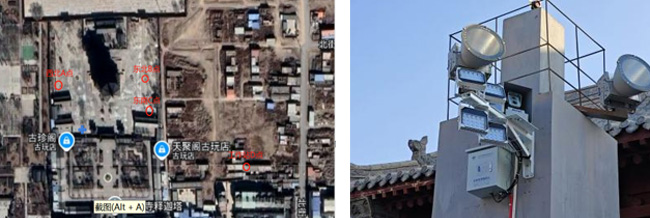
Through real-time observation of multiple key targets, the system captured:
The maximum horizontal displacement amplitude was about 8mm, occurring in the pagoda finial area and largely affected by wind loads; the deformation amplitude is in line with expectations for the response of an elevated structure.
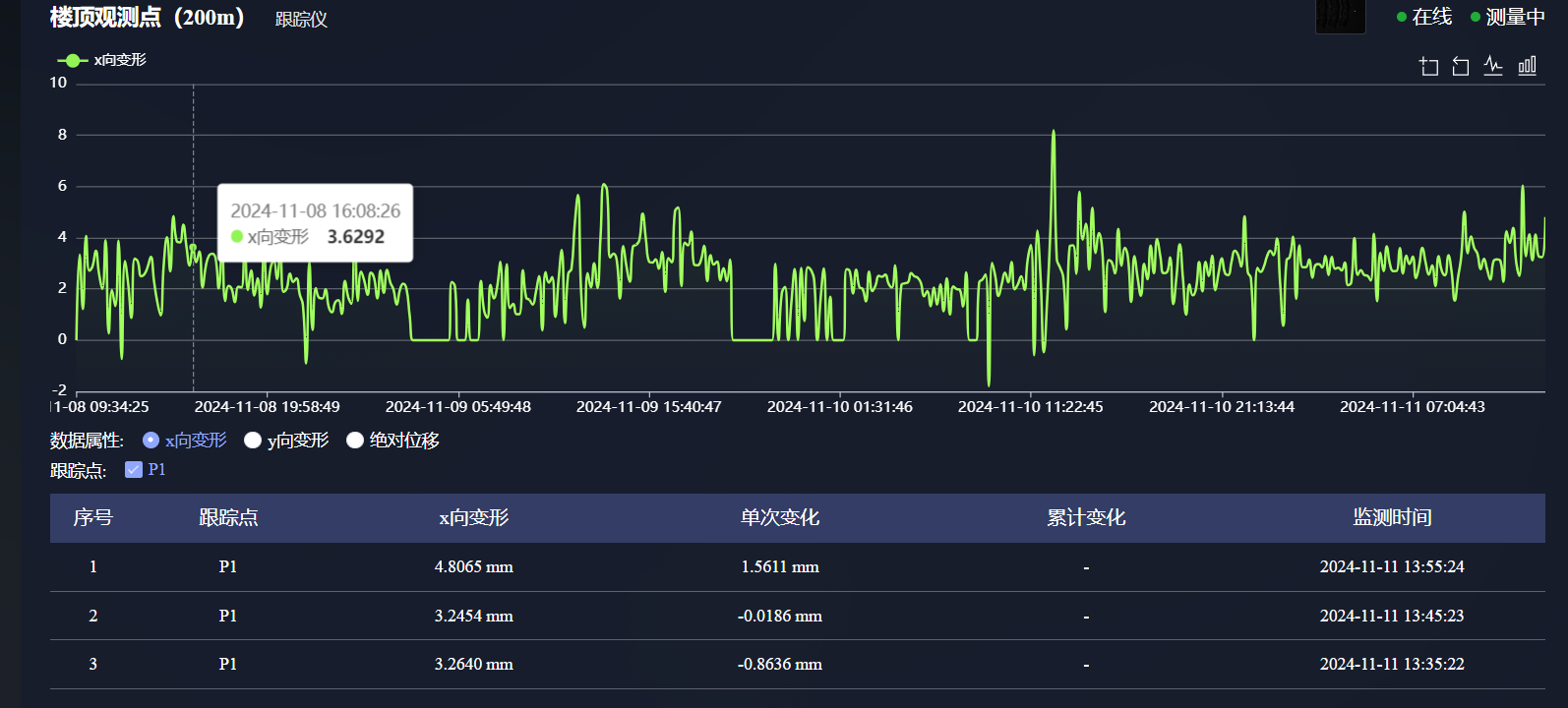
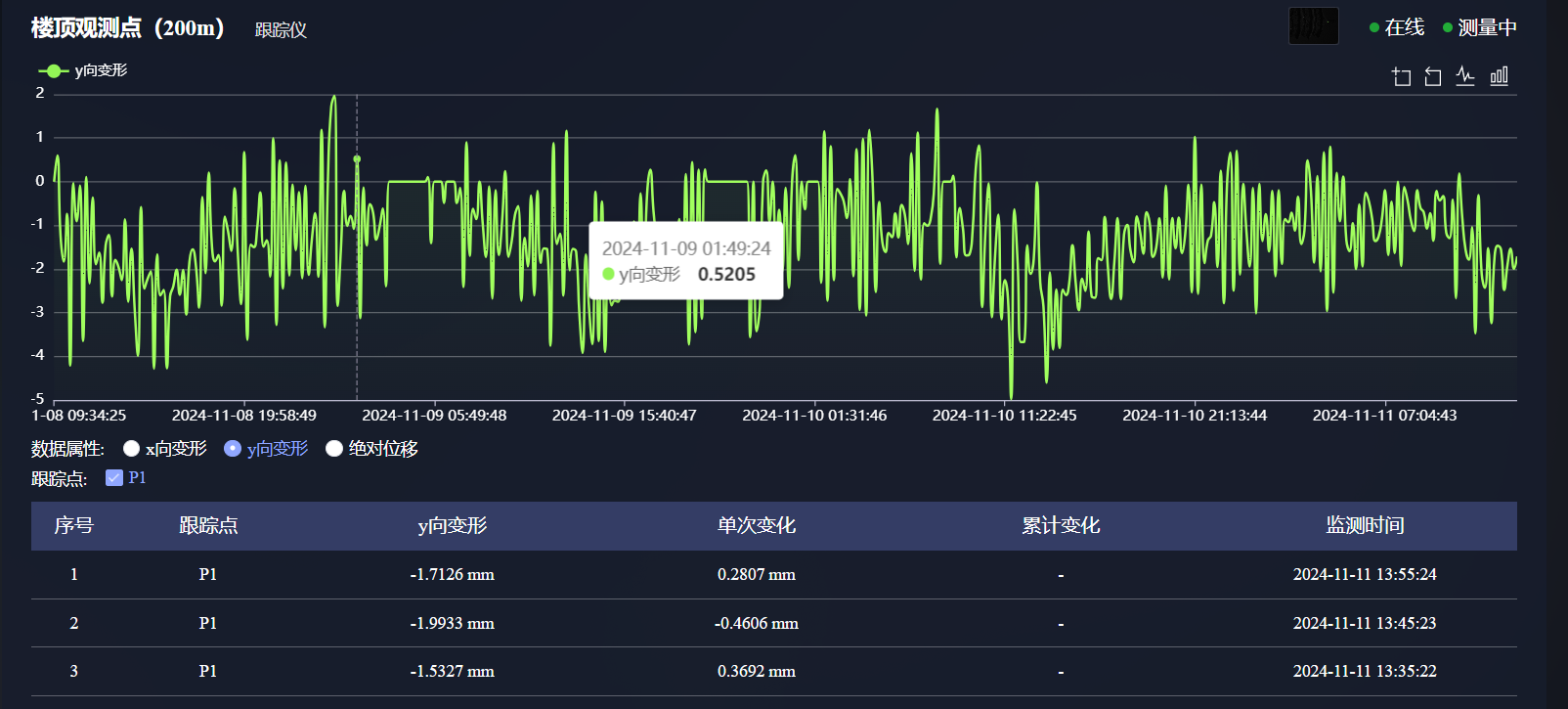
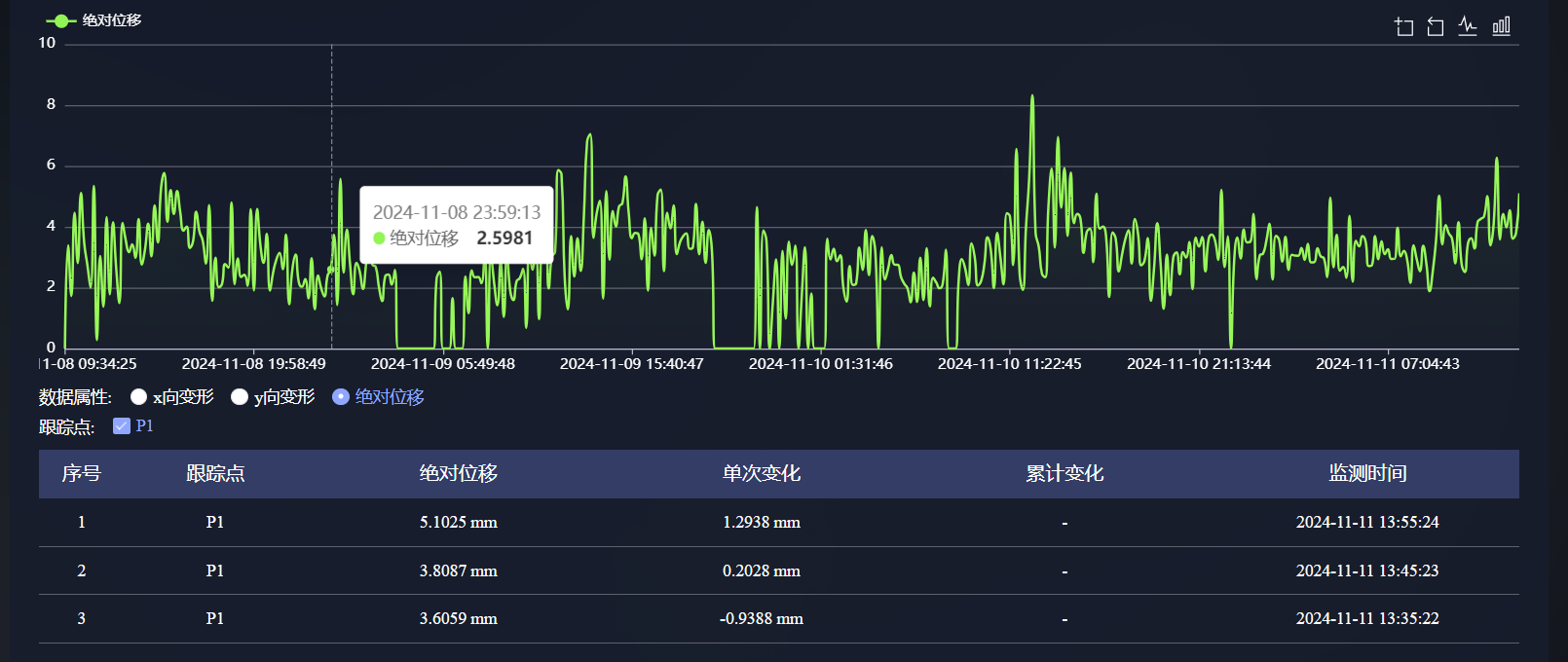
Data sampling is carried out stably at 10-minute intervals, and combined with an anomaly monitoring mechanism: when displacement changes exceed the set threshold, the observation frequency and data recording intensity can be automatically increased. Through its all-weather operation mechanism, the system synchronously uploads data to the Haytham safety monitoring cloud platform, supporting trend analysis, historical comparison and automatic alerts, and helping managers achieve closed-loop management from data collection to risk assessment.
In addition, the panoramic camera module of the system can be linked to record on-site images and environmental parameters when monitoring anomalies occur, forming event logs to assist subsequent analysis and management decisions.
This solution has effectively supported the continuous observation needs of the pagoda's upper structures. While reducing the frequency of manual inspections and avoiding the risks of climbing the pagoda, it has also proven its practicality and data value as a stable, non-contact long-term observation system suitable for ancient building scenarios.





 Downloads

