Materials Mechanics
Monocular 3D Video Extensometer



Monocular 2D Optical Strain Measurement System
Monocular 3D Optical Strain Measurement System
High-Speed Monocular 3D Optical Strain Measurement System
Stereo 3D Optical Strain Measurement System
Optical Strain Measurement System – Educational Edition
2D Optical Microscopic Strain Measurement System


Strain Measurement of Parallel Lap Welds
Residual Deformation Measurement of Drilled Welded Plates
Full-Field Strain Measurement of Weldments in Compression
Tensile Deformation Measurement of 0.3mm Fiber Filament
Unmarked Compression Deformation Measurement of Composite Materials

Deformation Measurement of Artificial Cardiac Patch
Keycap Vibration Measurement: Quantifying Press and Rebound Dynamics
Headband Deformation Measurement: Analyzing Bending Position and Unloading Recovery
High-Temperature DIC Measurement of Wafer Thermal Warpage: Quantifying Warpage vs. Temperature
UAV Dynamic Tracking Measurement: Capturing Flight Trajectory and Attitude Changes

 0755-86347753

Published: 2024-08-30
Overview: Recently, the research group of Prof. Bing Pan (Beihang University), chief scientist of Haytham Technology, made important progress in intelligent, fully automatic and precise digital image correlation algorithms. The results, titled Smart DIC: user-independent, accurate and precise DIC measurement with self-adaptively selected optimal calculation parameters, were published in Mechanical Systems and Signal Processing (MSSP), a top international journal in engineering technology. The research was funded by the National Natural Science Foundation of China, the State Key Laboratory of Strength and Structural Integrity, and Shenzhen Haytham Technology Co., Ltd.
Figure 1 Paper cover
Digital image correlation method (Digital Image Correlation, DIC) is the most practical and most widely used non-contact full-field deformation measurement method in experimental mechanics, widely applied in solid mechanics, materials science, aerospace, civil engineering and other research and engineering fields. DIC obtains the full-field displacement and strain of the surface by analyzing digital images of the measured object before and after deformation. In the current mainstream subset-based local DIC algorithms, to precisely track the image displacement of each calculation point, a correlation function describing the similarity of the subsets before and after deformation must first be defined, and users must manually select key calculation parameters — the subset size and the shape function — then use an optimization algorithm to nonlinearly optimize the correlation function to compute the image displacement of each point. However, existing commercial or laboratory DIC software requires users to set these key calculation parameters; lacking clear guidance, different parameter choices lead to different measurement results, creating ambiguity in the final DIC measurement.
Research shows that the choice of these key calculation parameters needs to consider the speckle quality of the specimen surface and the local deformation of the specimen, so the optimal calculation parameters required by each calculation point in actual DIC computation are not consistent, and the optimal parameters must be selected individually for each point. Therefore, how to achieve adaptive selection of optimal calculation parameters has become a key unsolved problem in adaptive, precise DIC measurement.
To address this problem, the paper proposes a simple and efficient Smart-DIC method to achieve fully automatic selection of subset size and shape function order, based on theoretical formulas for the random error and under-matching systematic error in DIC matching. Based on minimizing the Mean Absolute Error (MAE), an explicit formula for the optimal subset size is derived (the displacement gradient reflecting the local deformation level in the formula is determined by trial DIC computation), and the optimal subset size is determined for each calculation point in the full field using this formula. Since speckle quality and local specimen deformation are fully considered, the method can effectively obtain the optimal subset size in different measurement scenarios. In addition, the method combines the previously proposed speckle quality evaluation method based on the Sum of Square Subset Intensity Gradients (SSSIG) to determine the initial subset size and selection range, avoiding manual selection during trial DIC computation and ensuring the stability and automation of the Smart-DIC computation.
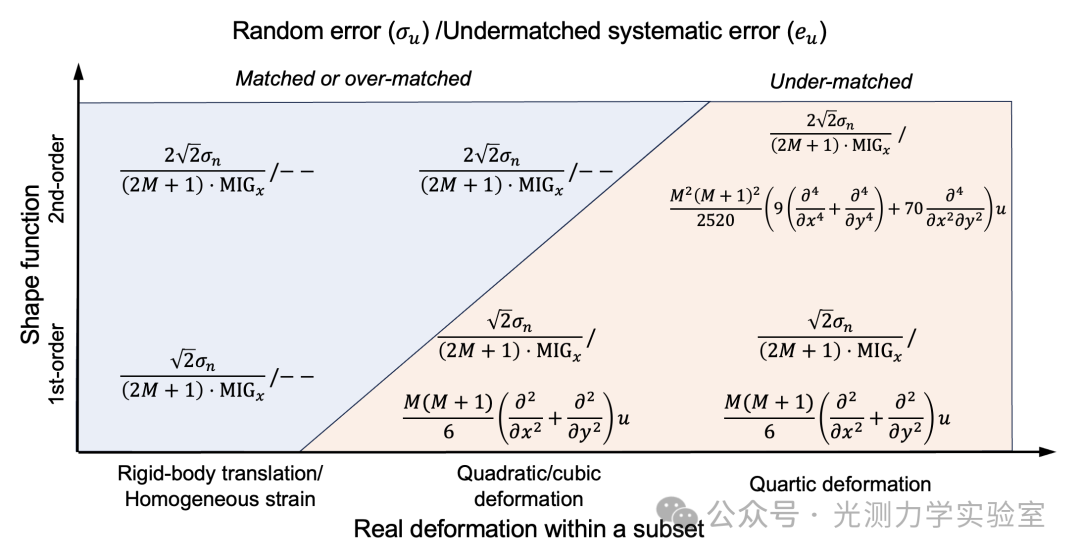
Figure 2. Estimation formulas for random error and under-matching systematic error in DIC matching
The concrete implementation includes three main steps: 1) perform trial DIC computation with the initial subset size determined by the SSSIG threshold, and estimate the parameters in the theoretical error formulas (such as camera noise, mean grayscale gradient and displacement gradient); 2) determine the optimal subset size and shape function using the explicit formula for the optimal subset; 3) optimize the displacement measurement results of each calculation point with the optimal subset size and shape function to obtain the optimized full-field displacement results.
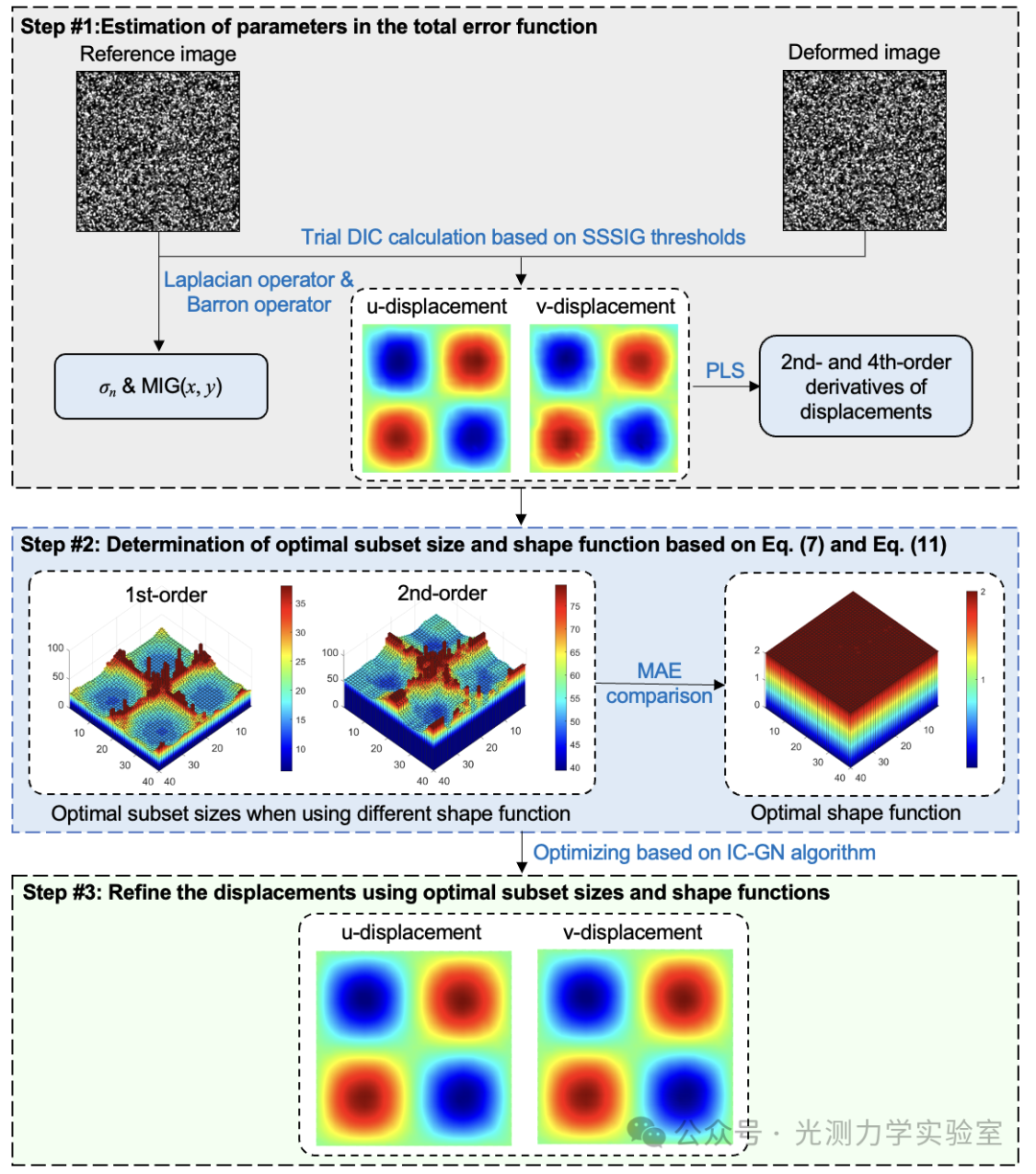
Figure 3. Schematic of the Smart-DIC computation process
Numerical simulation experiments based on the public DIC challenge dataset and real experiments measuring PLC bands in commercial aluminum alloy both verified the effectiveness and outstanding advantages of Smart-DIC in complex deformation measurement.
■ Numerical experiment - complex deformation
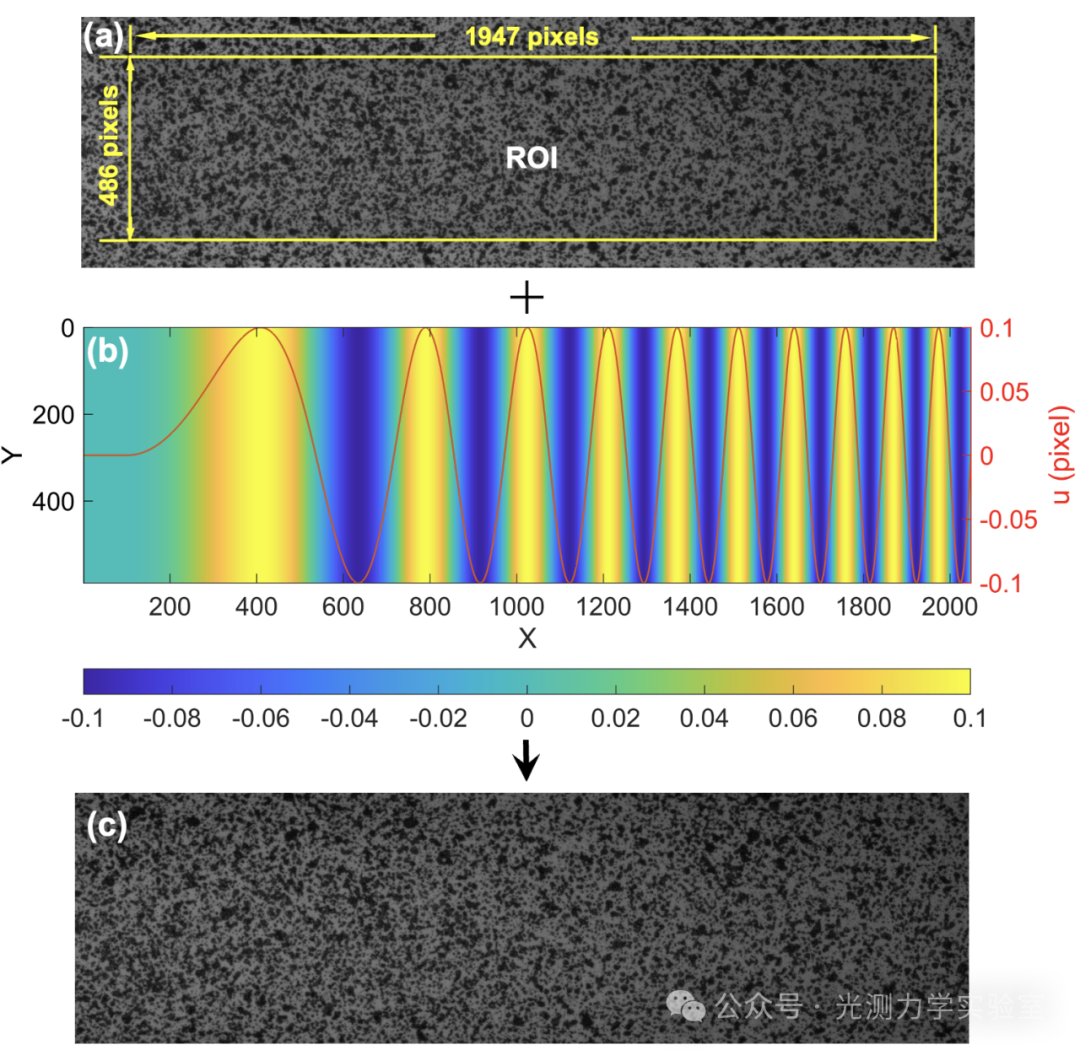
Figure 4. Schematic of speckle image generation in the numerical experiment
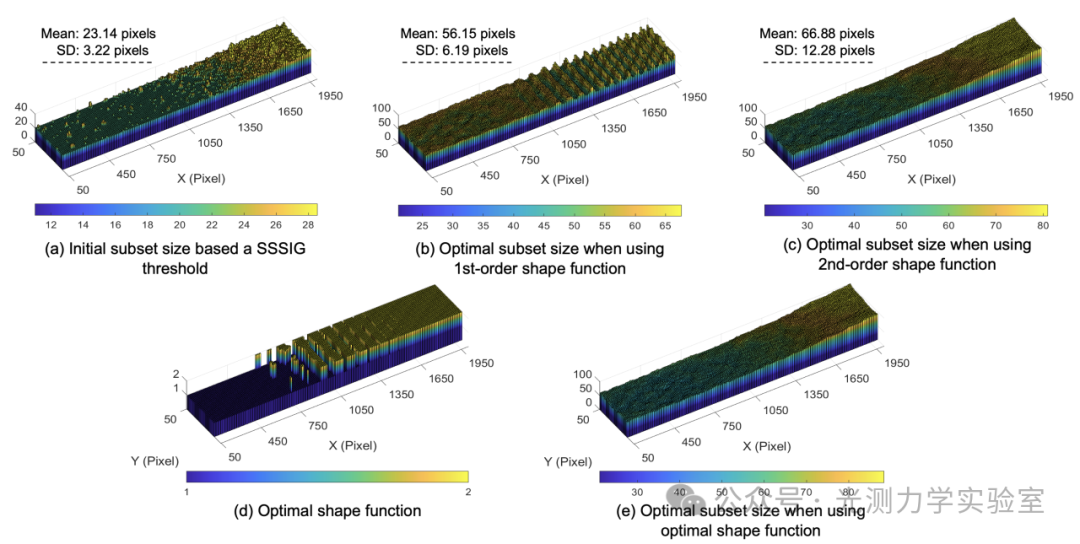
Figure 5. Distribution of optimal calculation parameters selected by Smart-DIC
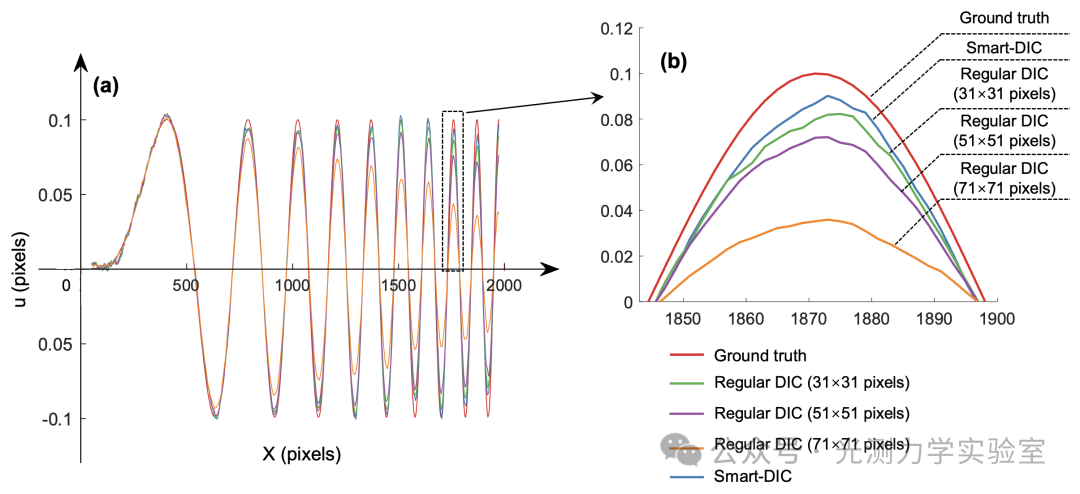
Figure 6. Comparison of sine curves computed by Smart-DIC and conventional DIC
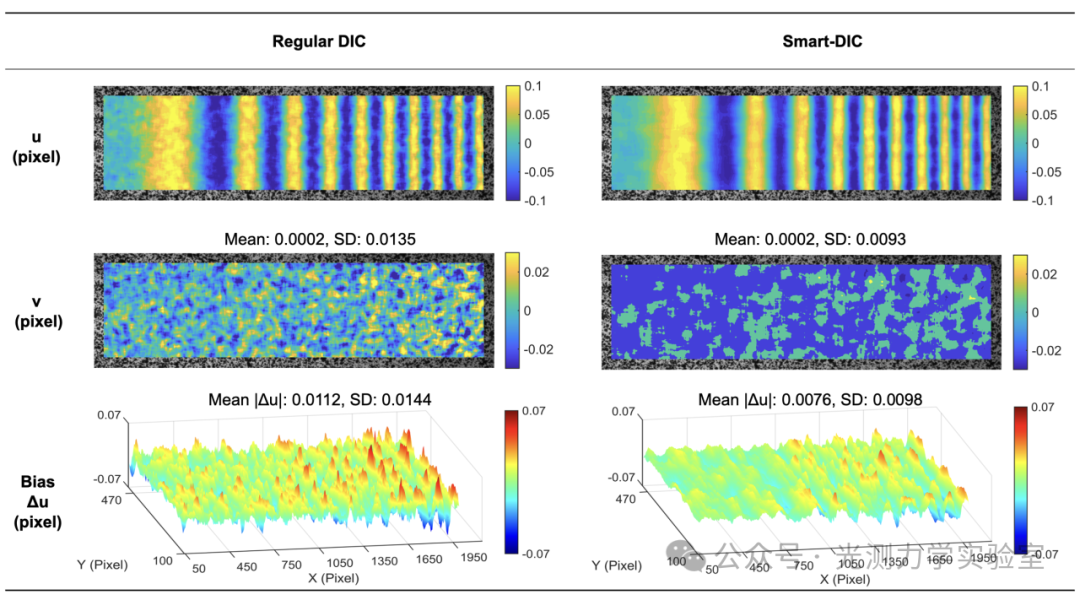
Figure 7. Comparison of full-field displacement results computed by Smart-DIC and conventional DIC
■ Real experiment - local deformation measurement of PLC slip bands
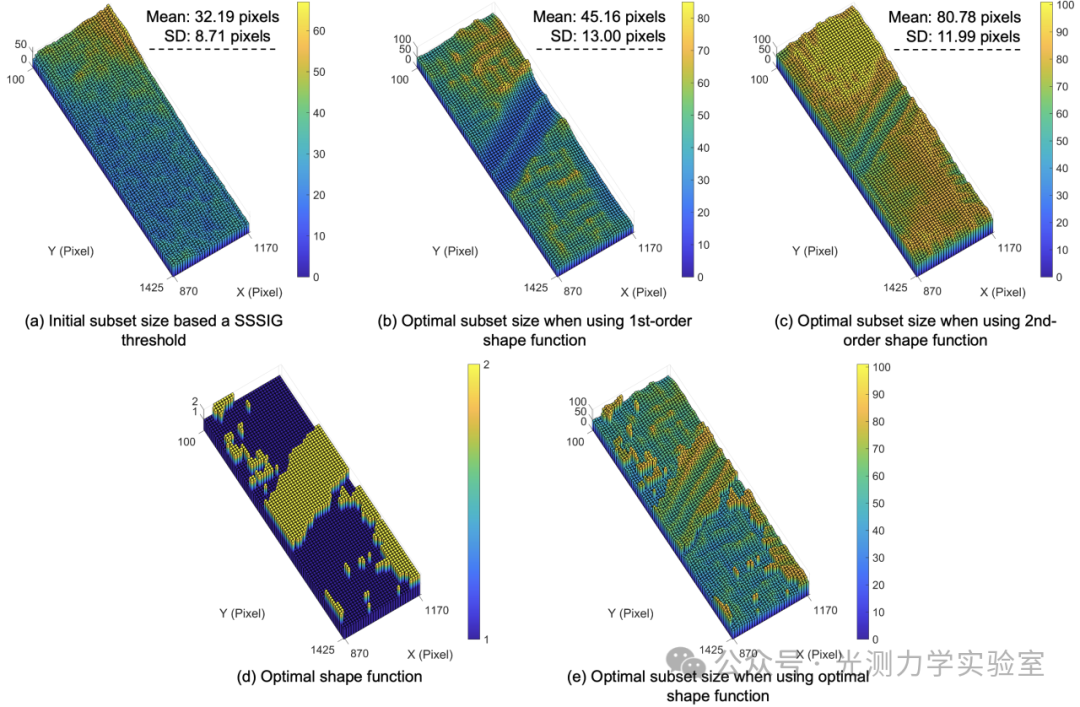
Figure 8. Distribution of optimal calculation parameters selected by Smart-DIC
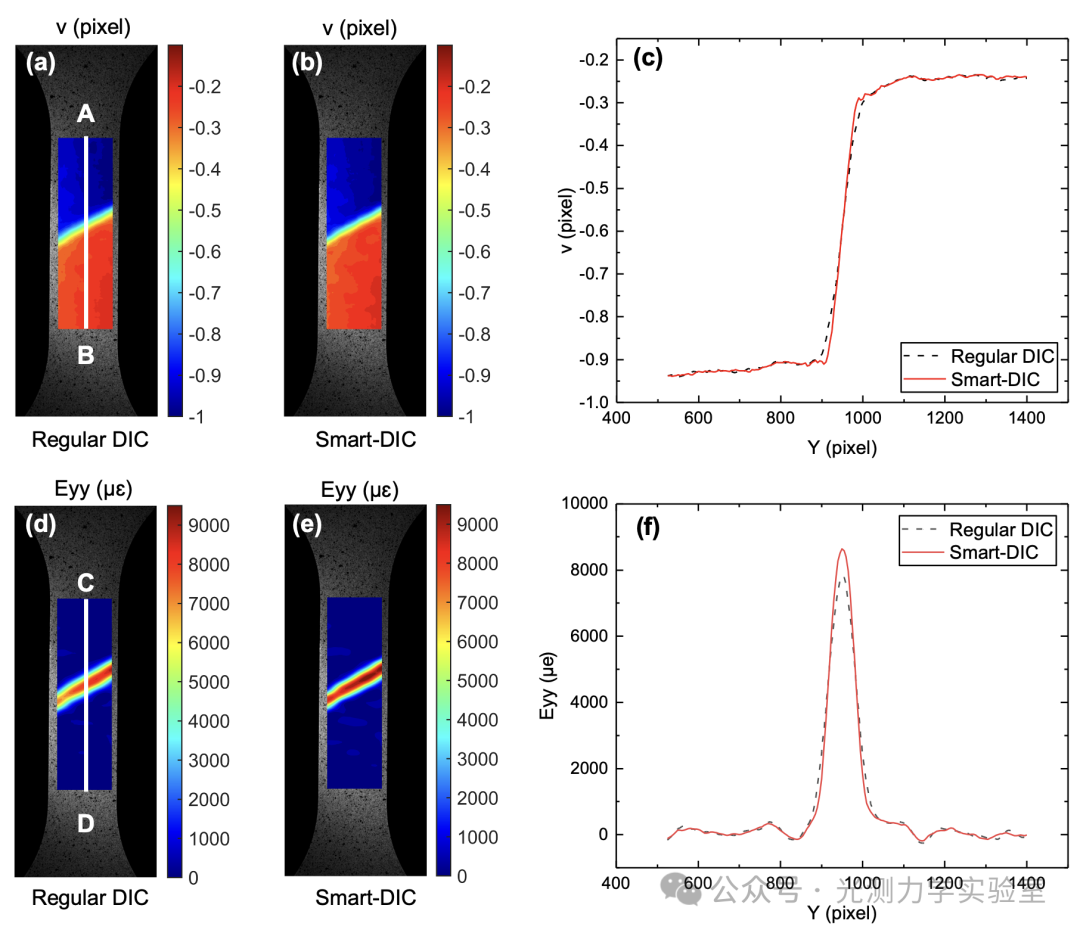
Figure 9. Comparison of results computed by Smart-DIC and conventional DIC
The proposed Smart-DIC method completes DIC measurement with one click, eliminating the ambiguity in operation and measurement caused by manual selection of key calculation parameters in existing DIC software, thus achieving user-independent precise image deformation measurement. On the basis of this research, future work can focus on two aspects: 1) combining the algorithm with 3D-DIC to achieve fully automatic, precise 3D topography, displacement and deformation measurement; 2) comparing the performance of Smart-DIC with emerging deep learning DIC algorithms.





 Downloads

