Materials Mechanics
Monocular 3D Video Extensometer



Monocular 2D Optical Strain Measurement System
Monocular 3D Optical Strain Measurement System
High-Speed Monocular 3D Optical Strain Measurement System
Stereo 3D Optical Strain Measurement System
Optical Strain Measurement System – Educational Edition
2D Optical Microscopic Strain Measurement System


Strain Measurement of Parallel Lap Welds
Residual Deformation Measurement of Drilled Welded Plates
Full-Field Strain Measurement of Weldments in Compression
Tensile Deformation Measurement of 0.3mm Fiber Filament
Unmarked Compression Deformation Measurement of Composite Materials

Deformation Measurement of Artificial Cardiac Patch
Keycap Vibration Measurement: Quantifying Press and Rebound Dynamics
Headband Deformation Measurement: Analyzing Bending Position and Unloading Recovery
High-Temperature DIC Measurement of Wafer Thermal Warpage: Quantifying Warpage vs. Temperature
UAV Dynamic Tracking Measurement: Capturing Flight Trajectory and Attitude Changes

 0755-86347753

Published: 2024-09-10
Crack initiation and propagation are critical to the performance and safety of material structures. Traditional crack monitoring methods such as strain gauges, COD gauges and optical microscopes have limitations of local measurement, contact interference and real-time monitoring, making it difficult to fully capture the whole crack propagation process. To address these problems, Haytham has innovatively launched an efficient, non-contact crack propagation monitoring solution based on strain field gradient recognition, boundary recognition and residual grayscale field technology, helping customers efficiently deal with crack monitoring challenges in complex environments.
Using strain field gradient recognition technology, changes in the material surface strain field can be analyzed in real time. Especially during crack initiation and propagation, non-contact full-field monitoring provides more comprehensive data support, making up for the shortcomings of traditional local measurement.
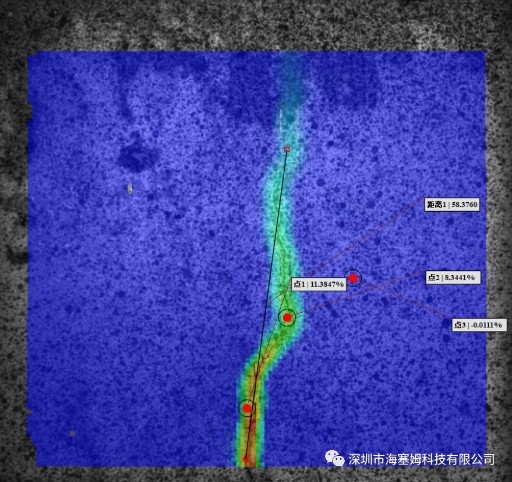
1. Fatigue crack propagation analysis of polymer CT specimens
This technology precisely captures every detail of crack propagation in polymer materials, dynamically tracking crack propagation with real-time visualization, allowing customers to understand crack propagation behavior faster and more accurately.
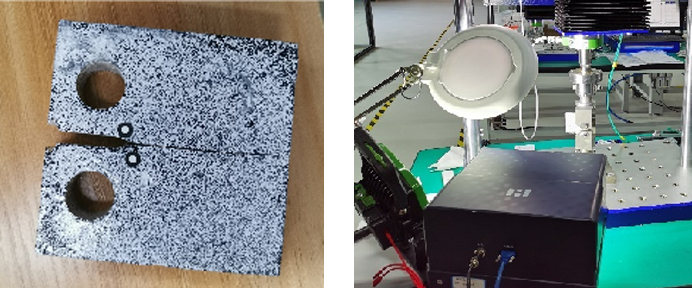
2. Full-field fatigue strain testing of defective components
Strain field gradient recognition provides more comprehensive crack analysis than local testing for fatigue tests of defective components, helping customers better evaluate fatigue performance, reduce structural failure risk and ensure project safety.
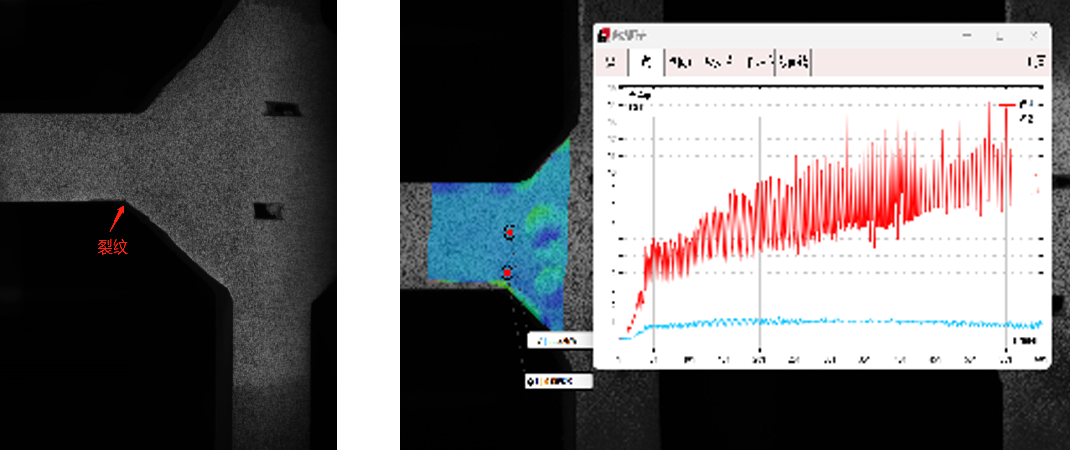
3. Four-point bending test of large concrete beams
In four-point bending tests of large concrete beams, strain field gradient recognition can monitor the dynamic changes of multiple cracks and generate detailed crack propagation data. Compared with traditional strain gauges, it provides continuous, complete data with broader full-field monitoring capability, offering comprehensive support for structural safety evaluation and design optimization and helping deeply understand structural mechanical performance — especially suitable for large structure testing.
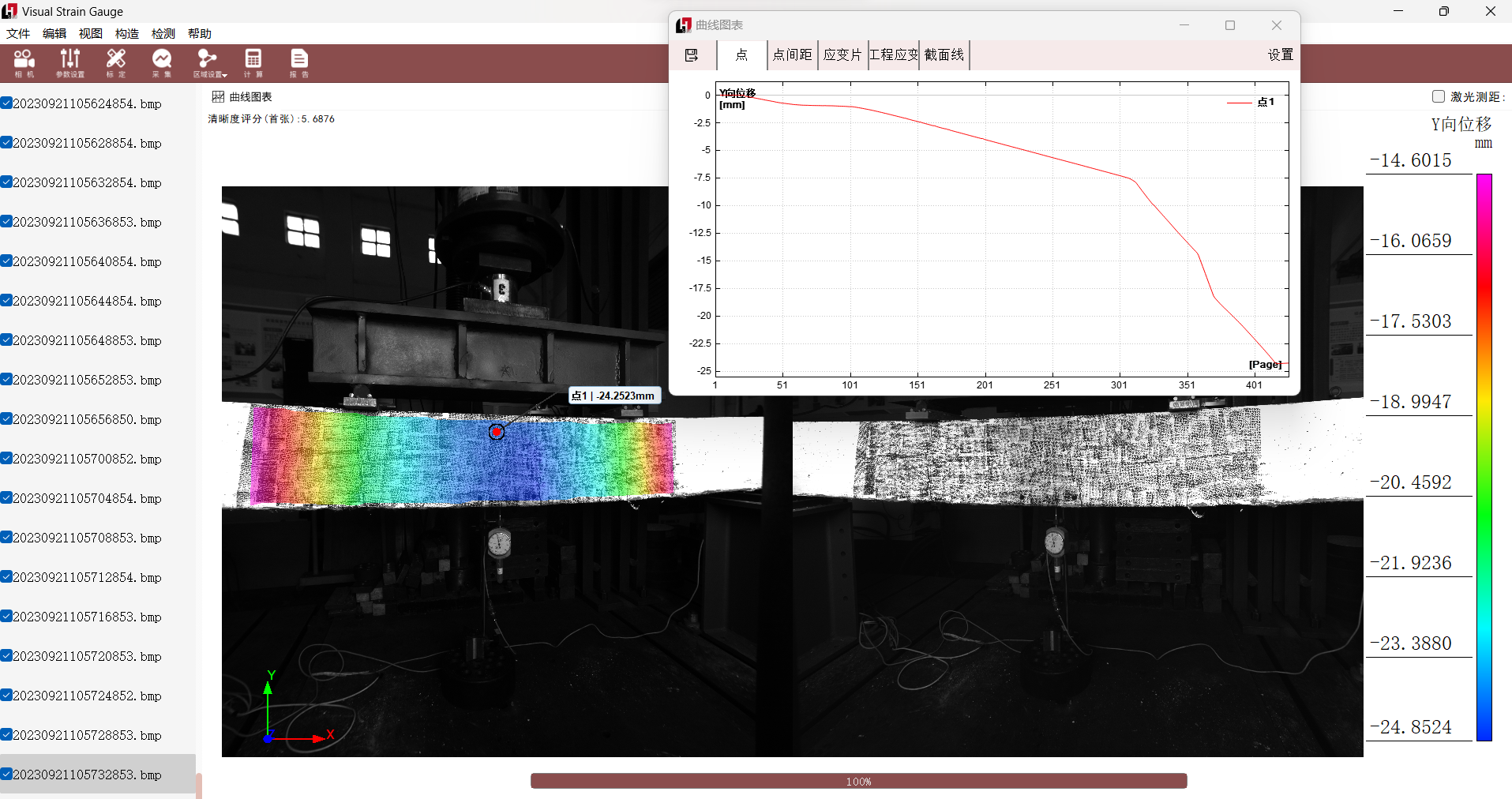

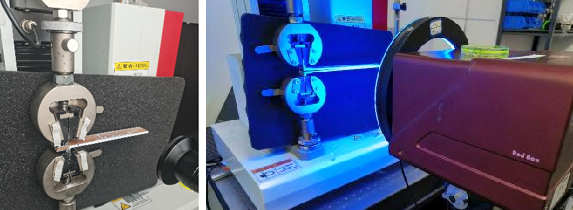
Based on the boundary recognition mode, automated crack propagation monitoring is achieved. Through deep learning and feature matching technology, the system precisely recognizes marker positions and acquires crack propagation length and loading displacement in real time. Small-area division effectively reduces surface interference, greatly improving recognition accuracy and computing speed, providing key data support for material failure mechanism research. Compared with COD gauges, boundary recognition requires no specimen contact, can track crack propagation across the full field, and its accuracy is unaffected by installation position or external interference.
Double-cantilever crack propagation analysis
In double-cantilever crack propagation tests, this mode captures crack initiation and precisely measures crack length and width. The high-precision algorithm ensures accurate deformation data, providing an important basis for analyzing crack propagation behavior.
In material damage and crack propagation analysis, the residual grayscale field mode provides a new breakthrough for precisely locating and observing crack morphology. By capturing the grayscale differences of voxel points before and after deformation, the technology achieves voxel-by-voxel matching quality evaluation, far exceeding the limitations of traditional DVC methods. The residual grayscale field computation based on the 3D Delaunay tessellation algorithm can not only precisely locate internal damage but also clearly present crack propagation and interface debonding behavior, suitable for materials with speckle features and no prefabricated cracks.
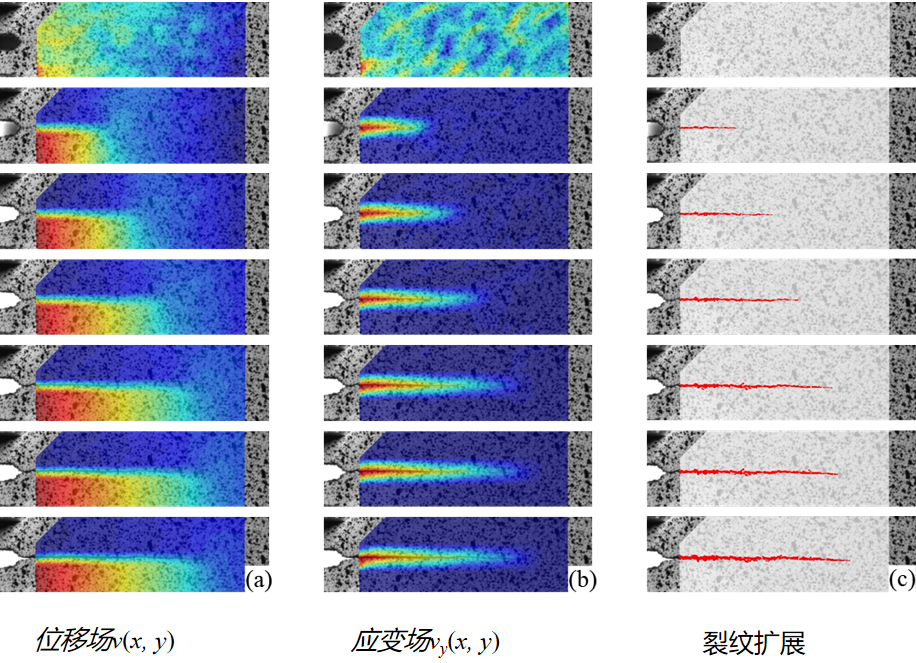
1. Concrete tensile testing
In concrete tension, residual grayscale field technology precisely captures crack initiation points, propagation paths and damage depth through detailed voxel-by-voxel grayscale difference analysis, providing reliable data for structural safety evaluation and ensuring the performance under tensile stress is fully understood.
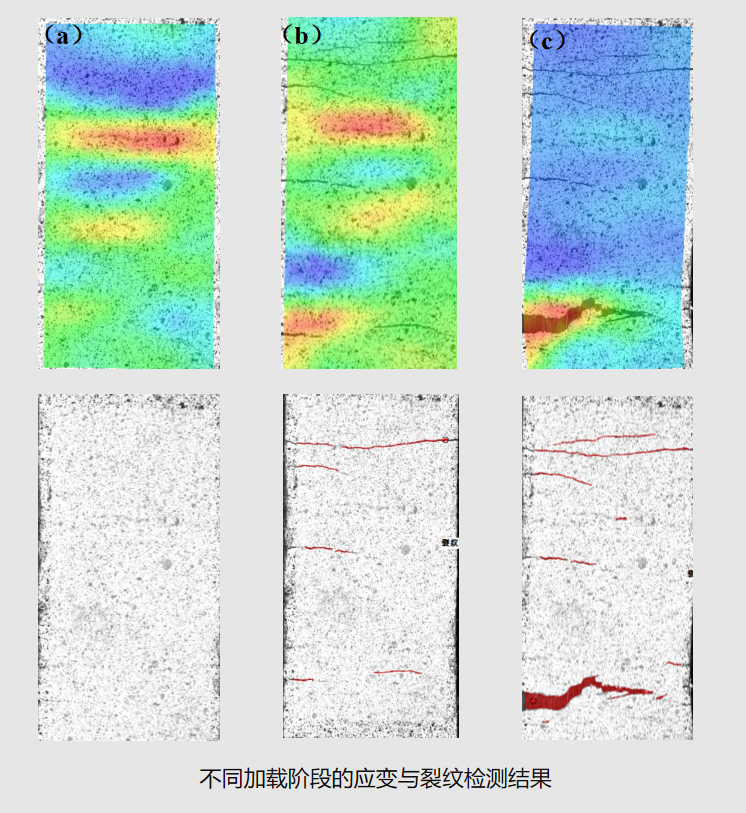
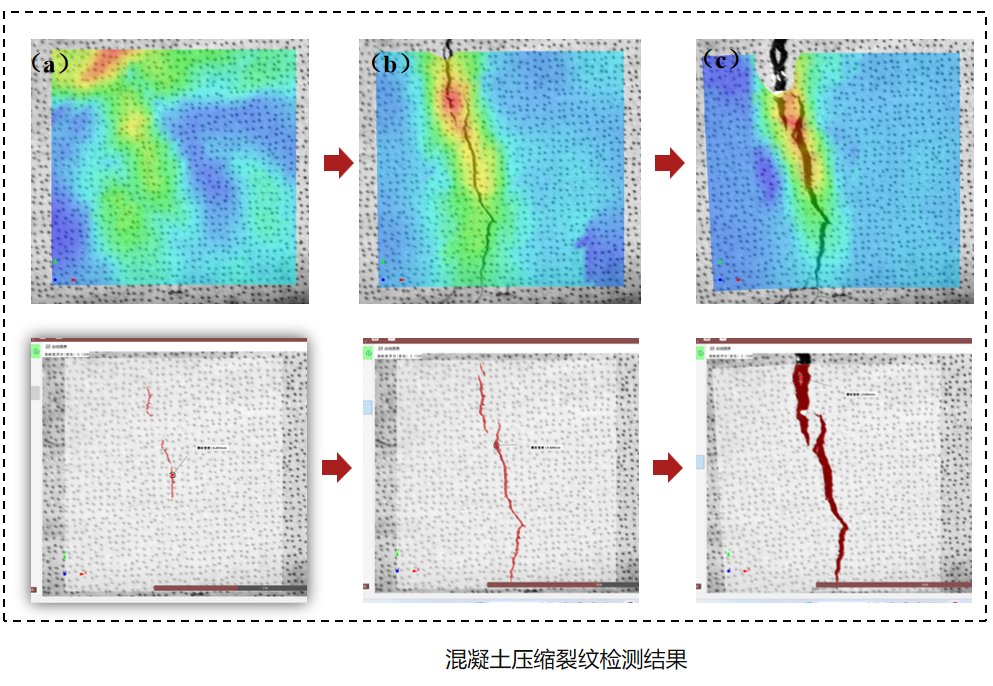
2. Concrete compression testing
In concrete compression tests, this technology effectively detects crack formation and records crack length, width and other details. With its high precision, residual grayscale field technology is suitable for in-depth monitoring of complex crack networks and precisely tracking the dynamic changes of crack propagation.
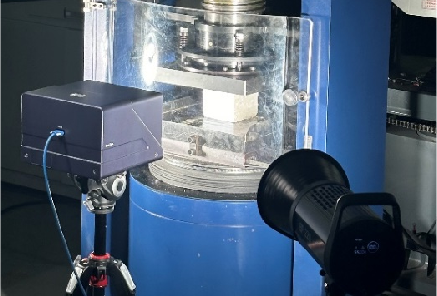
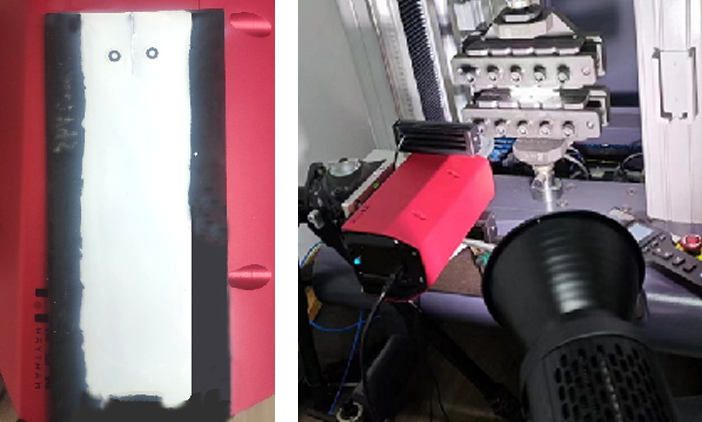
3. Rubber fatigue crack propagation testing
Crack propagation of rubber materials in fatigue tests is often accompanied by large deformation, which traditional monitoring means struggle to capture subtly. Residual grayscale field technology precisely analyzes crack propagation behavior and provides key data such as crack length, width and propagation rate, especially suitable for monitoring large-deformation materials.
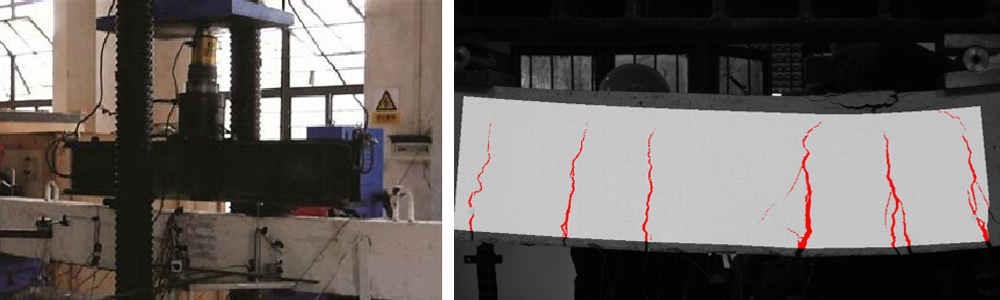
4. Bending test of large concrete beams
In bending tests of large concrete beams, residual grayscale field technology precisely monitors key information such as the initial state, number and length of cracks. By capturing the details of crack propagation, it helps with structural integrity analysis and provides detailed data for safety evaluation.
Haytham's crack propagation monitoring solution, through innovative non-contact, full-field monitoring technology, helps customers effectively overcome the limitations of traditional methods. In various research and engineering applications, customers can acquire comprehensive crack data in real time, make quick decisions, reduce material failure risk, and significantly improve structural safety and testing efficiency. The solution provides more economical and reliable testing support.





 Downloads

