Materials Mechanics
Monocular 3D Video Extensometer



Monocular 2D Optical Strain Measurement System
Monocular 3D Optical Strain Measurement System
High-Speed Monocular 3D Optical Strain Measurement System
Stereo 3D Optical Strain Measurement System
Optical Strain Measurement System – Educational Edition
2D Optical Microscopic Strain Measurement System


Strain Measurement of Parallel Lap Welds
Residual Deformation Measurement of Drilled Welded Plates
Full-Field Strain Measurement of Weldments in Compression
Tensile Deformation Measurement of 0.3mm Fiber Filament
Unmarked Compression Deformation Measurement of Composite Materials

Deformation Measurement of Artificial Cardiac Patch
Keycap Vibration Measurement: Quantifying Press and Rebound Dynamics
Headband Deformation Measurement: Analyzing Bending Position and Unloading Recovery
High-Temperature DIC Measurement of Wafer Thermal Warpage: Quantifying Warpage vs. Temperature
UAV Dynamic Tracking Measurement: Capturing Flight Trajectory and Attitude Changes

 0755-86347753

Published: 2025-11-19
3D printing has redefined the boundaries of material design and raised testing challenges. Complex geometry, small specimens and high-temperature loading repeatedly limit traditional contact measurement in installation, range and stability. To truly understand the real response of materials under loading, a non-contact, full-field, visualized testing method is needed.
Haytham DIC (digital image correlation technology)Through high-resolution vision imaging and image computing, it captures the full-field displacement and strain distribution on the specimen surface, visualizing the deformation process. From materials to structures, from room temperature to high temperature, researchers can understand material behavior in an intuitive and quantifiable way.
3D printing covers a rich variety of materials, from metals to polymers, from rubber to composites, with huge differences in shape and size. Haytham DIC measures full-field strain in a non-contact way, unaffected by surface morphology, size or material, and outputs stably under various loading modes such as tension, compression, bending and shear, providing a unified measurement solution for mechanical research on different materials.
Application Case — Full-Field Strain Test of 3D-Printed Rubber in Tension
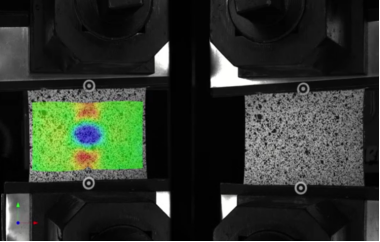
Features such as lattices, internal cavities and thin walls make the deformation process of 3D-printed structures more complex. Through full-field strain analysis, Haytham DIC can intuitively reveal local buckling, stress concentration and load transfer paths, providing quantitative evidence for structural optimization and failure prediction.
Application Case — Full-Field Strain Measurement of 3D-Printed Structural Parts in Compression
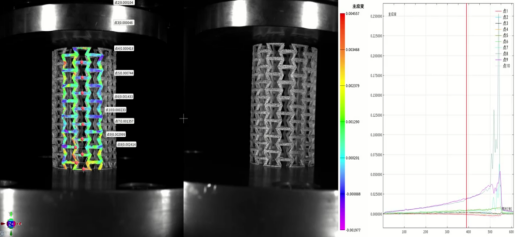
Application Case — Compression Measurement of Small Openwork Materials
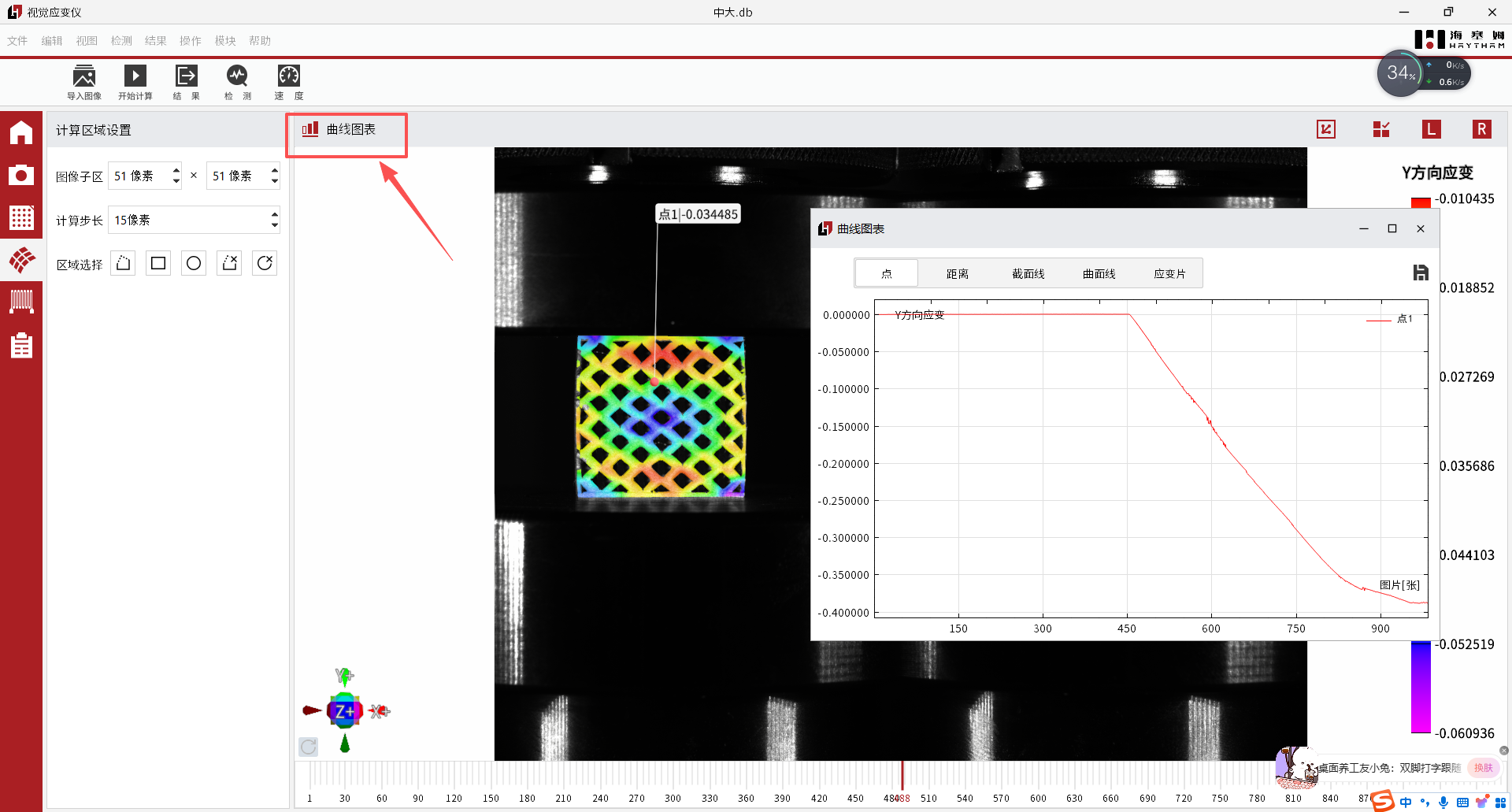
In high-temperature environments, thermal strain interacts with external loads, making the material response more complex.Haytham DIC system suits high/low-temperature environments, continuously tracking surface strain field changes during heating, revealing the material's thermal stability, expansion characteristics and coupling effects, providing data support for process design.
Application Case — Heating Strain Test of 3D-Printed Alloy Components
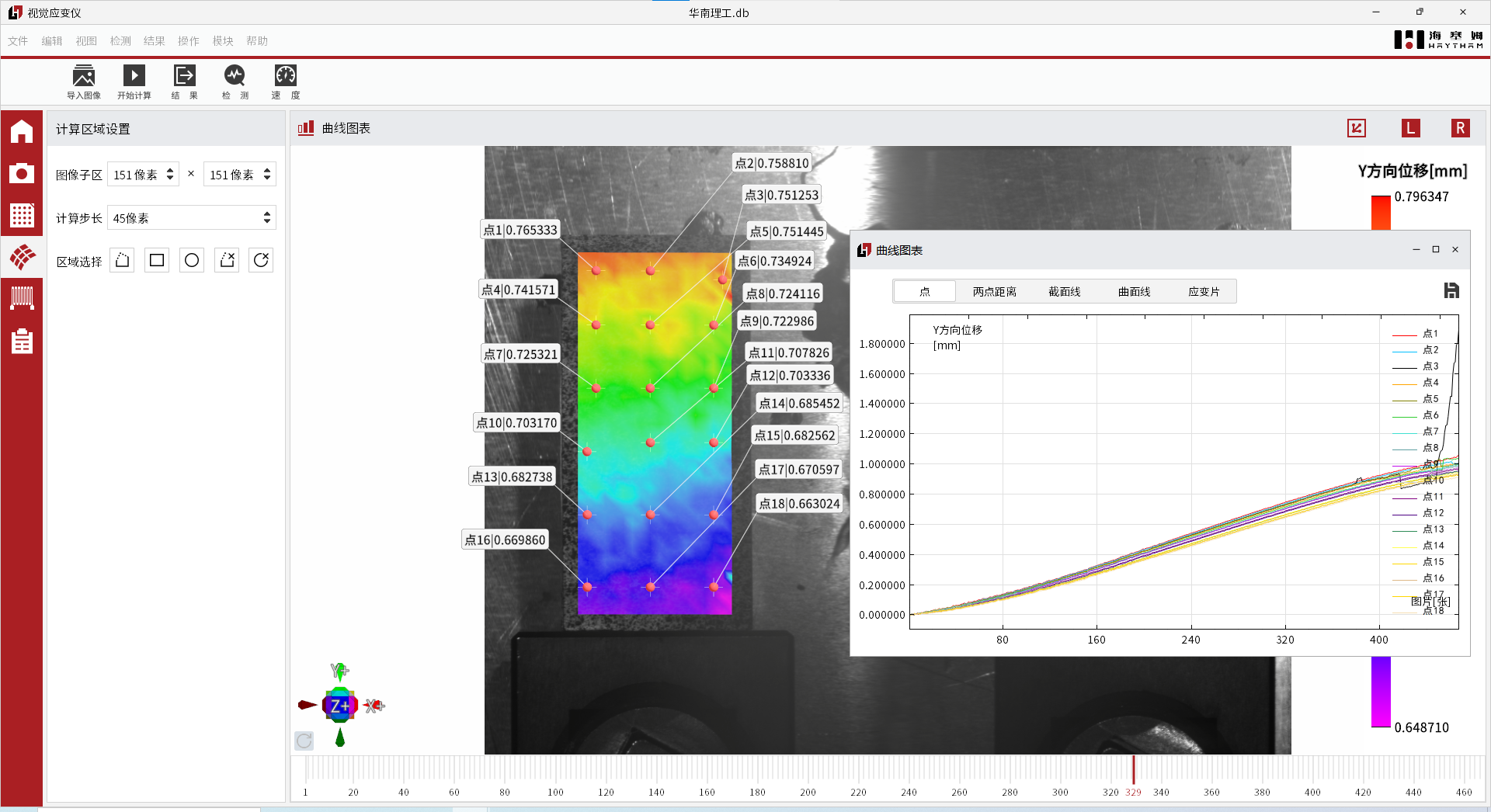
Haytham DIC not only presents images but also generates high-precision quantitative results. The system outputs force-displacement curves, full-field strain contour maps, local time-history curves and crack evolution sequences, helping researchers analyze under a unified coordinate systemThe influences of different materials, printing parameters and post-processing methods make the experimental results more comparable and interpretable.
Haytham DICBreaking traditional limitations with non-contact, full-field measurement, it helps researchers understand the mechanical behavior of 3D-printed materials from a more realistic perspective — making every loading cycle closer to the material's true performance.





 Downloads

