Materials Mechanics
Monocular 3D Video Extensometer



Monocular 2D Optical Strain Measurement System
Monocular 3D Optical Strain Measurement System
High-Speed Monocular 3D Optical Strain Measurement System
Stereo 3D Optical Strain Measurement System
Optical Strain Measurement System – Educational Edition
2D Optical Microscopic Strain Measurement System


Strain Measurement of Parallel Lap Welds
Residual Deformation Measurement of Drilled Welded Plates
Full-Field Strain Measurement of Weldments in Compression
Tensile Deformation Measurement of 0.3mm Fiber Filament
Unmarked Compression Deformation Measurement of Composite Materials

Deformation Measurement of Artificial Cardiac Patch
Keycap Vibration Measurement: Quantifying Press and Rebound Dynamics
Headband Deformation Measurement: Analyzing Bending Position and Unloading Recovery
High-Temperature DIC Measurement of Wafer Thermal Warpage: Quantifying Warpage vs. Temperature
UAV Dynamic Tracking Measurement: Capturing Flight Trajectory and Attitude Changes

 0755-86347753

Published: 2026-03-24
In mechanical property testing of materials, deformation measurement is a key factor affecting result accuracy. Whether it is strain measurement in tensile testing or displacement measurement in compression testing, the true deformation state of the specimen during loading directly affects the judgment of key results such as elastic modulus, yield behavior and fracture performance. For laboratories, testing institutions and enterprise research and development departments, the stability and accuracy of the deformation measurement system are just as important as the testing machine itself.
This is exactly why the video extensometer is gradually becoming a highly watched measurement method in material testing. Especially in testing scenarios such as films, rubber, plastics, composites and fiber materials, the advantages of non-contact measurement are increasingly obvious.
So, what is the working principle of a video extensometer?
Simply put, a video extensometer is a device that completes deformation measurement through optical imaging. It uses an industrial camera to capture specimen images in real time, combined with image recognition and tracking algorithms to continuously track markers, feature points or measurement areas on the specimen surface, computing displacement changes within the gauge length and further outputting test data such as strain and elongation.
If usingThe Haytham video extensometer as an example: as a single-camera video extensometer, its core measurement logic mainly includes four steps — image acquisition, feature recognition, displacement tracking and strain solving. After the test starts, the system continuously captures specimen images through a single industrial camera; when the specimen deforms under tension or compression, the distance between the two set measuring points changes accordingly; the system computes these changes in real time and converts them into strain and displacement values based on the initial gauge length.
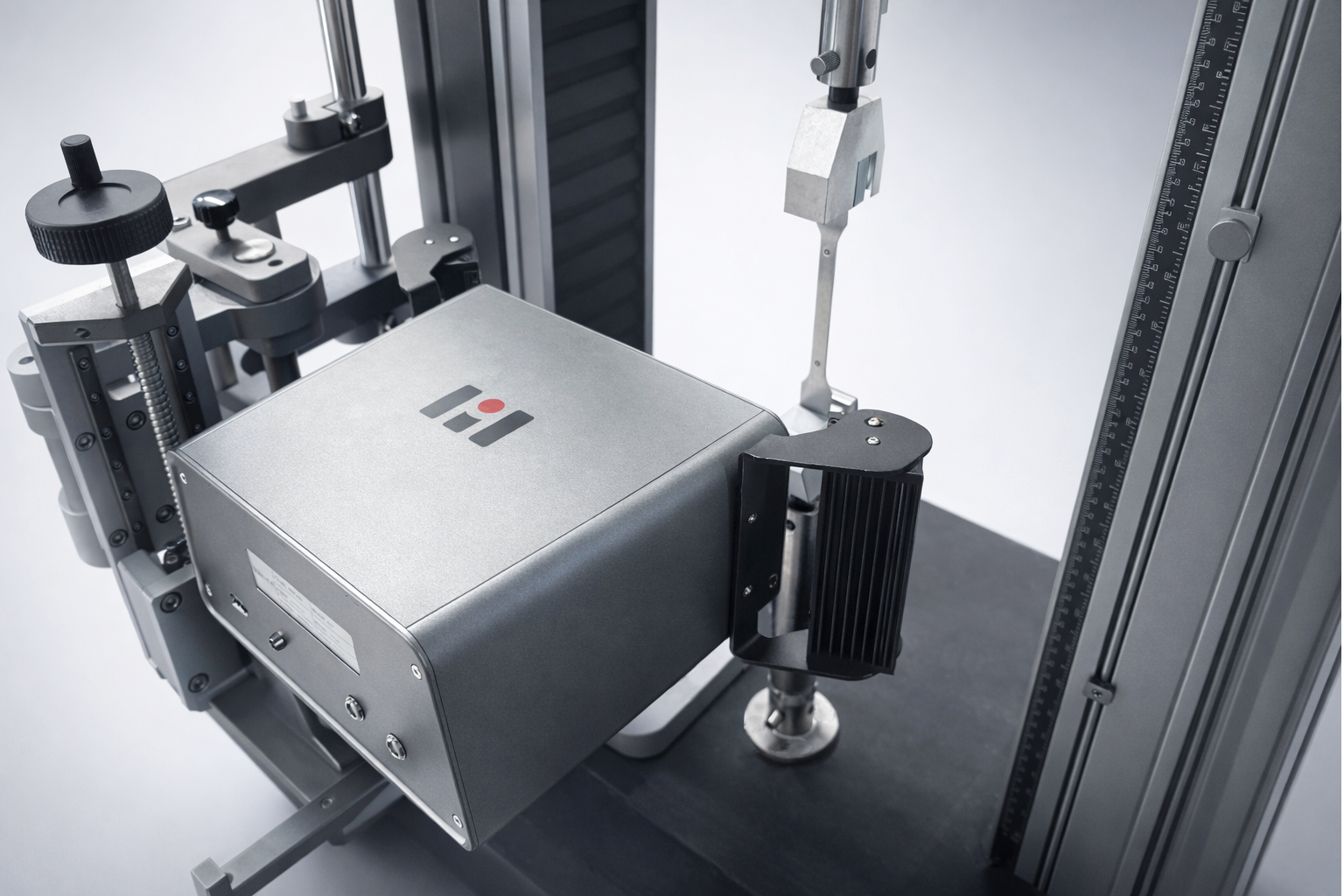
Unlike traditional contact extensometers, the video extensometer does not need to clamp directly on the specimen surface but acquires data through long-distance optical means. This non-contact measurement approach reduces the additional influence of mechanical clamping on the specimen, and avoids problems such as local stress concentration, slippage or falling off caused by clamping in some materials during testing.
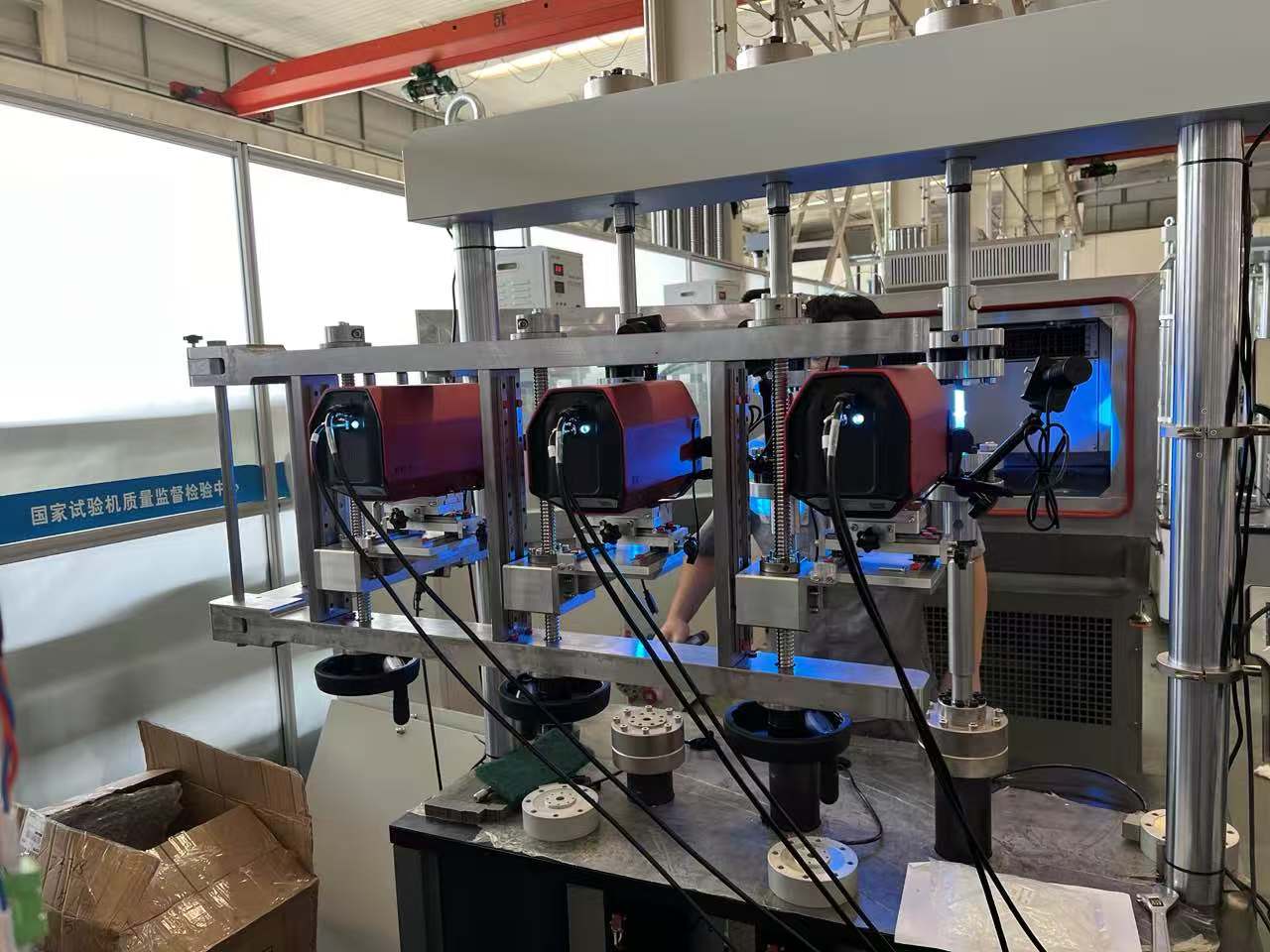
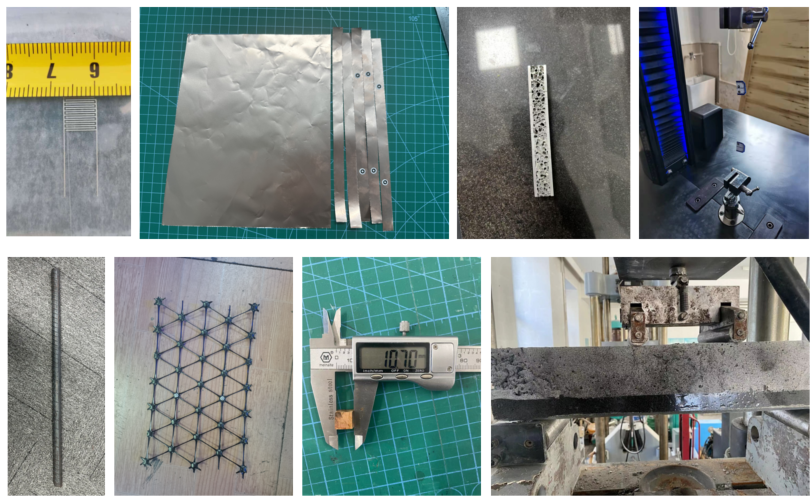
From an application perspective, the video extensometer is particularly suitable for material mechanical property testing scenarios with high requirements for accuracy, continuity and specimen adaptability. For example, in metal tensile testing, users often need to clearly capture the elastic stage, yield stage and the deformation process before and after fracture; in rubber, plastic and polymer testing, the focus is more onlarge deformation conditions; in composite testing, it is also necessary to minimize the influence of external contact on the specimen's true response. Compared with traditional approaches, the video extensometer more easily balances measurement accuracy and testing convenience in these scenarios.
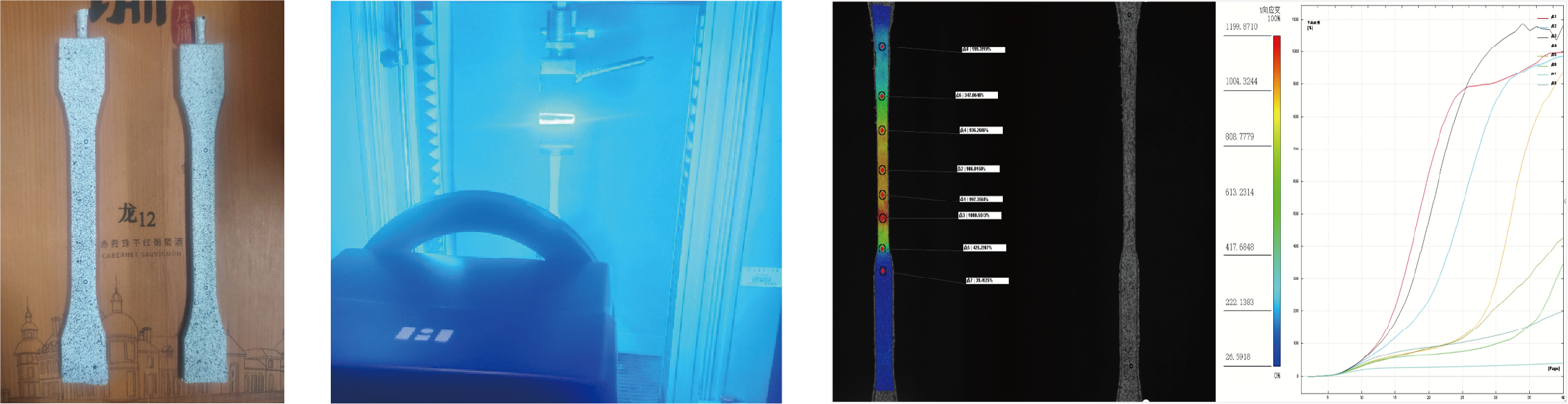
Full-field strain measurement of polypropylene in tension (maximum strain 1200%)
The Haytham video extensometeris designed around these real testing needs. What really matters to users is not just the non-contact feature, but whether the equipment can provide stable, continuous and verifiable data during testing, help testers see the deformation process of the specimen more clearly, and improve test efficiency and the persuasiveness of results.
In actual testing, the Haytham video extensometer completes strain and displacement measurement simultaneously through image acquisition and algorithm analysis, outputting key data while preserving the image information of the test process. This means testers obtain not only final results but can also review how the specimen changed at different loading stages through process images, making it easier to identify anomalies, analyze the deformation process, and improve the traceability of test results.
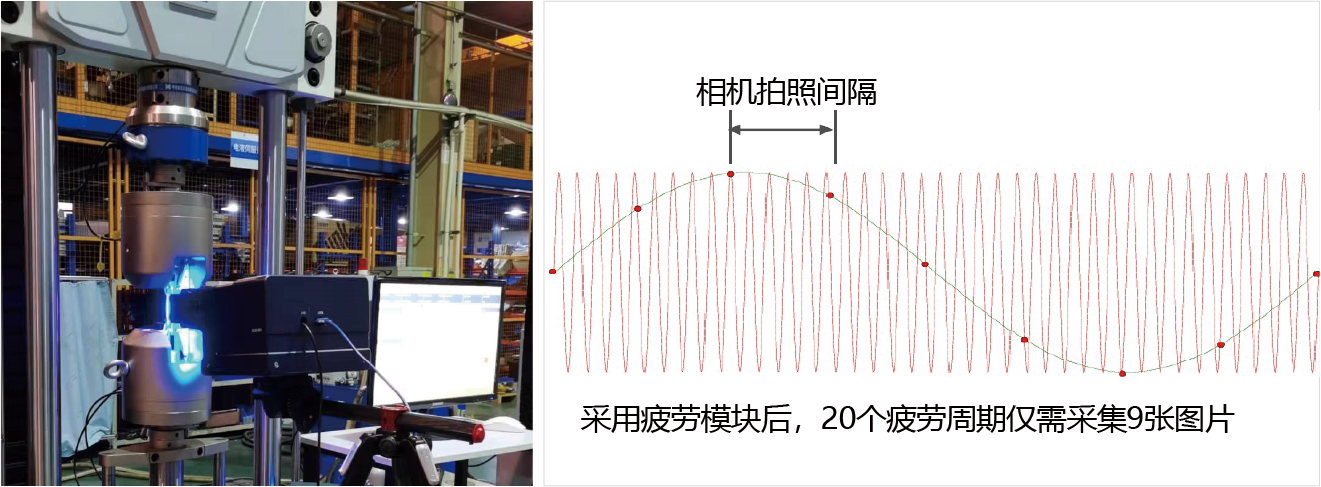
Fatigue strain control enables real-time measurement and digital/analog signal conversion at 1200Hz, with fatigue frequency-reduced measurement analysis through cross-cycle acquisition
For material research, product verification and quality inspection, this capability has obvious value. Many tests are not just about obtaining a single number; what matters more is seeing the actual response of the material under load. Especially in new material development, complex material verification and fine testing scenarios, whether the process is visible and the data is continuous often directly affects the reliability of test conclusions.
Overall, the video extensometer is not just an alternative to traditional extensometers, but represents the upgrade direction of material deformation measurement. It converts the measurement process, which originally relied on mechanical contact, into a visualized, continuous, non-contact data acquisition process through optical means, showing stronger specimen adaptability and higher process visibility in mechanical property testing.
If you are following the working principle of video extensometers, or looking for a non-contact extensometer solution better suited to modern material testing needs,The Haytham video extensometer is worth learning more about. For users who want to improve testing accuracy, optimize the testing process and enhance data credibility, it is not just a measurement device but an important tool for improving material testing capability.





 Downloads

