Materials Mechanics
Monocular 3D Video Extensometer



Monocular 2D Optical Strain Measurement System
Monocular 3D Optical Strain Measurement System
High-Speed Monocular 3D Optical Strain Measurement System
Stereo 3D Optical Strain Measurement System
Optical Strain Measurement System – Educational Edition
2D Optical Microscopic Strain Measurement System


Strain Measurement of Parallel Lap Welds
Residual Deformation Measurement of Drilled Welded Plates
Full-Field Strain Measurement of Weldments in Compression
Tensile Deformation Measurement of 0.3mm Fiber Filament
Unmarked Compression Deformation Measurement of Composite Materials

Deformation Measurement of Artificial Cardiac Patch
Keycap Vibration Measurement: Quantifying Press and Rebound Dynamics
Headband Deformation Measurement: Analyzing Bending Position and Unloading Recovery
High-Temperature DIC Measurement of Wafer Thermal Warpage: Quantifying Warpage vs. Temperature
UAV Dynamic Tracking Measurement: Capturing Flight Trajectory and Attitude Changes

 0755-86347753

Published: 2026-03-30
In mechanical property testing of materials, many people focus on the testing machine, loading mode and control system, but what really affects result quality is another unavoidable step — strain measurement.
Whether it is elastic modulus, yield behavior, or elongation response before fracture, the judgment of many key results depends on acquiring strain data. Precisely because of this, how to measure strain more accurately, more efficiently and more suitably for different materials is becoming a practical issue in more and more material testing scenarios.
From strain gauges to contact extensometers to video extensometers, strain measurement methods have kept changing. Behind the change is not only an adjustment of technical path, but the changing needs of material testing itself.
Simply put, strain is how much relative deformation a material undergoes under load.
After a specimen is stretched, how much longer the gauge section becomes — this change, after conversion, is the strain commonly referred to in material testing. Many key results look like analysis of material properties, but are essentially built on accurate acquisition of strain data.In other words, when doing strain measurement in material testing,essentially answers one question: how much does the specimen actually change under load?
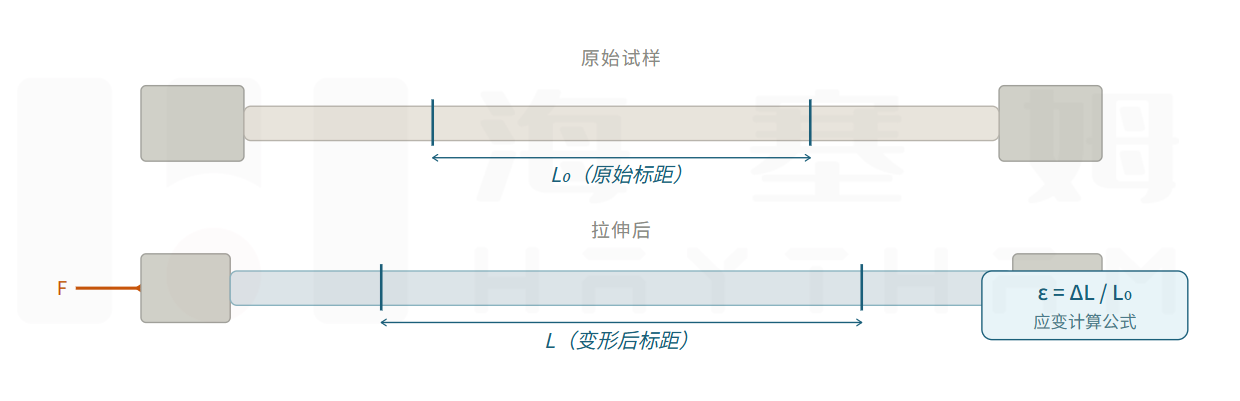
But different methods answer this question in different ways.
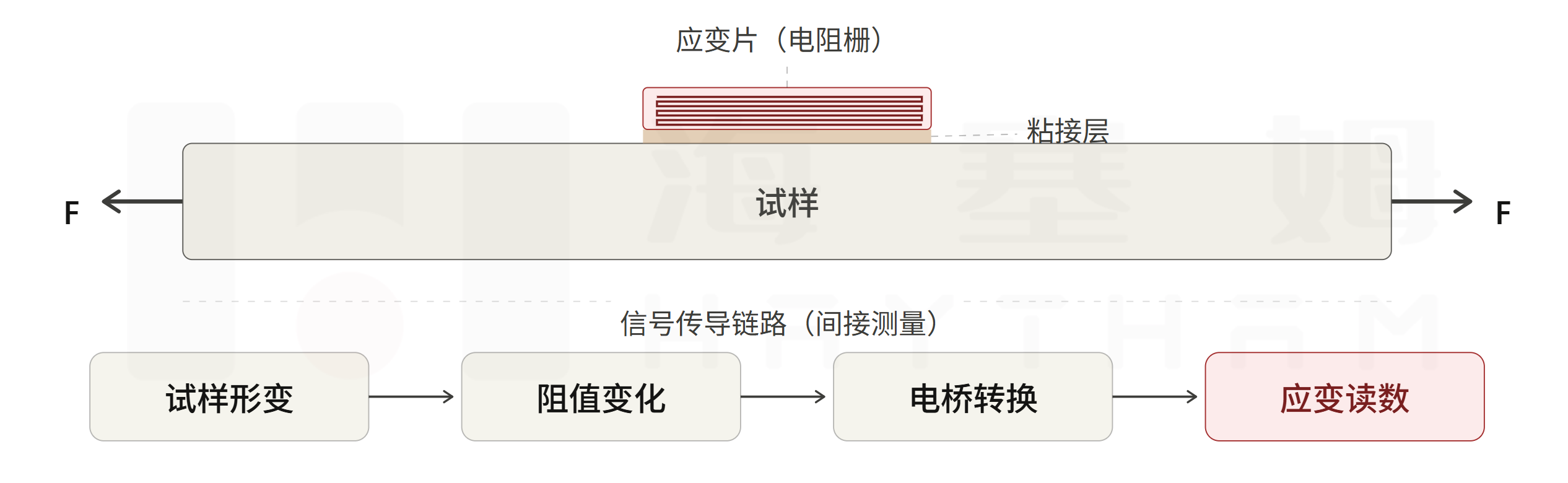
Strain gauges measure local surface strain. It senses tiny deformation through a resistance grid bonded on the specimen surface, then converts it into strain via a bridge circuit. It better suits focusing on the surface response of one specific position.
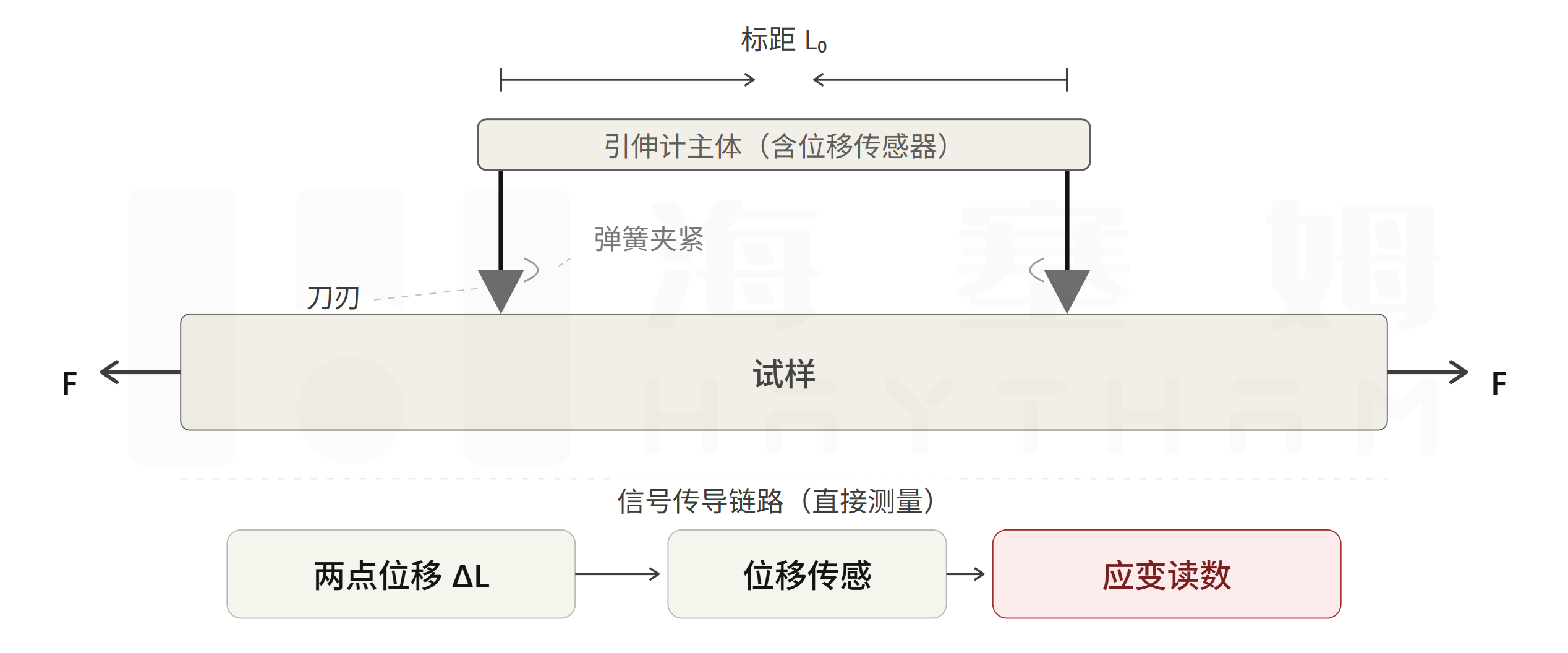
A contact extensometer measures the relative displacement between the two ends of the gauge length and converts it into strain.It is fixed by knife edges or fixtures at both ends of the specimen gauge section, directly obtaining the gauge length change. This approach is closer to the definition of strain in standard tensile tests, so it has long been a common solution in many material testing scenarios.
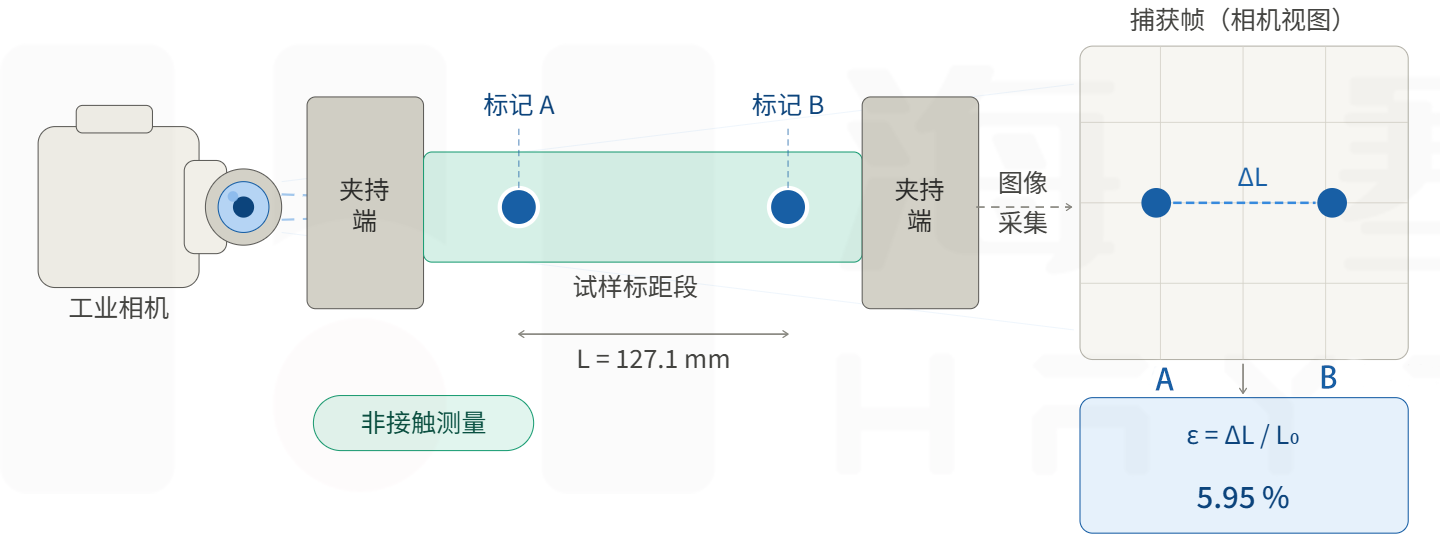
The video extensometer essentially also measures gauge length displacement.The difference is that it obtains displacement not through mechanical clamping butcaptures images through industrial cameras,tracks the position changes of markers or feature areas, and then calculates the gauge length elongation.
Therefore,video extensometer is not simply filming a video to watch the deformation. What it really does is still serious strain measurement — only the implementation changes from mechanical contact to vision measurement.
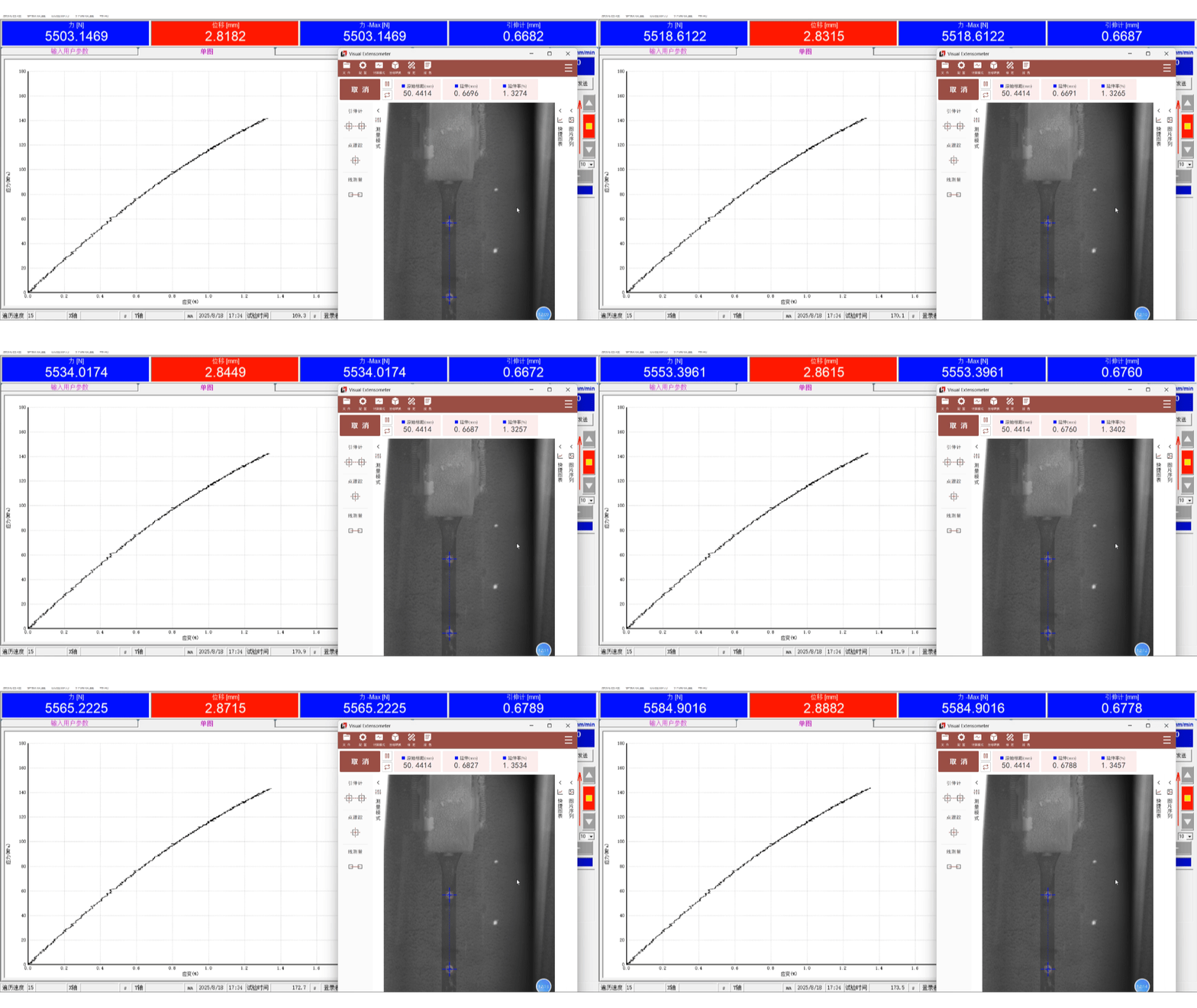
Tensile measurement of plastics at -40℃
If you only ask whether it can measure strain, strain gauges, contact extensometers and video extensometers can all give results.
But at the actual testing site, what really determines the user experience is often not whether it can measure, but whether measurement goes smoothly when facing different materials, specimens and conditions.
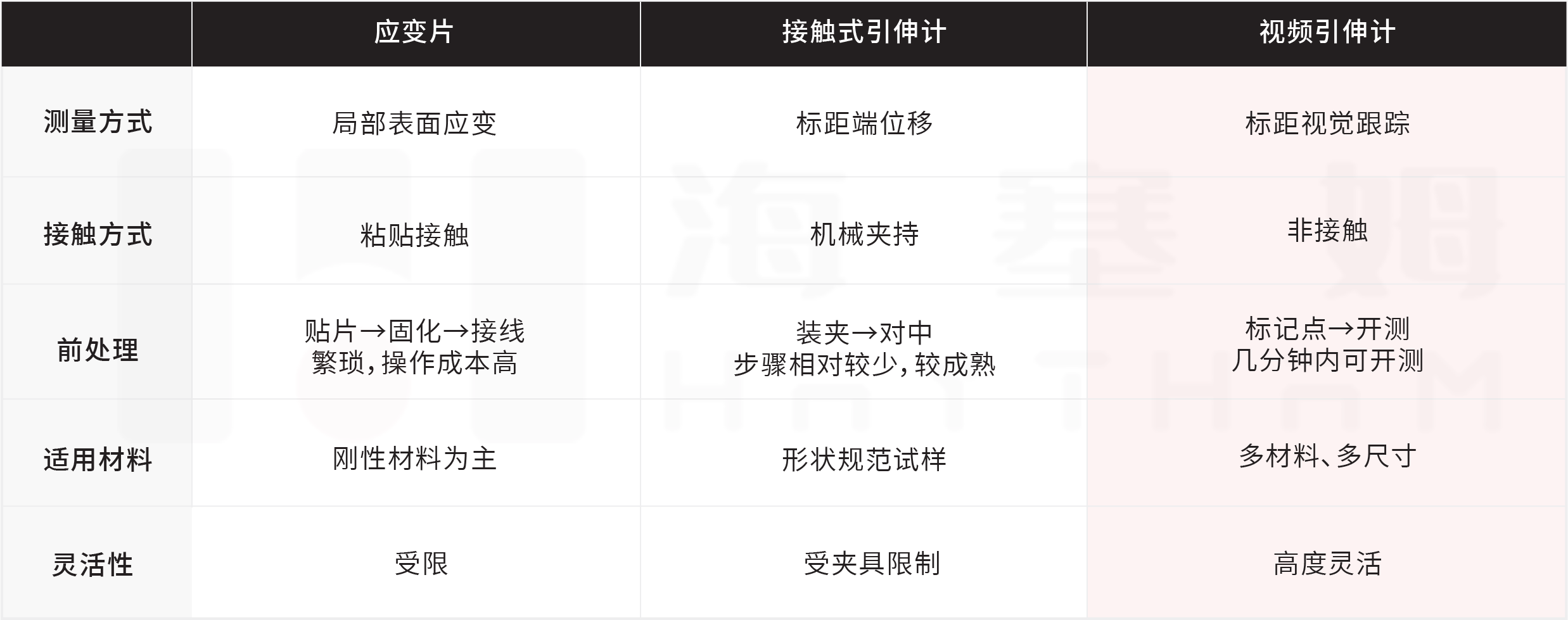
The characteristic of strain gauges is that they suit local analysis.It is valuable for measurement at some specific positions, butthere are also more preprocessing steps.surface cleaning, grinding, bonding, curing and wiring,Every step affects the result.This approach is common for a few local tests; but when facing a large volume of routine material tests, its operational burden becomes more obvious.
contact extensometer's advantage is thatThe result definition is clear and the application is relatively mature. For metal specimens with good rigidity and regular shapes, it remains an effective solution in many scenarios. But itrelies on mechanical clamping, before testing you need clamping, alignment and knife-edge checks; once specimen conditions get complex, the workflow becomes complicated accordingly. EspeciallyWhen facing soft materials, thin materials and easily slipping specimens, contact itself introduces new variables.
video extensometer is highly consistent with the contact extensometer in result definition; the core difference is that one establishes the gauge length by clamping, the other bygauge length established visually. It is exactly this difference that gives the video extensometerStronger adaptability to different test objects。
In the past, many material tests had relatively concentrated specimen types and more fixed testing processes, and contact solutions could already meet the main needs.
But today, the material testing site is already quite different.
Test objects are becoming more diverse. Besides conventional metal parts, thin films, rubber, plastics, fibers and composites are increasingly common. Meanwhile, needs such as high temperature, low temperature, large deformation and batch testing appear more and more frequently in daily testing.
At this point, the question the laboratory cares about is no longer just whether it can measure, but:
whether there are additional effects on the specimen itself;
faster switching between different specimens;
whether the complete deformation process can be captured as much as possible;
whether the operational burden can be reduced in batch testing.
This is exactly where the value of the video extensometer lies.
The value of the video extensometer is precisely concentrated in these questions:
No specimen contact, eliminating the interference of mechanical clamping on measurement results;
Gauge length is established visually, so switching between specimens of different sizes or types requires no fixture change;
From small strain to large deformation, tracking is continuous and data continuity is better.
"Non-contact" is only one feature; the more fundamental value is that it makes the overall strain measurement workflow smoother across multi-material, multi-condition tasks.
At this point, the question has actually moved a step forward.
What really needs comparing is no longer contact versus non-contact, but: what kind of video extensometer can truly fit daily testing.
Because the value of the video extensometer has never been just one more camera.
Behind it is the whole vision measurement chain: whether image acquisition is stable, whether marker recognition is accurate, whether dynamic tracking is continuous, whether the operation process is cumbersome, and whether switching is smooth when facing different materials and conditions.
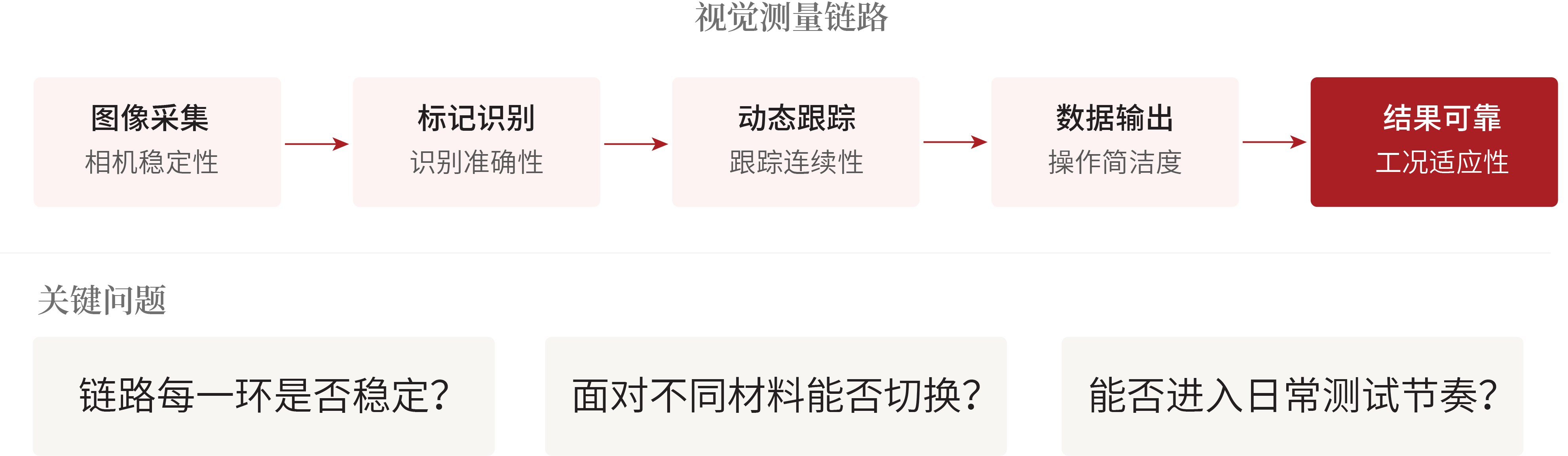
That is to say, whether a video extensometer is truly good depends not only on whether it can give strain values, but on whether it can enter the testing workflow, reduce preparation, improve specimen-change efficiency, cover more test objects, and retain data as completely as possible.
From this perspective,The video extensometer is not an attachment that merely looks more advanced, but a strain measurement solution closer to current material testing needs.
If the video extensometer answers how strain measurement can be upgraded, thenThe Haytham video extensometer answers precisely how this upgrade can truly be applied in on-site testing.
Haytham has long focused on DIC vision measurement. What it does is not simply moving a camera in front of a testing machine, but starting from the actual workflow of material testing and considering the optical system, calibration method, testing efficiency, scope of application and data capability as one integrated chain.
This is also why the Haytham video extensometer deserves separate discussion.
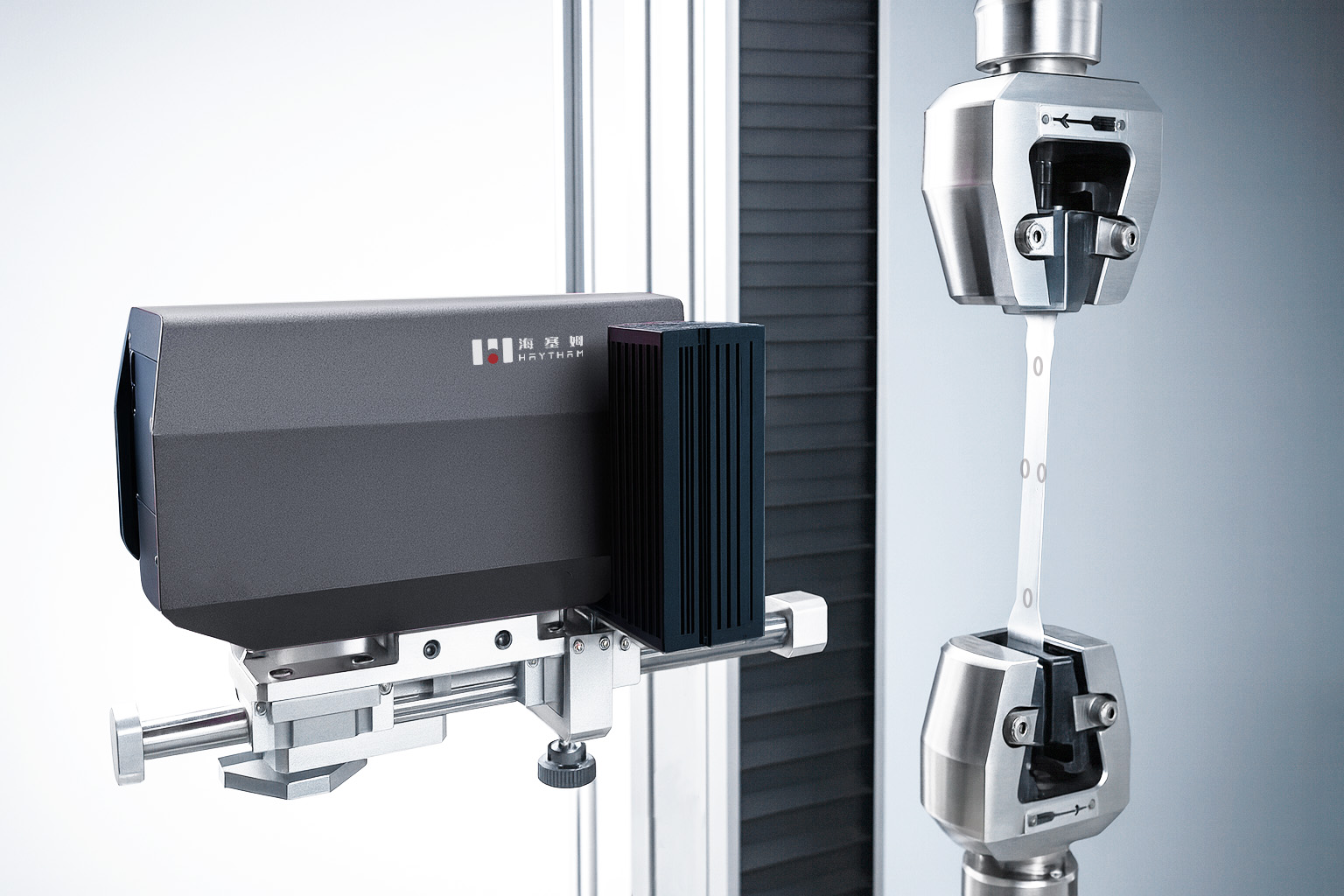
First, the testing process is lighter.
The Haytham video extensometer uses a fixed optical path design with factory-calibrated camera intrinsics — no recalibration needed in daily use. For routine testing, set up the camera and start measuring within two minutes. The difference seems small, but once in the rhythm of batch testing, frequent specimen changes and parallel projects, the fewer the preparation steps, the more easily the testing workflow connects.
Often, the efficiency gap is not opened in the few minutes of formal testing, but in every preparation, adjustment and switchover. The lighter the process, the smoother the test.
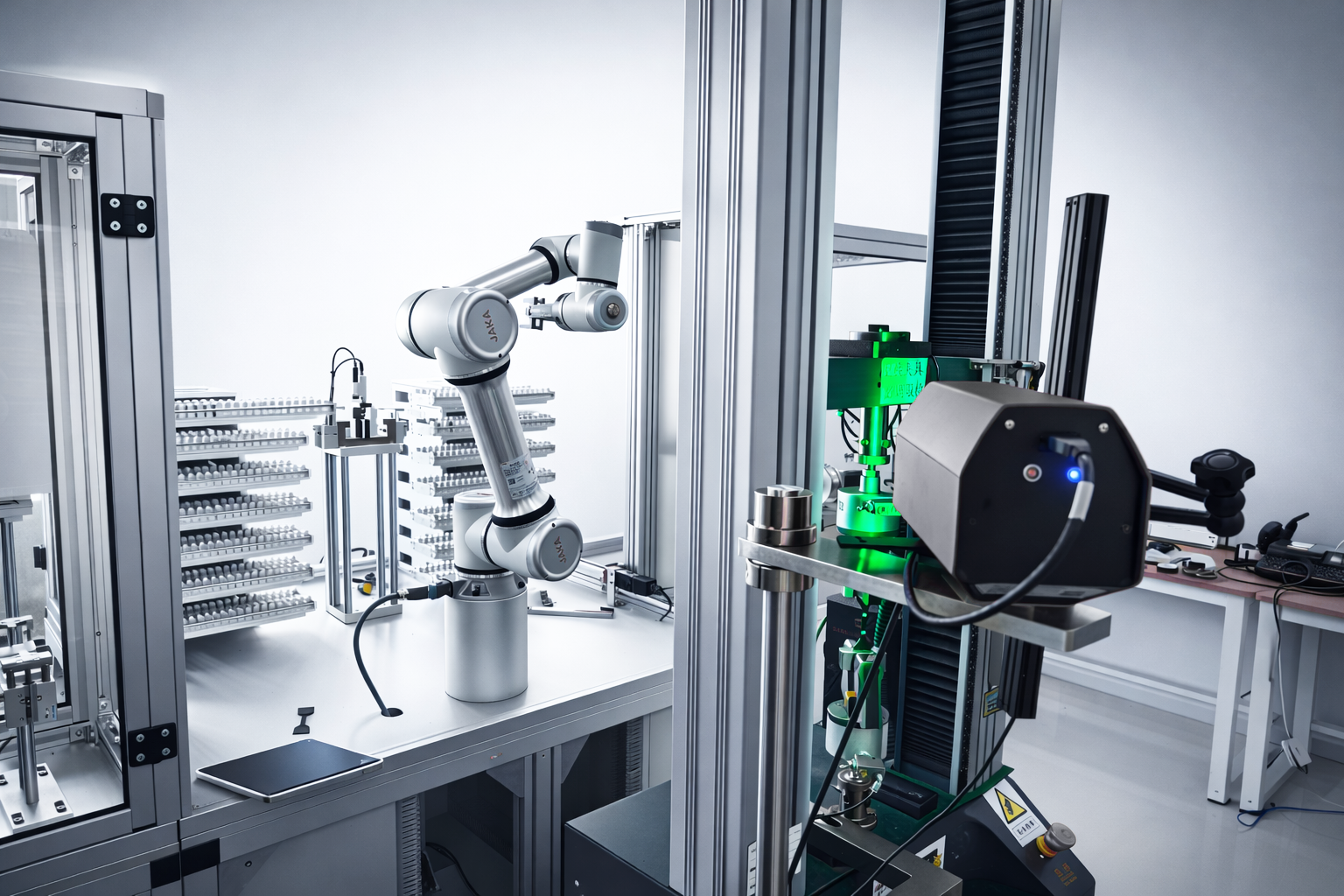
Automated rubber measurement
Second, the scope of application is wider.
Material testing is becoming more and more complex, and one obvious change is that it is not that one material is hard to test, but that there are more and more material types. Metals, plastics, films, rubber and composites present different testing difficulties. The Haytham video extensometer is not limited by specimen shape or size, switches more flexibly between different specimens, and makes it easier to establish a unified testing path.
Especially in high/low-temperature scenarios, this advantage becomes more obvious. Compared with the dependence of high-temperature contact extensometers on extension rod materials, special accessories and installation methods, the Haytham video extensometer covers a test range from -190℃ to 2600℃, maintaining usability across a wider temperature zone. For scenarios whose testing boundaries will keep expanding, such adaptability is more meaningful.
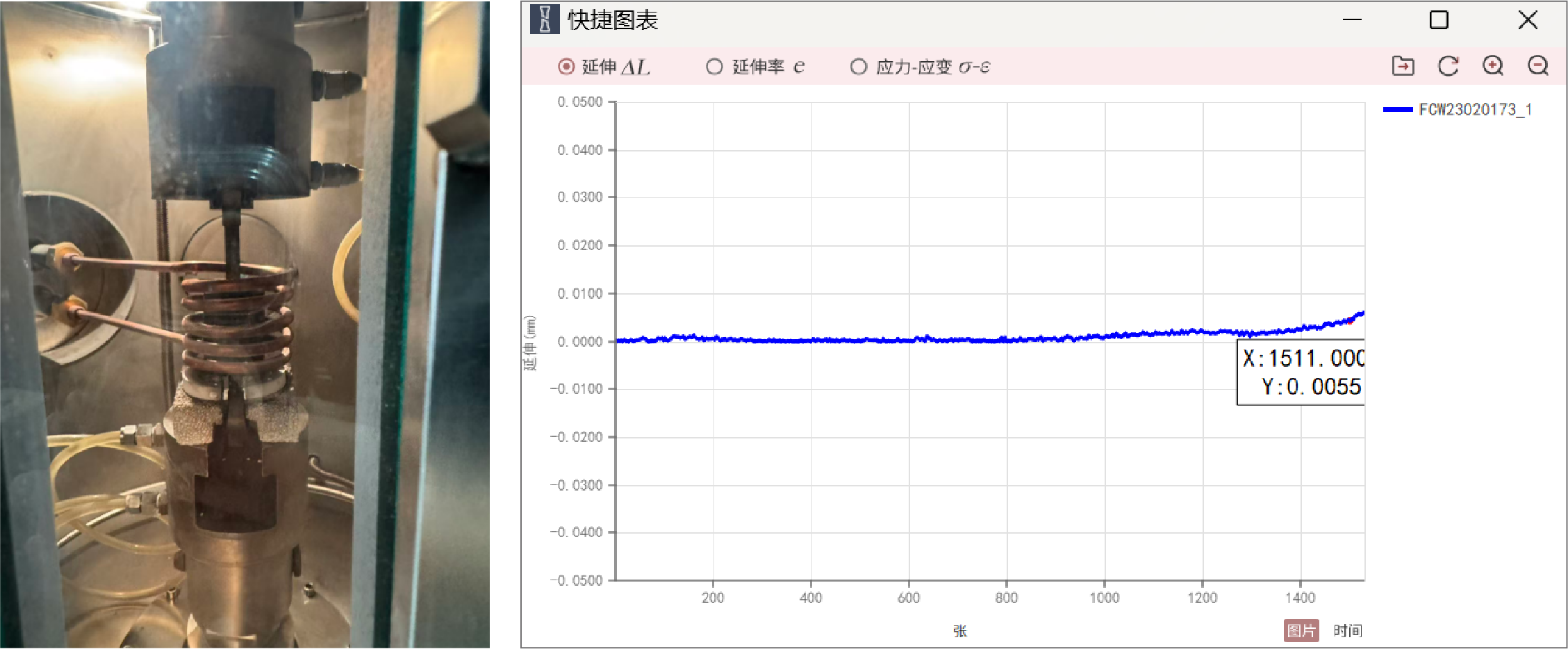
High-temperature 2000℃ tensile deformation measurement of carbon-carbon composites
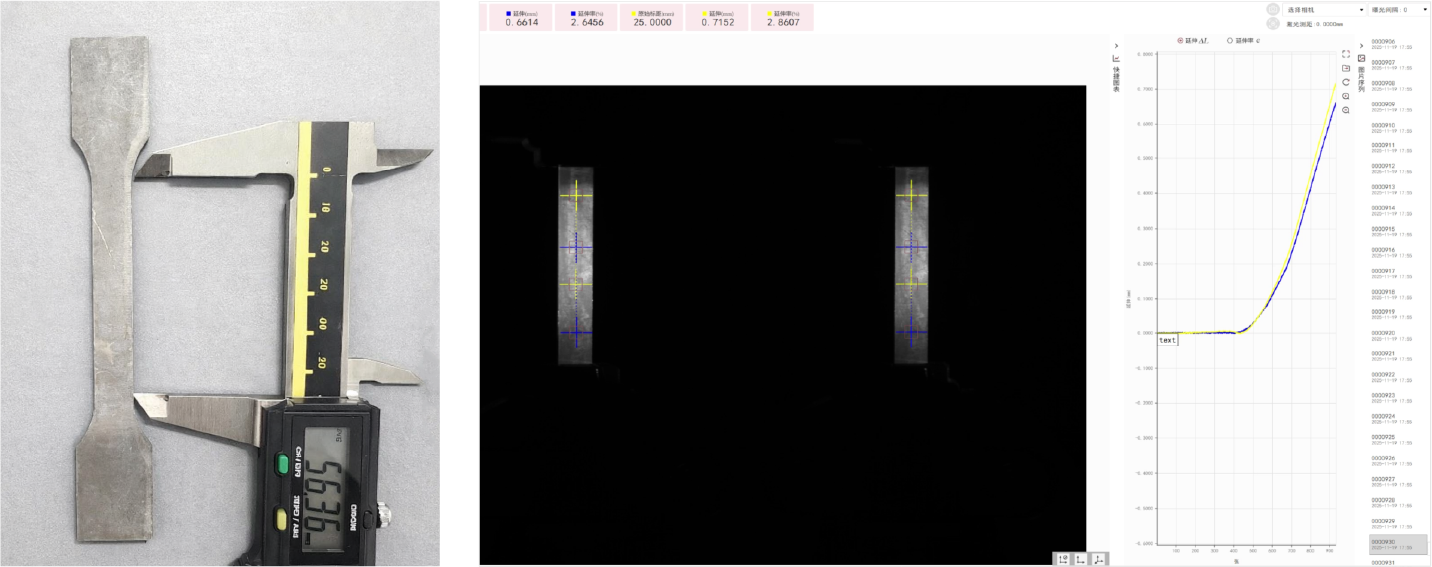
Multi-gauge-section featureless measurement
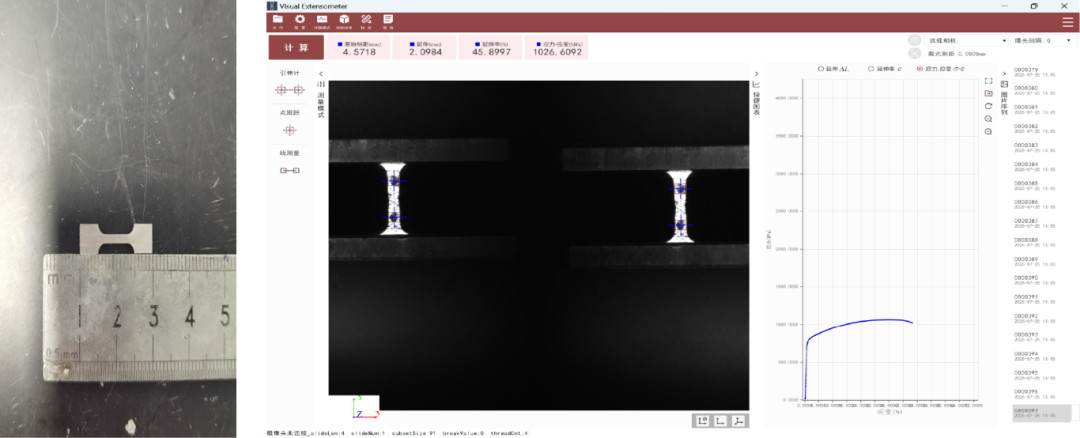
Stress-strain measurement of metal sheets in tension
Third, data recording is more complete.
Many tests care not only about a result value, but about the process itself.
From the small strain stage to larger elongation, the Haytham video extensometer can continuously track the changes of markers or feature areas, recording the strain evolution of the material during loading more completely. For scenarios requiring a complete stress-strain curve, this continuity itself is an important data foundation.
On this basis, full-field measurement capability can be optionally added. When the testing need goes beyond how much this gauge section elongated on average, and one wants to see the local deformation distribution further, this extension extends a single value into richer process information.
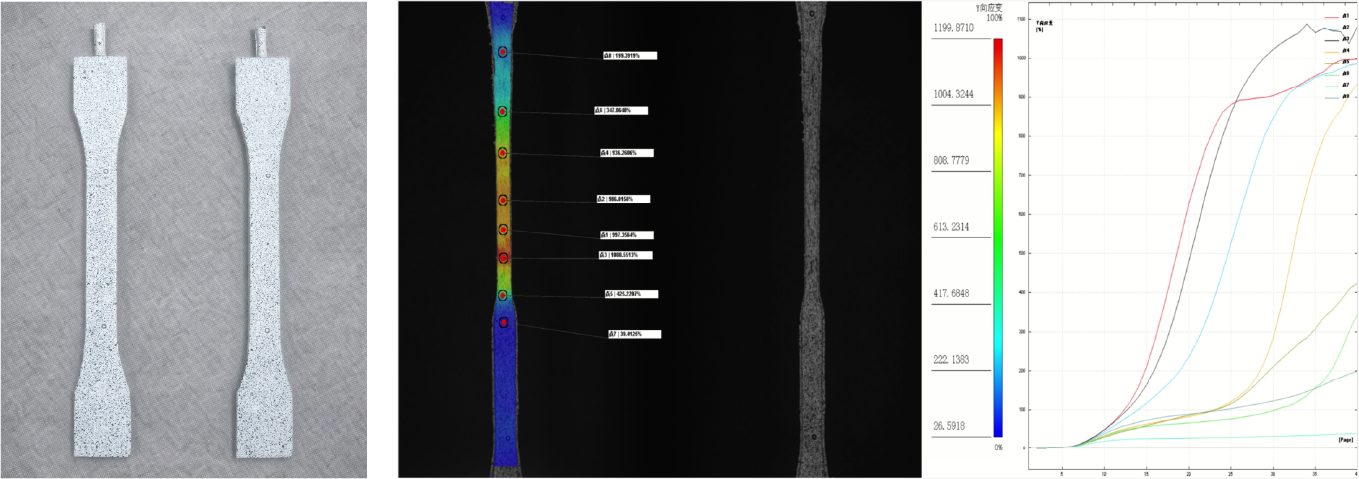
Full-field strain measurement of polypropylene in tension
Finally, it better aligns with the current development direction of material testing.
Today's material testing is no longer as simple as getting a result. Many research, quality inspection and comparative analysis scenarios want data to be more intuitive, the process more traceable, results easier to review and more convenient for subsequent analysis.
The Haytham video extensometer advances strain measurement from the traditional mechanical contact path to a visualized, digital path, letting testing go beyond the result end and retaining more process information. For the test site, this change is often not one more feature, but a real step forward in the measurement method itself.
If you currently mainly test standard metal specimens and the existing contact solution already stably meets the needs, continuing the original approach is of course fine.
But if you have already started encountering these situations, the Haytham video extensometer deserves serious inclusion in the comparison:
More and more specimen types; mechanical clamping and adaptation start to take more time;
An increasing share of specimens such as films, rubber, plastics, fibers and composites;
hoping to reduce the operating burden of clamping and removal;
hoping to acquire data as continuously as possible from small strain to large elongation;
hoping the test results are not just a number but preserve the complete process as much as possible;
hoping special scenarios such as high/low temperature can also be included in a unified strain measurement path.
In the end, choosing a strain measurement solution is not choosing an isolated parameter, but a whole way of organizing testing.
Which approach better suits the current task, and which better balances efficiency, adaptability and process data — that is the real question to answer.
From strain gauges to contact extensometers to video extensometers, the change in strain measurement methods has never been about switching tools, but about getting closer to the real needs of material testing as they happen.
As test objects multiply, working conditions become more complex and efficiency demands rise, strain measurement itself also needs a more flexible, more continuous path that fits more easily into daily workflows.
The Haytham video extensometer — the meaning lies right here.
It does not simply replace the contact solution with a vision solution; for material strain testing, it provides a lighter, wider-range and more complete way of data acquisition. For scenarios that want a smoother testing workflow and a fuller view of the data, such a choice better fits current needs.





 Downloads

