Materials Mechanics
Monocular 3D Video Extensometer



Monocular 2D Optical Strain Measurement System
Monocular 3D Optical Strain Measurement System
High-Speed Monocular 3D Optical Strain Measurement System
Stereo 3D Optical Strain Measurement System
Optical Strain Measurement System – Educational Edition
2D Optical Microscopic Strain Measurement System


Strain Measurement of Parallel Lap Welds
Residual Deformation Measurement of Drilled Welded Plates
Full-Field Strain Measurement of Weldments in Compression
Tensile Deformation Measurement of 0.3mm Fiber Filament
Unmarked Compression Deformation Measurement of Composite Materials

Deformation Measurement of Artificial Cardiac Patch
Keycap Vibration Measurement: Quantifying Press and Rebound Dynamics
Headband Deformation Measurement: Analyzing Bending Position and Unloading Recovery
High-Temperature DIC Measurement of Wafer Thermal Warpage: Quantifying Warpage vs. Temperature
UAV Dynamic Tracking Measurement: Capturing Flight Trajectory and Attitude Changes

 0755-86347753

Published: 2026-05-09
As thin-film materials become lighter, thinner and structurally finer, traditional contact testing methods tend to affect data accuracy in practice. When the specimen is thin, clamping, added mass or local constraints change the true load state of the material, making test results fail to fully reflect the behavior of the material itself.
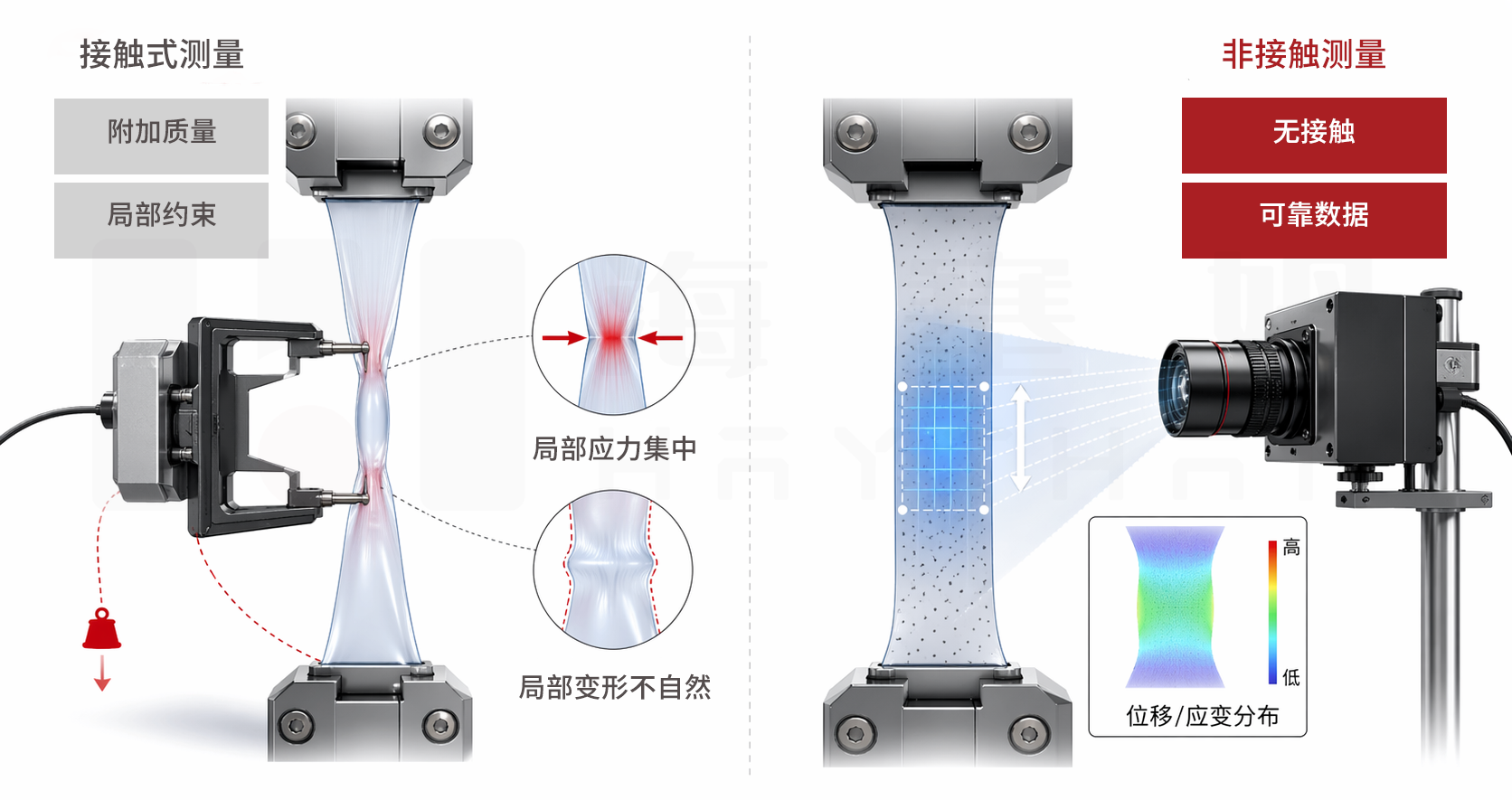
Against this background,video extensometerprovides an efficient, non-contact measurement solution. By acquiring displacement and strain information through optical imaging, the video extensometer performs accurate measurement without disturbing the specimen, so the data reflect the true response of the material. Whether capturing key tensile displacement or observing local deformation evolution, the video extensometer provides complete experimental information.
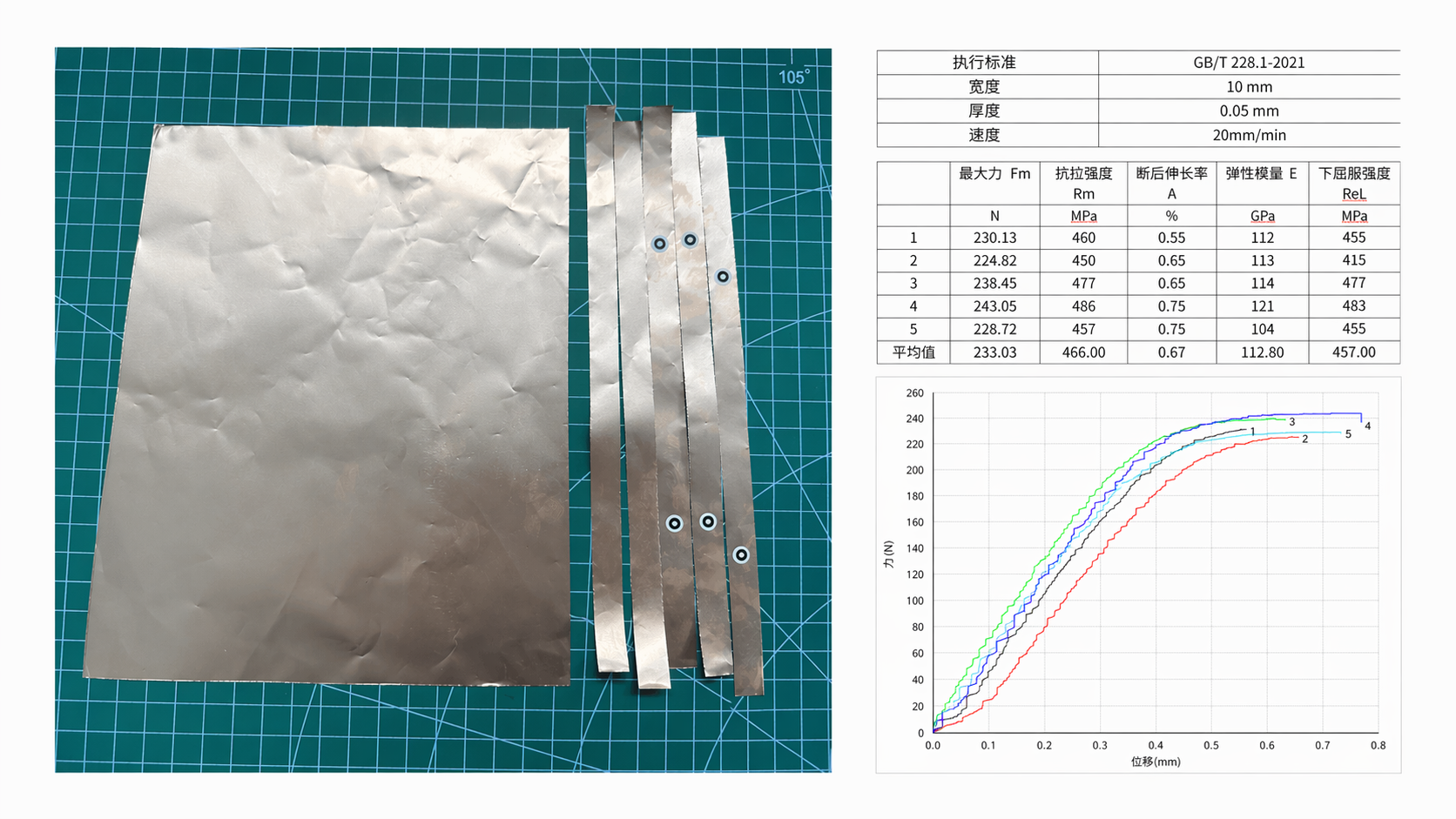
Copper foil tensile deformation measurement
In addition, video extensometerIt also has obvious advantages in test execution: fixed optical path design and factory calibration mean no frequent repeated calibration in daily use; switching between different specimens and conditions is convenient and efficient. This improves the laboratory experience, helps maintain workflow consistency and guarantees data reliability.
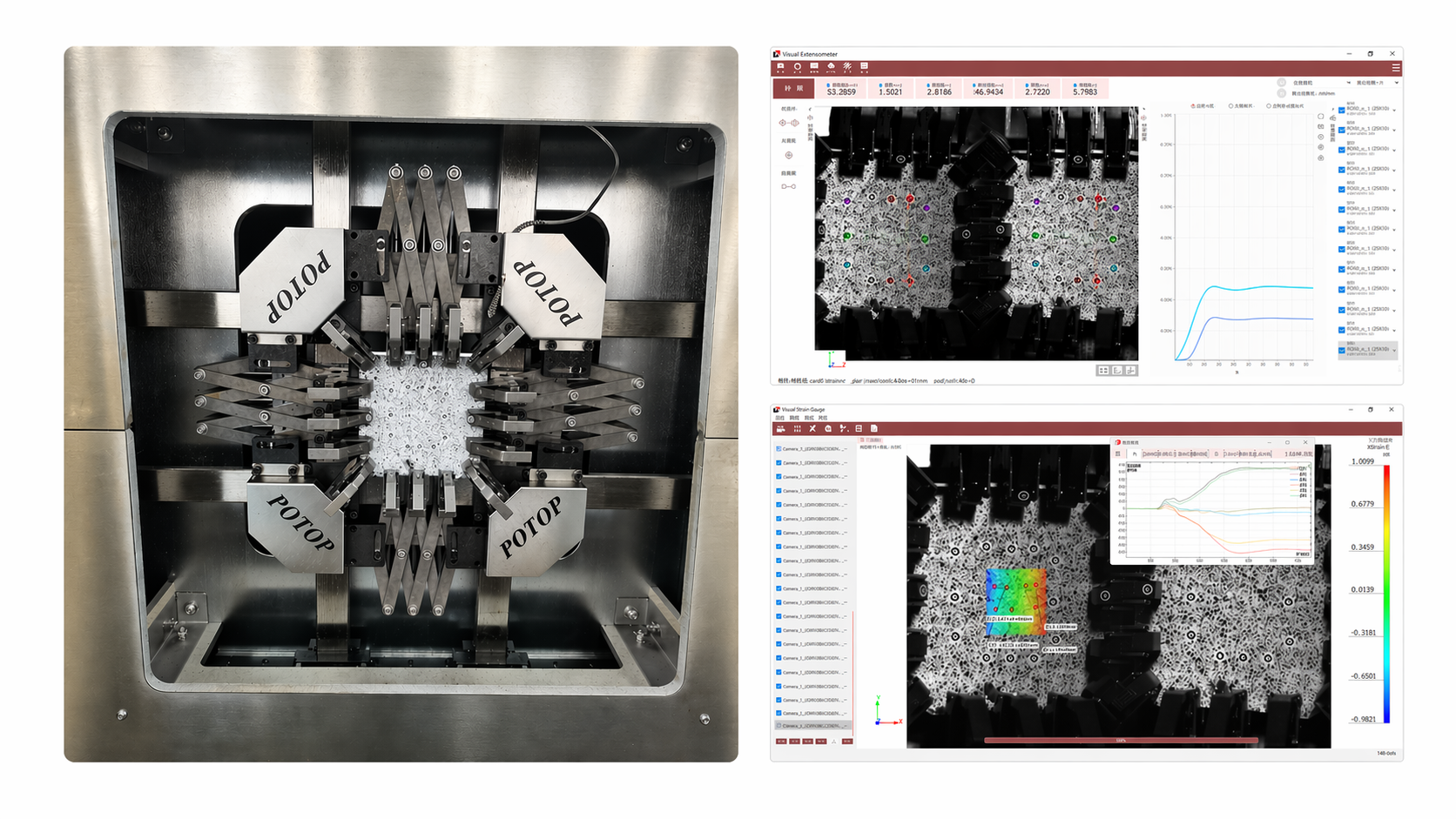
Full-field strain measurement of film biaxial tension
Overall, for thin-film material testing, the video extensometer is not just a measuring tool but a key means of ensuring data accuracy and reliability. It lets researchers reduce interference and improve efficiency during experiments while obtaining reliable data closer to the actual load state.





 Downloads

