Materials Mechanics
Monocular 3D Video Extensometer



Monocular 2D Optical Strain Measurement System
Monocular 3D Optical Strain Measurement System
High-Speed Monocular 3D Optical Strain Measurement System
Stereo 3D Optical Strain Measurement System
Optical Strain Measurement System – Educational Edition
2D Optical Microscopic Strain Measurement System


Strain Measurement of Parallel Lap Welds
Residual Deformation Measurement of Drilled Welded Plates
Full-Field Strain Measurement of Weldments in Compression
Tensile Deformation Measurement of 0.3mm Fiber Filament
Unmarked Compression Deformation Measurement of Composite Materials

Deformation Measurement of Artificial Cardiac Patch
Keycap Vibration Measurement: Quantifying Press and Rebound Dynamics
Headband Deformation Measurement: Analyzing Bending Position and Unloading Recovery
High-Temperature DIC Measurement of Wafer Thermal Warpage: Quantifying Warpage vs. Temperature
UAV Dynamic Tracking Measurement: Capturing Flight Trajectory and Attitude Changes

 0755-86347753

Published: 2026-05-23
In precision measurement, the choice of tools is important, but equally critical is how to use these tools.
It is like photography: no matter how good the lens and sensor are, if the shutter is pressed at the wrong moment, the decisive shot cannot be captured. Fatigue testing is the same. Many teams invest heavily in selecting a measurement scheme, but then hit a bottleneck at another equally important step: once the method is chosen, how should the data be acquired?
Material failure is often not a one-time event: during repeated loading and unloading cycles, internal damage gradually accumulates and eventually evolves into cracks and even fracture. This process is fatigue.
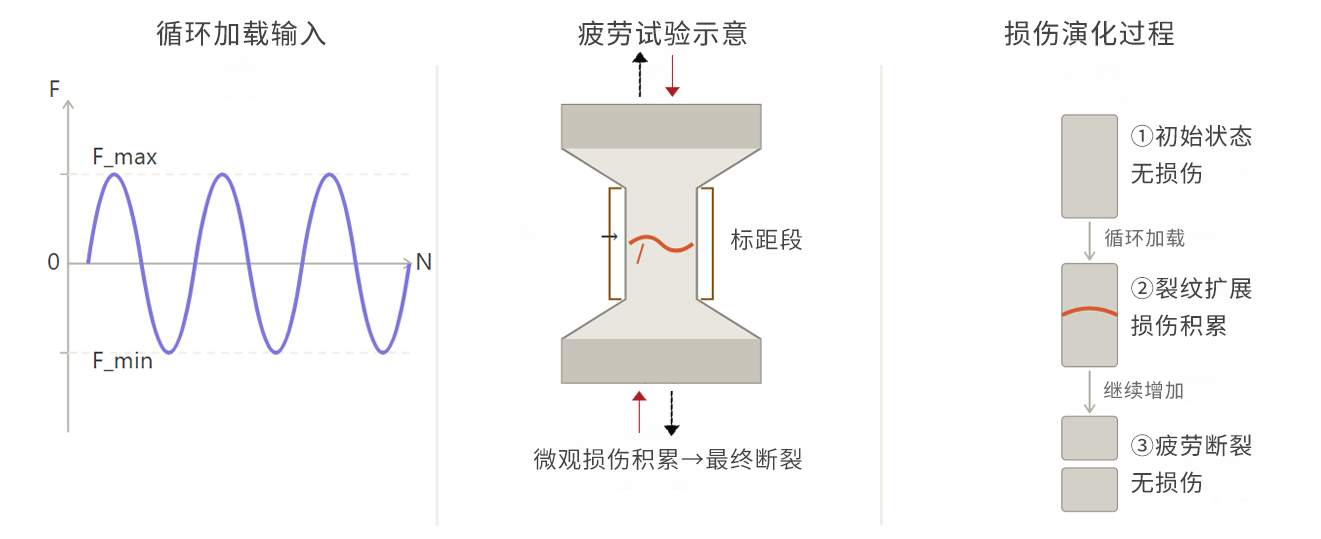
The goal of fatigue testing is precisely to observe the response evolution of materials under loading history by simulating cyclic loading conditions. Among them, strain is one of the most representative observation objects.
And there is more than one method to measure strain.
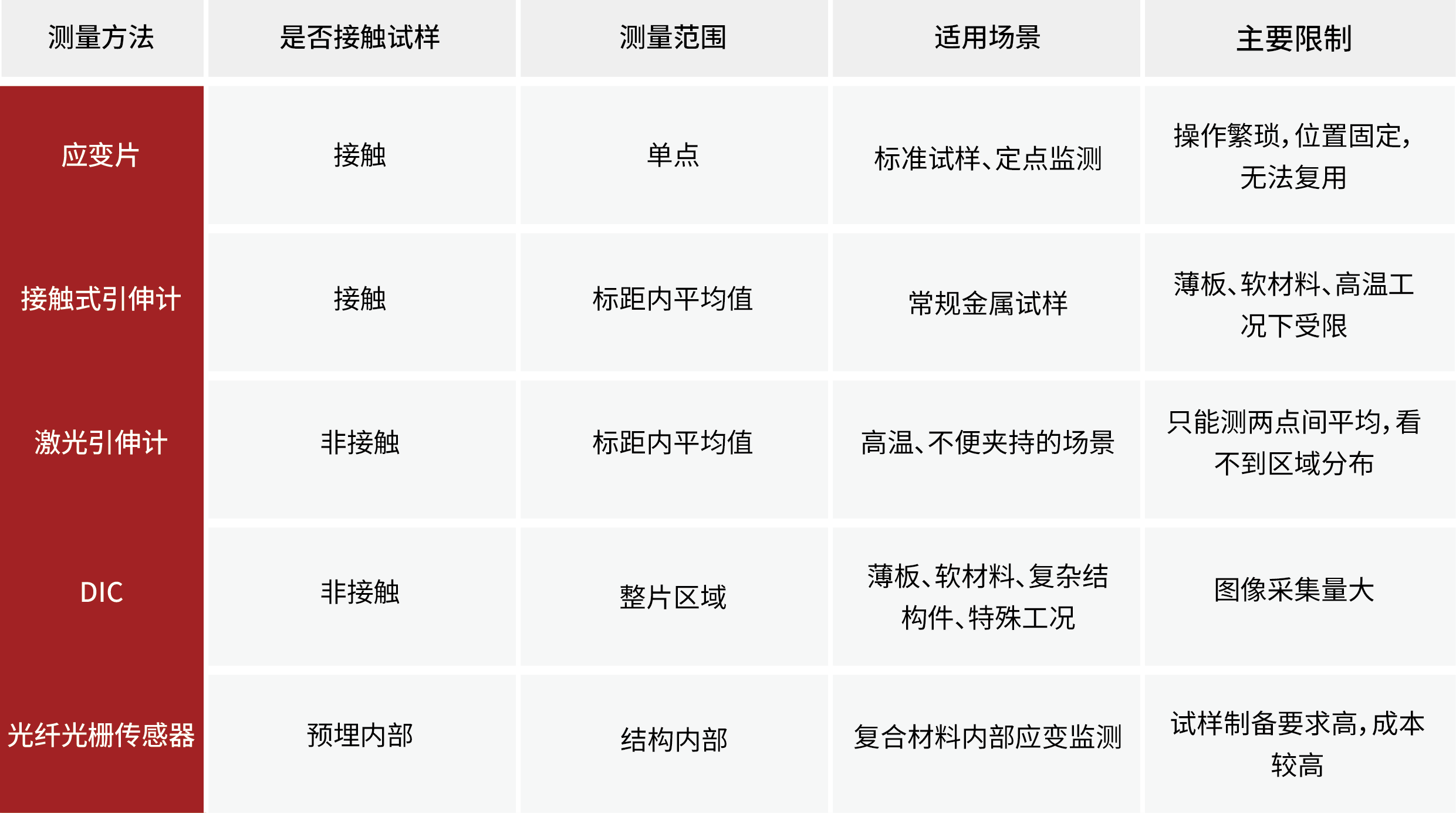
strain gaugesBonded directly onto the specimen surface, it reflects local strain through the change of its own resistance with deformation. Low cost and high precision, suitable for fixed-point monitoring. The trade-off: once the position is set it cannot be changed, coverage is limited, and it usually cannot be reused after each test.
contact extensometerClamping the specimen by knife edges and measuring the relative displacement between the two gauge ends is the most common configuration in standard fatigue tests — technically mature, and the most direct to integrate with the testing machine's control system. But the clamping itself somewhat interferes with the specimen,Its applicability is reduced for thin sheets, soft materials and high-temperature conditions.
Laser extensometer:A laser tracks the distance change between two target points without touching the specimen throughout. It has obvious advantages in high-temperature environments and scenarios inconvenient for clamping, but like contact extensometers, it reflects the average strain of the gauge section and cannot see the regional distribution.
DICA camera captures images of the specimen surface and tracks featureslocations movement to calculate strain. It is non-contact, can cover an entire area, and adapts better to complex materials and special conditions. Its application in fatigue testing has continued to expand in recent years.
Fiber Bragg grating sensor can be embedded inside composites to directly sense the internal strain state of the structure — a scenario other methods cannot replace; however, it demands high specimen preparation standards and is usually used in research and engineering projects with specific needs.
Comparing the several methods together,DICThe advantage in scope of application is quite prominent,Especially when specimen conditions or the test environment make contact solutions difficult to install,DICis often the most realistic choice.
DIC strain calculation depends on image quality and acquisition density. To accurately track the strain evolution within each loading cycle,DICsystemsUsually needs to be acquired within a single fatigue cycle10 or more images, which places high demands on the sampling frequency of the measuring head.
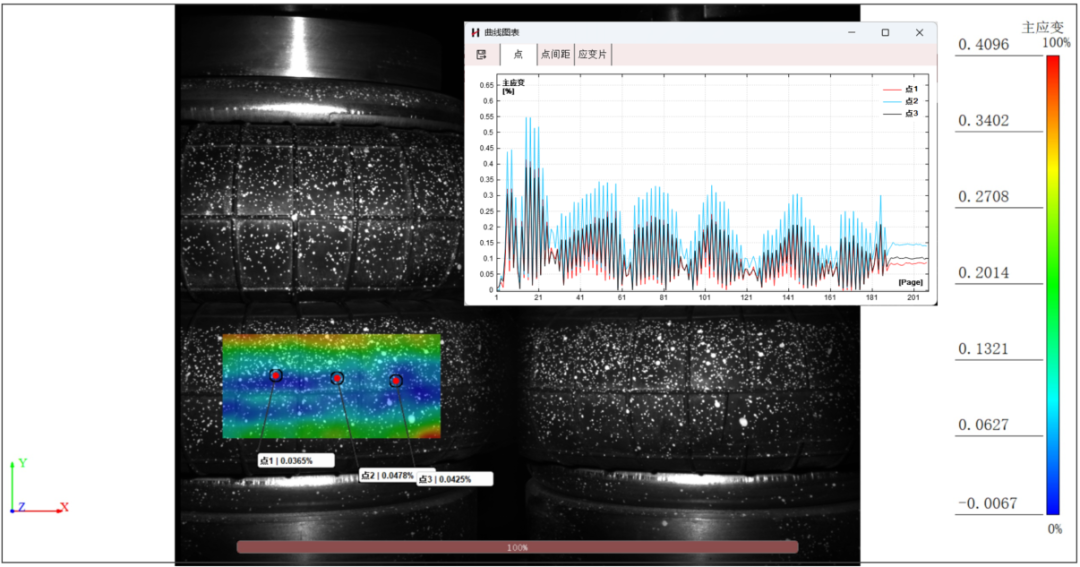
In a single short-term test, this requirement does not pose an obstacle.
However, the essence of fatigue testing is repeated cycling, with cycle counts often reaching tens of thousands or even millions. Under this premise, the data volume is dramatically amplified:
▪ Even a medium-scale test can easily exceed one million images in total
▪ storage space usage exceeding hundreds ofGB
▪ Continuous high-frequency acquisition causes data transmission delays
▪ In severe cases, the system goes down completely
DICIts measurement capability is beyond doubt, but in long-period fatigue testing its acquisition load exceeds the stable tolerance of conventional systems.
Back to the photography analogy.
An experienced sports photographer shooting a marathon would never shoot continuously at high speed from start to finish,That would not only produce massive redundant photos, but also consume an equally long time to filter out the truly valuable frames.
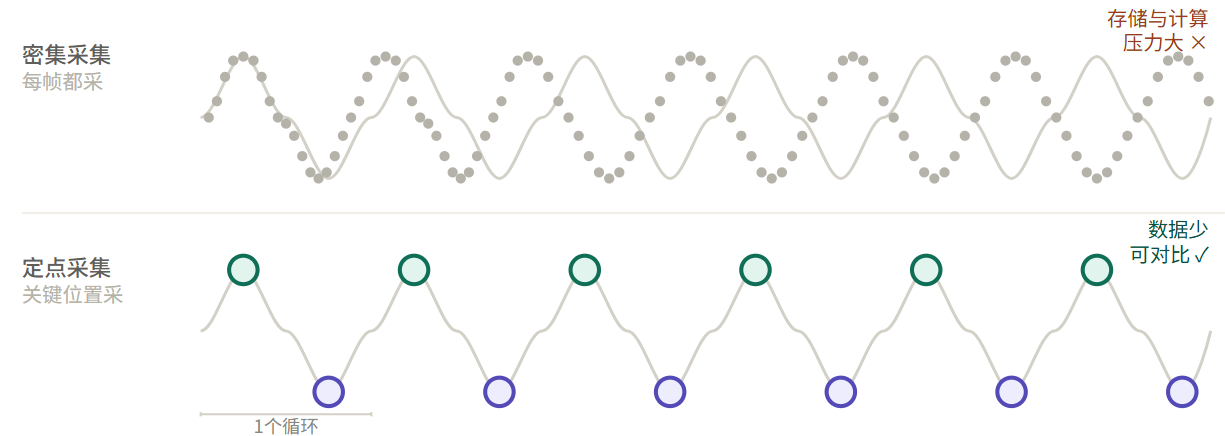
True masters know how to anticipate the key moments and capture precisely.
The acquisition logic of fatigue testing is the same:
▪ Between adjacent cycles in the stable fatigue stage, the material shows almost no change; dense per-cycle acquisition yields only highly repetitive images
▪ What truly carries effective information is the representative nodes at different fatigue stages, and key loading moments within each cycle such as peaks and valleys
The core issue has never been the amount of acquisition, but the timing of acquisition.
To address this industry pain point,Haytham Fatigue Frequency-Reduction Moduleprovides a systematic solution that restructures the fatigueDIC acquisition logic.
First mechanism: with "major cycle"alternative"minor cycle"
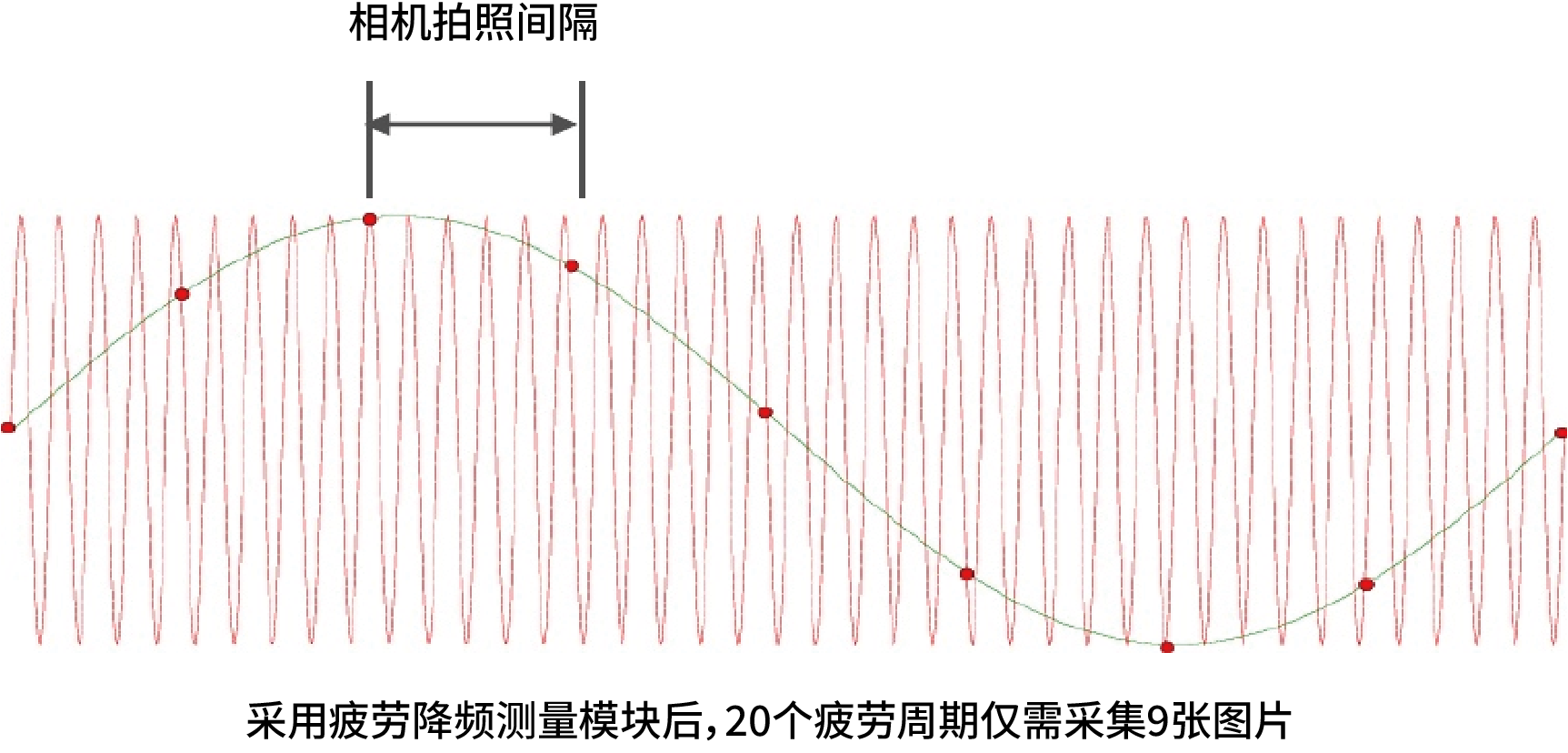
module reduces the frequency of fatigue loading Nminor cycles fitted as1 major cycle, with triggering done at the major-cycle levelDIC for system acquisition rather than high-frequency shooting in every minor cycle.
Strain-controlled high-cycle fatigue test of metal materials (loading frequency 10Hz)
Strain-controlled fatigue test of alloy materials (loading frequency 5Hz)
Strain-controlled fatigue test of metal bar materials (loading frequency 0.05Hz, 0.01Hz)
Actual effect:
▪ Total acquisition volume greatly compressed
▪ hundreds ofGB storage pressure is significantly reduced
▪ Data transmission congestion and system downtime risks are effectively controlled
Second mechanism: fixed-point acquisition to capture key moments
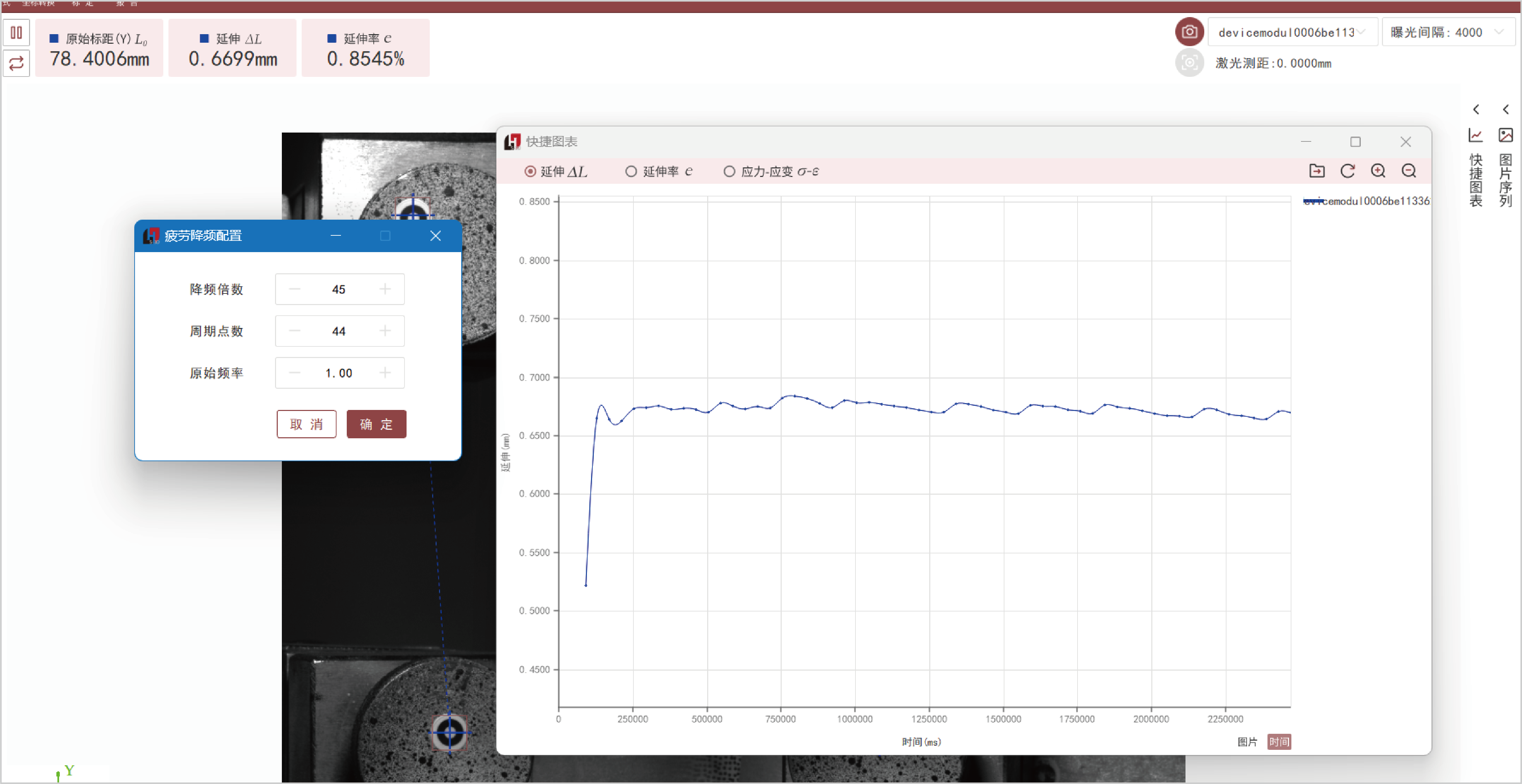
This function is equivalent to presetting shooting moments for the camera. Users can define observation positions on the fatigue loading waveform, and the system automatically and precisely triggers acquisition when each major cycle reaches that position.
Core value:
▪ Data at the same loading position is stably recorded in every major cycle
▪ the 100 and the 5000 and the 50000the same moment of each cycle can be directly compared
▪ The evolution trend of materials during fatigue is clear at a glance
The two mechanisms work together,Acquisition volume is greatly reduced, while the continuous tracking capability for key states is fully retained.
In the field of fatigue strain measurement, there are core problems at two levels:
DICWhat the solution addresses is: under harsh specimen conditions and test environments, "If you only ask whether it can measure strain, strain gauges, contact extensometers and video extensometers can all" question.
Haytham What the fatigue frequency-reduction module solves is: under long-period cyclic loading, "stable measurement, usable data" question.
Just as even the best camera needs to know when to press the shutter, advanced measurement methods also need scientific acquisition strategies.
Only by planning measurement capability and acquisition strategy together,DICcan its true value in long-period fatigue testing be fully released.





 Downloads

