Materials Mechanics
Monocular 3D Video Extensometer



Monocular 2D Optical Strain Measurement System
Monocular 3D Optical Strain Measurement System
High-Speed Monocular 3D Optical Strain Measurement System
Stereo 3D Optical Strain Measurement System
Optical Strain Measurement System – Educational Edition
2D Optical Microscopic Strain Measurement System


Strain Measurement of Parallel Lap Welds
Residual Deformation Measurement of Drilled Welded Plates
Full-Field Strain Measurement of Weldments in Compression
Tensile Deformation Measurement of 0.3mm Fiber Filament
Unmarked Compression Deformation Measurement of Composite Materials

Deformation Measurement of Artificial Cardiac Patch
Keycap Vibration Measurement: Quantifying Press and Rebound Dynamics
Headband Deformation Measurement: Analyzing Bending Position and Unloading Recovery
High-Temperature DIC Measurement of Wafer Thermal Warpage: Quantifying Warpage vs. Temperature
UAV Dynamic Tracking Measurement: Capturing Flight Trajectory and Attitude Changes

 0755-86347753



 High-temperature extensometerDIC systemVideo extensometer
For the limited view through the small window of a high-temperature furnace, we recommended a 2D extensometer. By adjusting the device angle and optimizing the optical path, the 2D extensometer covers the key parts of the specimen within the limited view.
 Composite materialsHigh-temperature full-field strain
Traditional contact measurement often interferes with the specimen surface in high-temperature tests, possibly affecting data accuracy. Haytham's monocular 3D video extensometer uses non-contact optical measurement, tracking carbon plate deformation optically to avoid physical-contact interference and ensure reliable test data.
 Composite materialsHigh-temperature compression
For high-performance carbon fiber rebar, any contact measurement may damage its surface and affect results. Haytham's monocular 3D high-temperature video extensometer monitors specimen deformation in real time via optical tracking without contact, preserving specimen integrity and providing accurate data for subsequent analysis.
 Video extensometerRubber tensile testing
Traditional equipment often struggles to maintain accuracy with large-deformation rubber. Through 3D optical measurement, Haytham's monocular 3D video extensometer tracks subtle changes of rubber during tension in real time, ensuring highly accurate results.
 Video extensometerWire tensile testing
Tensile testing of fine wire demands both extremely high sensitivity and stable data during tension. With advanced image processing algorithms and high-resolution sensors, Haytham's monocular 3D video extensometer provides accurate strain data under very small deformation, fully meeting high-precision test requirements.
 Crack propagation analysisDIC system
In double-cantilever crack propagation analysis, Haytham's monocular 2D video extensometer analyzes crack growth behavior in real time and precisely through strain gradient, boundary recognition and residual gray-field modes. Strain gradient analysis identifies stress concentration regions of crack growth, boundary recognition tracks the crack path and width changes precisely, and residual gray-field analysis provides strain distribution around the crack, helping identify subtle changes in propagation.
 Material strainHigh-cycle fatigue
Haytham's monocular 2D video extensometer is equipped with a dedicated fatigue measurement module that, working with the controller and software, fits N small cycles of high-cycle fatigue testing into 1 large cycle. This effectively reduces the data acquired per fatigue cycle, while cross-cycle photo capture ensures the DIC system tracks the specimen's deformation throughout.
 N-value and R-valueVideo extensometer
In the experiment, the sheet metal specimen was clamped in a tensile testing machine. Haytham's monocular 2D video extensometer monitored the specimen surface in real time and captured its deformation during tension. Based on method A of GB/T 5027-2016, the system precisely measured the plastic strain and computed the corresponding R-value. Since the system allows flexible selection of the plastic strain range, researchers can better control test conditions and ensure reliable results.
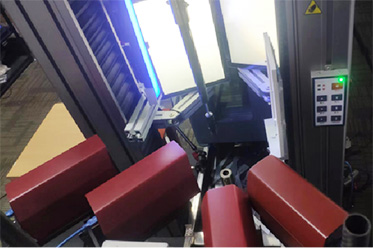 Reduction of area2D video extensometer
Measuring reduction of area requires precisely measuring the specimen's cross-section dimensions before and after fracture, while measuring elongation after fracture requires the longitudinal elongation after breaking. Single-direction traditional measurement may miss transverse deformation, making the data less comprehensive; moreover, inevitable manual errors make precise measurement of these parameters even more challenging.





 Downloads

