Materials Mechanics
Monocular 3D Video Extensometer



Monocular 2D Optical Strain Measurement System
Monocular 3D Optical Strain Measurement System
High-Speed Monocular 3D Optical Strain Measurement System
Stereo 3D Optical Strain Measurement System
Optical Strain Measurement System – Educational Edition
2D Optical Microscopic Strain Measurement System


Strain Measurement of Parallel Lap Welds
Residual Deformation Measurement of Drilled Welded Plates
Full-Field Strain Measurement of Weldments in Compression
Tensile Deformation Measurement of 0.3mm Fiber Filament
Unmarked Compression Deformation Measurement of Composite Materials

Deformation Measurement of Artificial Cardiac Patch
Keycap Vibration Measurement: Quantifying Press and Rebound Dynamics
Headband Deformation Measurement: Analyzing Bending Position and Unloading Recovery
High-Temperature DIC Measurement of Wafer Thermal Warpage: Quantifying Warpage vs. Temperature
UAV Dynamic Tracking Measurement: Capturing Flight Trajectory and Attitude Changes

 0755-86347753



 Composite buckling testingVideo extensometer
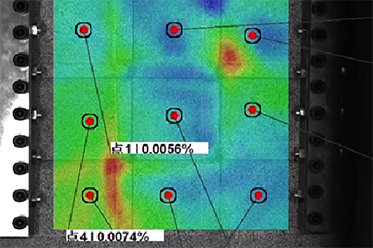
To measure strain distribution of composite materials during buckling, the test team chose Haytham's monocular 3D video extensometer. The specimen was installed in the compression machine and loaded gradually until buckling occurred. The extensometer continuously photographed the specimen surface with a single camera and computed the 3D strain distribution through DIC processing.
 Material compressionVideo extensometer
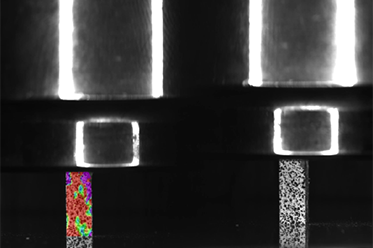
To accurately measure the strain distribution of a silicon nitride column composite during compression, the test team used Haytham's monocular 3D video extensometer. The specimen was installed in the compression machine, and the extensometer monitored surface deformation in real time via a single camera.
 Glass tensileVideo extensometer
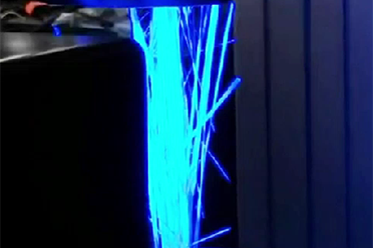
In tensile testing of glass fiber materials, Haytham's monocular 3D video extensometer was used. The specimen was clamped in the tensile machine; the extensometer captured surface deformation of the glass fiber specimen during tension via a single camera, analyzing images with DIC to compute strain distribution in real time.
 High-speed cameraHigh-speed vibration testing
In reactor vibration testing, the customer needed precise measurement of vibration frequency and amplitude under different operating conditions, especially the surface strain distribution. Given the reactor's large size and complex test environment, traditional contact sensors may not provide comprehensive, accurate data — a non-contact device with high dynamic response was needed.
 Hopkinson impact testingHigh-speed DIC
Hopkinson impact testing of small specimens requires high precision and high-speed response to capture strain changes within extremely short times. Traditional strain measurement equipment for small specimens and high-speed dynamic tests usually requires complex multi-camera systems, increasing equipment cost and demanding more lab space and arrangement.
 High-speed cameraHigh-speed dynamic testing
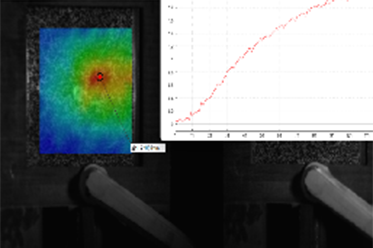
In wall panel projectile testing, the customer needed precise measurement of transient deformation and strain distribution under projectile impact. With the extremely high strain rate at impact, the equipment must capture the high-speed dynamic process in real time and provide full-field strain data for comprehensive analysis of panel deformation behavior.
 Digital image correlation (DIC)Virtual strain gauge
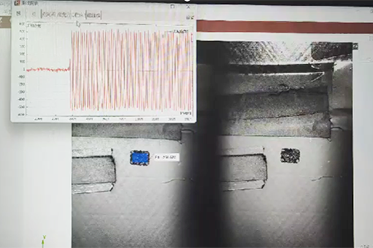
In fatigue life verification of propeller blades, traditional strain gauges are limited by difficult curved-surface installation, complex wiring and signal degradation under long-term vibration, making comprehensive, stable strain measurement hard to achieve. The project team therefore adopted the Virtual Strain Gauge (VSG) mode, achieving multi-point synchronized strain monitoring and life assessment of the blade surface without changing the test setup.
 Microscopic strain testingDIC system
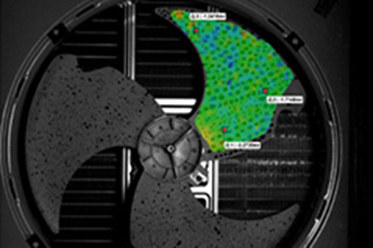
In high and low temperature deformation testing of the phone optical sensor, the sensor must withstand extreme temperature changes from 20℃ down to -40℃ and up to 200℃. Precisely measuring its minute deformation under these temperatures is essential to performance stability. Haytham's vision strain measurement system, with advanced DIC technology, provides a reliable solution for this test.
 DIC systemDigital image correlation (DIC)
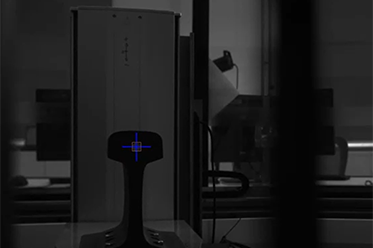
Haytham's monocular 3D vision strain gauge performed a dual-device single-point tracking test of railway track. By placing two Haytham instruments at key track nodes, the team achieved synchronized strain measurement of the track as trains passed.


 Downloads

